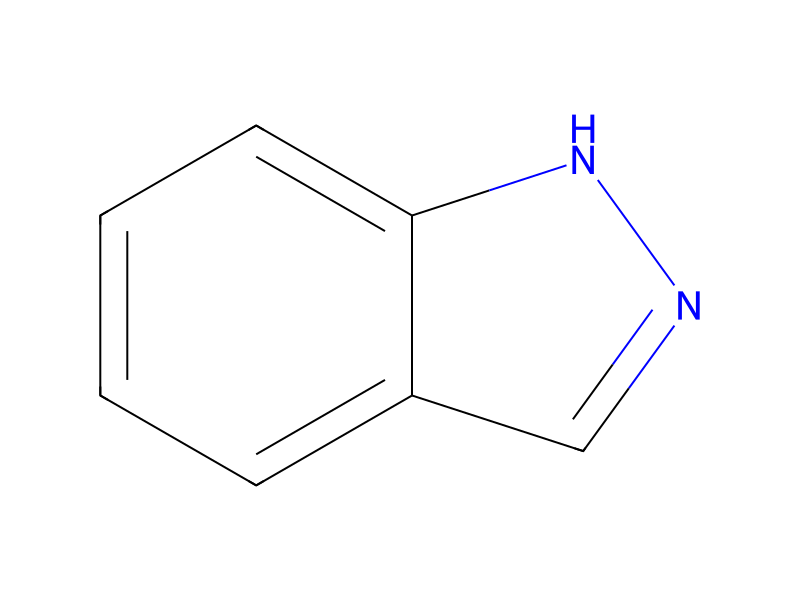
[CH2:1]([O:8][C:9]1[CH:16]=[CH:15][C:12]([CH:13]=O)=[C:11]([NH:17][CH2:18][CH:19]([OH:21])[CH3:20])[CH:10]=1)[C:2]1[CH:7]=[CH:6][CH:5]=[CH:4][CH:3]=1.[NH:22]1C2C(=CC=CC=2)C=N1.N([O-])=O.[Na+]>[Zn]>[CH2:1]([O:8][C:9]1[CH:10]=[C:11]2[C:12]([CH:13]=[N:22][N:17]2[CH2:18][CH:19]([OH:21])[CH3:20])=[CH:15][CH:16]=1)[C:2]1[CH:7]=[CH:6][CH:5]=[CH:4][CH:3]=1The product of Step C (202.7 g, 0.71 mol) was treated as described for Steps C and D of Preparation 3. After the nitrosamine intermediate had been converted to a mixture of the desired indazole product and unreacted starting material (5:1), sodium nitrite (29.5 g, 0.43 mol) was added to renitrosate the starting material. Zinc dust (84 g, 1.28 mol) was then added in portions with cooling as described. When the starting material was consumed, the reaction mixture was worked up as described and combined with the product from another batch that started with 176 g of the product of Step C. The combined crude products were purified by chromatography (Biotage Kiloprep-250) to give a solid (226 g, 60%): 99% purity by HPLC.