1,3-Propanediamine → N-(3-aminopropyl)-6-chloro-1,2,3,4-tetrahydroacridin-9-amine
HRID 1821087
Reaktionsgleichung

[Cl:1][C:2]1[CH:3]=[C:4]2[C:13](=[CH:14][CH:15]=1)[C:12](Cl)=[C:11]1[C:6]([CH2:7][CH2:8][CH2:9][CH2:10]1)=[N:5]2.[NH2:17][CH2:18][CH2:19][CH2:20][NH2:21].C(O)CCCC.C(=O)(O)[O-].[Na+]>>[Cl:1][C:2]1[CH:3]=[C:4]2[C:13](=[CH:14][CH:15]=1)[C:12]([NH:17][CH2:18][CH2:19][CH2:20][NH2:21])=[C:11]1[C:6]([CH2:7][CH2:8][CH2:9][CH2:10]1)=[N:5]2Komponenten
5
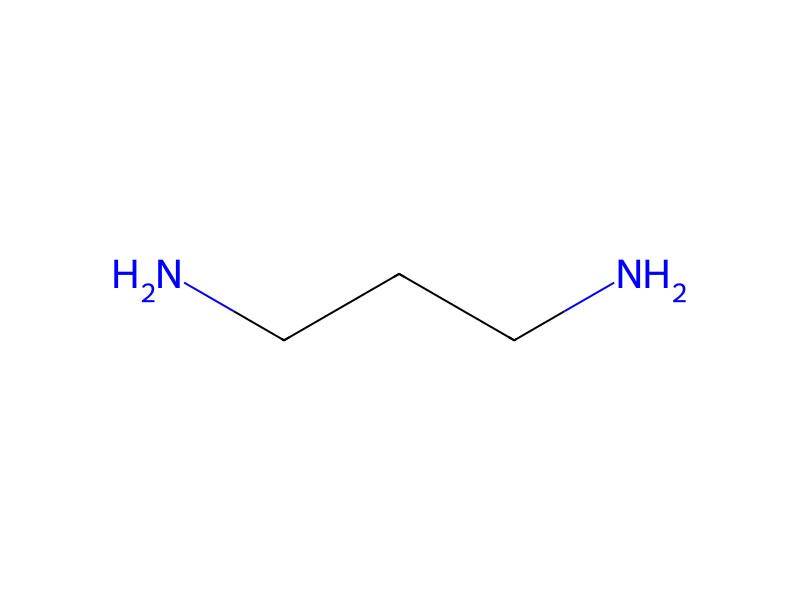




Versuchsvorschrift
To a sealed tube was charged a mixture of 6,9-dichloro-1,2,3,4-tetrahydroacridine (1.0 g, 3.97 mmoL), 1,3-diaminopropane (1.67 mL, 19.83 mmoL) and 4 mL 1-pentanol. The mixture was heated to 160 degree Celsius for 24 h. After cooled down and saturated sodium bicarbonate was added, the mixture was extracted with dichloromethane three times. The combined extract was dried over sodium sulfate, filtered and concentrated. The resulting residue was purified by column chromatography on silica gel with 10-20% MeOH/CH2Cl2 (1% ammonium hydroxide) to give the desired product as brown oil (1.0 g, 87%).