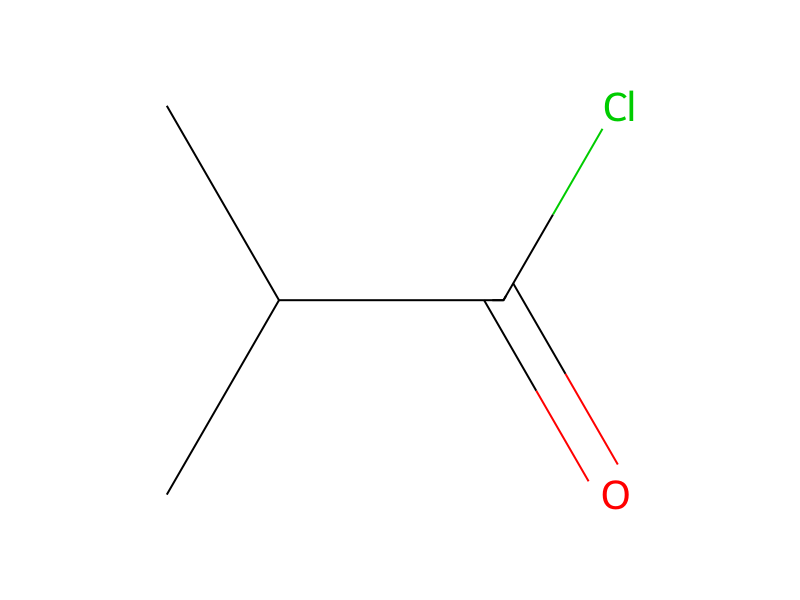
[NH2:1][C:2]1[CH:3]=[C:4]([C:8]2[CH2:9][CH2:10][N:11]([C:14]([O:16][C:17]([CH3:20])([CH3:19])[CH3:18])=[O:15])[CH2:12][CH:13]=2)[CH:5]=[CH:6][CH:7]=1.C(N(C(C)C)CC)(C)C.[C:30](Cl)(=[O:34])[CH:31]([CH3:33])[CH3:32]>ClCCl>[C:30]([NH:1][C:2]1[CH:3]=[C:4]([C:8]2[CH2:13][CH2:12][N:11]([C:14]([O:16][C:17]([CH3:20])([CH3:19])[CH3:18])=[O:15])[CH2:10][CH:9]=2)[CH:5]=[CH:6][CH:7]=1)(=[O:34])[CH:31]([CH3:33])[CH3:32]Into a solution of 4.00 g (16.0 mmol) of tert-butyl 4-(3-aminophenyl)-3,6-dihydro-1(2H)-pyridinecarboxylate and 5.60 mL (32.0 mmol) of diisopropylethylamine in 100 mL dichloromethane was slowly added 1.90 mL (19.0 mmol) of isobutyryl chloride. The reaction mixture was stirred at room temperature for 2 hours, washed with water, dried (MgSO4), and concentrated in vacuo. The residue was purified by column chromatography (silica, 50:46:3:1, hexanes:dichloromethane:methanol:isopropyl amine) to afford 2.90 g (52.0% yield) of the desired product: 1H NMR (400 MHz, CDCl3) δ 7.69 (s, 1H), 7.34 (d, 1H, J=7.8 Hz), 7.27 (t, 1H, J=7.8 Hz), 7.11 (d, 1H, J=7.8 Hz), 6.04 (s, 1H), 4.05 (s, 2H), 3.62 (apparent t, 2H, J=4.9 Hz), 2.51 (m, 3H), 1.49 (s, 9H), 1.25 (d, 6H, J=7.4 Hz); ESMS m/e: 345.5 (M+H)+. Anal. Calc. for C20H28N2O3+0.175CHCl3: C, 66.33; H, 7.77; N, 7.67. Found: C, 66.20; H, 7.41; N, 7.88.
Wird geladen…