Reaktionsgleichung

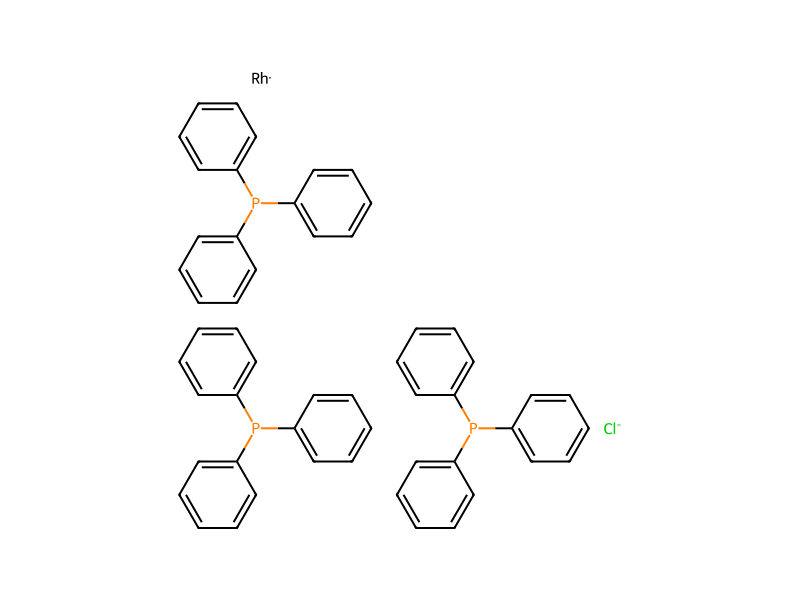
[N+:1]([C:4]1[CH:5]=[C:6]([CH:10]=[CH:11][C:12]#[N:13])[CH:7]=[CH:8][CH:9]=1)([O-:3])=[O:2]>C1C=CC(P(C2C=CC=CC=2)C2C=CC=CC=2)=CC=1.C1C=CC(P(C2C=CC=CC=2)C2C=CC=CC=2)=CC=1.C1C=CC(P(C2C=CC=CC=2)C2C=CC=CC=2)=CC=1.[Cl-].[Rh].C1C=CC=CC=1>[N+:1]([C:4]1[CH:5]=[C:6]([CH2:10][CH2:11][C:12]#[N:13])[CH:7]=[CH:8][CH:9]=1)([O-:3])=[O:2]Komponenten
4


Reagenzien, Katalysatoren, Lösungsmittel 2

Reaktionsbedingungen
- Temperatur
- 40 °C
Versuchsvorschrift
There are introduced into a cylinder 3 g of the product obtained in Step 1, 1.59 g of tris(triphenylphosphine)rhodium(I) chloride and 90 ml of benzene. The whole is heated for 5 hours at 40° C. under a hydrogen pressure of 5 bar. The solvent is evaporated off and the residue is purified by chromatography on silica gel using dichloromethane as eluant.
Aufarbeitung
- customThe solvent is evaporated off
- customthe residue is purified by chromatography on silica gel
Quellen und Nachweise
- ORD-Eintrag
- ord-85e8aacf647b40d99e6441bc79a44ef9
- Quelldatensatz
- uspto-grants-2004_08
- Patentnummer
- US06784183B2
Verknüpfte Notizen
Wird geladen…