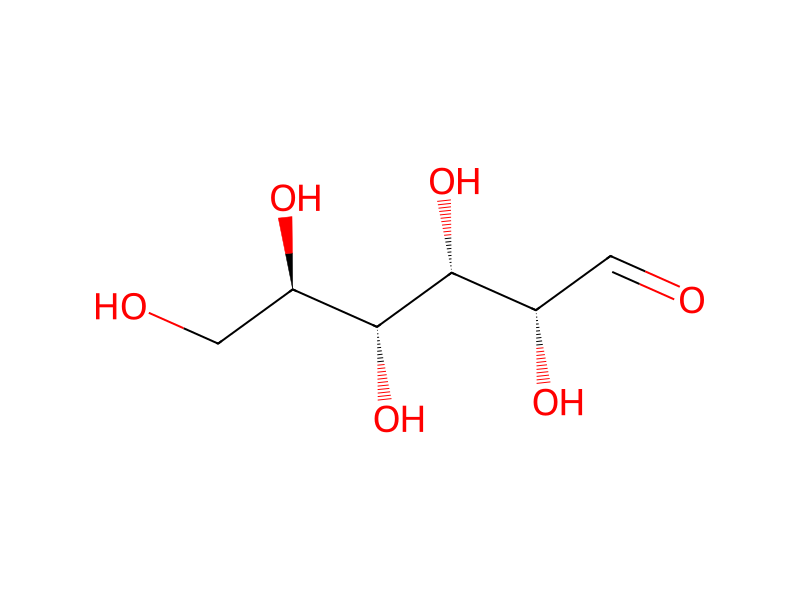
(2R,3S,4R,5R)-2,3,4,5,6-pentahydroxyhexanal → Neopentyl glycol
HRID 1838040
Reaktionsgleichung

Cl[C:2]1[C:3](=[O:22])[C:4]2[CH:21]=CC=C[C:5]=2[C:6]2[C:15]=1OC1C(=CC(CBr)=CC=1)N=2.[O:23]=[CH:24][C@@H]([C@H]([C@@H]([C@@H](CO)O)O)O)O.[BH:35]([O-:45])[O:36]C1C=CC=CC=1NC>>[C:4]1([CH3:21])[CH:5]=[CH:6][CH:15]=[CH:2][C:3]=1[B:35]([OH:45])[OH:36].[OH:23][CH2:24][C:4]([CH3:5])([CH2:3][OH:22])[CH3:21]Komponenten
5


Versuchsvorschrift
Nevertheless, benzophenoxazinone bromide 6a had been prepared and now required attachment with the glucose binding boronate unit. The preparation of the benzophenoxazinone coupling partner, aminophenyl boronate 10, required protection of o-tolylboronic acid 7 with neopentyl glycol to give the corresponding o-tolylboronic ester 8 in 99% yield. Boronic ester 8 was functionalized by free radical bromination using N-bromosuccinimide in carbon tetrachloride and AIBN as the initiator. The reaction conditions required heating, as well as, irradiation with a light source to give bromomethylphenyl boronate 9 in 97% yield. Subsequently, amino boronate derivative 10 was synthesized by bubbling methylamine through a etheral solution of phenyl boronate 9. Methylaminophenyl boronate 10 was isolated cleanly in 99% yield (FIG. 23).