StartseiteMCPWorkbenchSkills
StartseiteWorkbenchBenachrichtigungenMein Bereich
llms.txt · MCP-AnleitungDatenschutz · Nutzungsbedingungen · Supportv1.8.3
  1. Startseite
  2. /Reaktion

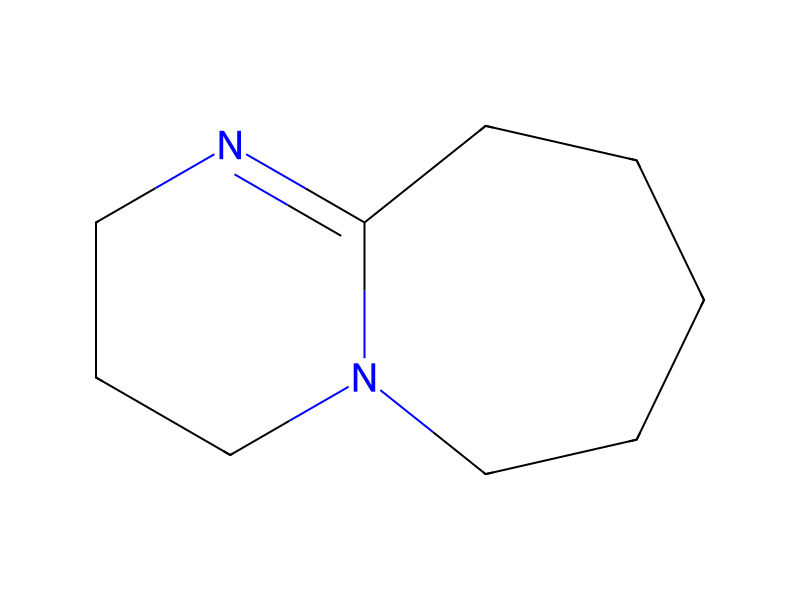
1,8-Diazabicyclo(5.4.0)undec-7-ene → 1-[(2-Methoxynaphth-3-yl)aminocarbonyl]-4-(3,5-dimethylphenyl)piperazine

HRID 1841504
Drucken

Reaktionsgleichung

Reaktionsgleichung von HRID 1841504
[CH3:1][O:2][C:3]1[C:12]([NH:13][C:14](=[O:22])OC2C=CC=CC=2)=[CH:11][C:10]2[C:5](=[CH:6][CH:7]=[CH:8][CH:9]=2)[CH:4]=1.[CH3:23][C:24]1[CH:25]=[C:26]([N:31]2[CH2:36][CH2:35][NH:34][CH2:33][CH2:32]2)[CH:27]=[C:28]([CH3:30])[CH:29]=1.C1CCN2C(=NCCC2)CC1>O1CCCC1>[CH3:1][O:2][C:3]1[C:12]([NH:13][C:14]([N:34]2[CH2:35][CH2:36][N:31]([C:26]3[CH:27]=[C:28]([CH3:30])[CH:29]=[C:24]([CH3:23])[CH:25]=3)[CH2:32][CH2:33]2)=[O:22])=[CH:11][C:10]2[C:5](=[CH:6][CH:7]=[CH:8][CH:9]=2)[CH:4]=1
KomponentenVersuchsvorschriftAufarbeitungQuellen und NachweiseNotizen zur Reaktion

Komponenten

5

Edukt 3

HCID 811841,8-Diazabicyclo(5.4.0)undec-7-eneHCID 27586261-(3,5-Dimethylphenyl)piperazineHCID 23446160Phenyl N-(2-methoxynaphth-3-yl)carbamate

Produkt 1

HCID 234462211-[(2-Methoxynaphth-3-yl)aminocarbonyl]-4-(3,5-dimethylphenyl)piperazineAusbeute 72 %

Reagenzien, Katalysatoren, Lösungsmittel 1

HCID 8028
Tetrahydrofuran
Lösungsmittel

Versuchsvorschrift

Phenyl N-(2-methoxynaphth-3-yl)carbamate (375 mg, 1.28 mmol) and 1-(3,5-dimethylphenyl)piperazine (208 mg, 1.28 mmol) were dissolved in anhydrous tetrahydrofuran (25 ml) and thereto DBU (195 mg, 1.28 mmol) was added, and then stirred at room temperature for 2 hours, concentrated under the reduced pressure to remove the solvent and purified by column chromatography to obtain the titled compound.

Aufarbeitung

  1. concentrationconcentrated under the reduced pressure
  2. customto remove the solvent
  3. custompurified by column chromatography

Quellen und Nachweise

ORD-Eintrag
ord-1f5b9534f63248cea2238558cb4e3629
Quelldatensatz
uspto-grants-2004_01
DOI
10.6084/m9.figshare.5104873.v1
Patentnummer
US06683184B2

Notizen zur Reaktion

Auf dieser SeiteKomponentenVersuchsvorschriftAufarbeitungQuellen und NachweiseNotizen zur Reaktion