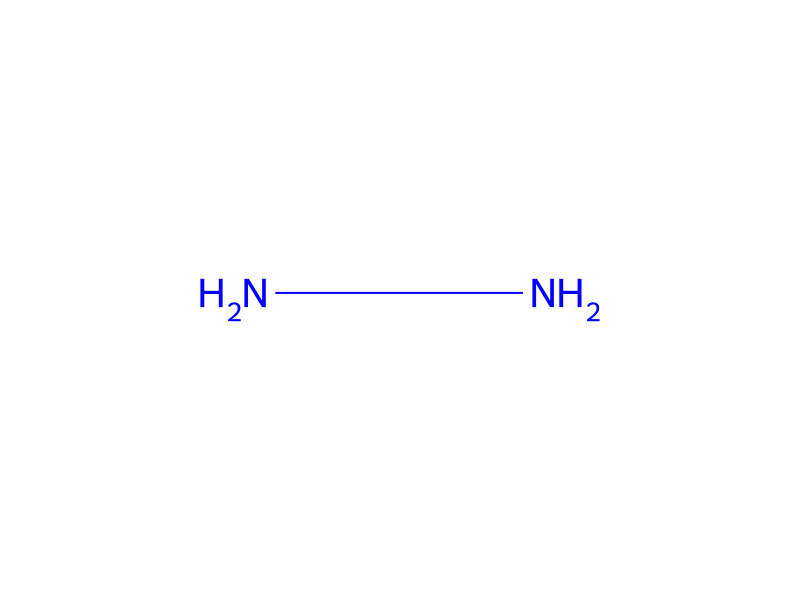
A mixture of (5-chloro-1H-pyrrolo[2,3-b]pyridin-4-yl)(cyclohexyl)methanone (0.720 g, 2.74 mmol), anhydrous hydrazine (0.430 mL, 13.7 mmol) and AcOH (0.025 mL, 0.44 mmol) in EtOH (40 mL) was heated at reflux for about 20 h. During this time, water was removed from the reaction mixture via the use of a Dean-Stark trap. The reaction mixture was cooled to ambient temperature, the volatiles were removed under reduced pressure and the residue was partitioned between water (29 mL) and EtOAc (30 mL). The organic layer was dried over anhydrous MgSO4, filtered, and the solvent evaporated under reduced pressure. The crude material was purified by silica gel chromatography using a gradient of 10 to 50% EtOAc in heptane as the eluent to provide 5-chloro-4-(cyclohexyl(hydrazono)methyl)-1H-pyrrolo[2,3-b]pyridine as an off-white solid (0.37 g, 48%); LC/MS (Table 2, Method o) Rt=2.22 min; MS m/z: 277 and 279 (M+H)+.