StartseiteMCPWorkbenchSkills
StartseiteWorkbenchBenachrichtigungenMein Bereich
llms.txt · MCP-AnleitungDatenschutz · Nutzungsbedingungen · Supportv1.8.3
  1. Startseite
  2. /Reaktion

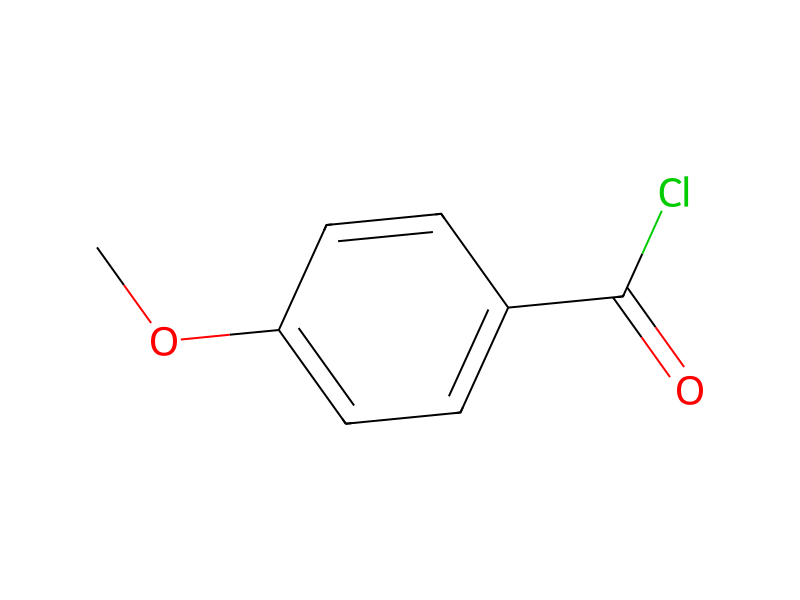
p-Anisoyl chloride → 3,7-Dimethyl-1,6-octadien-3-yl 3-(4-Methoxyphenyl)-3-oxo-propionate

HRID 1870696
Drucken

Reaktionsgleichung

Reaktionsgleichung von HRID 1870696
C([N-]C(C)C)(C)C.[Li+].[C:9]([O:12][C:13]([CH3:22])([CH2:16][CH2:17][CH:18]=[C:19]([CH3:21])[CH3:20])[CH:14]=[CH2:15])(=[O:11])[CH3:10].[C:23](Cl)(=[O:32])[C:24]1[CH:29]=[CH:28][C:27]([O:30][CH3:31])=[CH:26][CH:25]=1>C1COCC1>[CH3:31][O:30][C:27]1[CH:28]=[CH:29][C:24]([C:23](=[O:32])[CH2:10][C:9]([O:12][C:13]([CH3:22])([CH2:16][CH2:17][CH:18]=[C:19]([CH3:21])[CH3:20])[CH:14]=[CH2:15])=[O:11])=[CH:25][CH:26]=1
KomponentenReaktionsbedingungenVersuchsvorschriftAufarbeitungQuellen und NachweiseNotizen zur Reaktion

Komponenten

5

Edukt 3

HCID 7477p-Anisoyl chlorideHCID 8294Linalyl AcetateHCID 2724682Lithium diisopropylamide

Produkt 1

HCID 219325043,7-Dimethyl-1,6-octadien-3-yl 3-(4-Methoxyphenyl)-3-oxo-propionate

Reagenzien, Katalysatoren, Lösungsmittel 1

HCID 8028TetrahydrofuranLösungsmittel2×

Reaktionsbedingungen

Temperatur
-78 °C

Versuchsvorschrift

Lithium diisopropylamide (119.0 mL of a 2.0 M solution, 0.238 mol) is placed into a 500 mL three-necked round-bottomed flask fitted with a magnetic stirrer, internal thermometer, argon inlet, and addition funnel. The flask is cooled to -78° C. 3,7-dimethyl-1,6-octadien-3-yl acetate (22.04 g, 0.112 mol) is dissolved in THF (5 mL) and the resulting solution added to the flask over 45 min. Once addition is complete, the mixture is stirred for an additional 15 min. before being treated with a solution of p-anisoyl chloride (35.00 g, 0.106 mol) dissolved in THF (30 mL) over 30 min. The mixture is warmed to -20° C. and stirred at that temperature for 18 h. After warming to 0° C., the mixture is quenched with 20% HCl (80 mL). The mixture is poured into a separatory funnel containing ether (150 mL) and water (250 mL). The aqueous layer is extracted with ether (150 mL). The mixture is poured into a separatory funnel containing ether (150 mL) and water (250 mL). The aqueous layer is extracted with ether (150 mL). The combined organic layers are washed with saturated NaHCO3 solution (2×100 mL), water (2×150 mL) and brine (150 mL), dried over MgSO4 and filtered. The solvent is removed by rotary evaporation to give an oil. The oil is purified by column chromatography (elution with 2% ethyl acetate/petroleum ether) to yield a colorless oil having 1H and 13C NMR spectra consistent with the desired product.

Aufarbeitung

  1. customfitted with a magnetic stirrer
  2. additioninternal thermometer, argon inlet, and addition funnel
  3. additionthe resulting solution added to the flask over 45 min
  4. additionOnce addition
  5. temperatureThe mixture is warmed to -20° C.
  6. stirringstirred at that temperature for 18 h
  7. temperatureAfter warming to 0° C.
  8. customthe mixture is quenched with 20% HCl (80 mL)
  9. additionThe mixture is poured into a separatory funnel
  10. additioncontaining ether (150 mL) and water (250 mL)
  11. extractionThe aqueous layer is extracted with ether (150 mL)
  12. additionThe mixture is poured into a separatory funnel
  13. additioncontaining ether (150 mL) and water (250 mL)
  14. extractionThe aqueous layer is extracted with ether (150 mL)
  15. washThe combined organic layers are washed with saturated NaHCO3 solution (2×100 mL), water (2×150 mL) and brine (150 mL)
  16. dry with materialdried over MgSO4
  17. filtrationfiltered
  18. customThe solvent is removed by rotary evaporation
  19. customto give an oil
  20. customThe oil is purified by column chromatography (elution with 2% ethyl acetate/petroleum ether)
  21. customto yield a colorless oil

Quellen und Nachweise

ORD-Eintrag
ord-d8ab6477005d44e59f2c2bb471d69abe
Quelldatensatz
uspto-grants-2000_08
DOI
10.6084/m9.figshare.5104873.v1
Patentnummer
US06100233

Notizen zur Reaktion

Auf dieser SeiteKomponentenReaktionsbedingungenVersuchsvorschriftAufarbeitungQuellen und NachweiseNotizen zur Reaktion
