Triphenylphosphine → tert-Butyl 3-(2-acetyl-3-methoxyphenoxy)propylcarbamate
HRID 1878307
Reaktionsgleichung

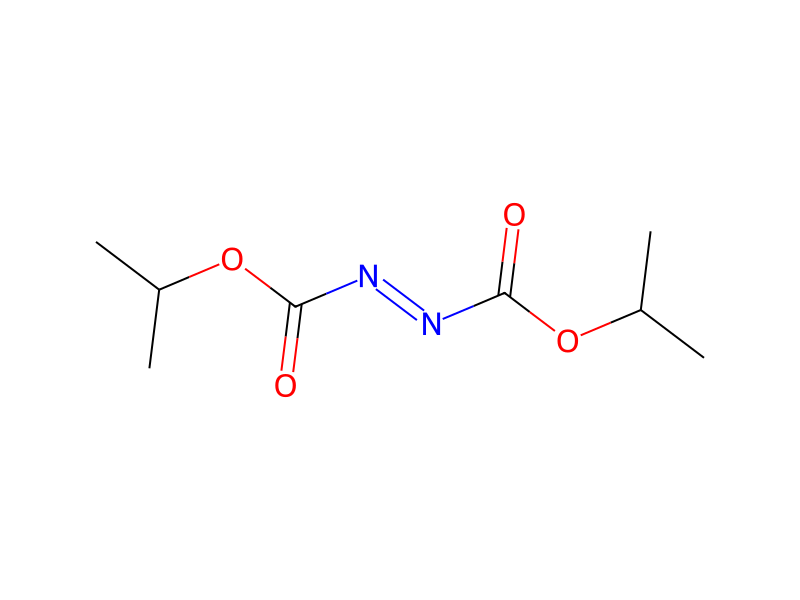
N(C(OC(C)C)=O)=NC(OC(C)C)=O.[OH:15][CH2:16][CH2:17][CH2:18][NH:19][C:20](=[O:26])[O:21][C:22]([CH3:25])([CH3:24])[CH3:23].O[C:28]1[CH:33]=[CH:32][CH:31]=[C:30]([O:34][CH3:35])[C:29]=1[C:36](=[O:38])[CH3:37].C1(P(C2C=CC=CC=2)C2C=CC=CC=2)C=CC=CC=1>C1COCC1>[C:36]([C:29]1[C:30]([O:34][CH3:35])=[CH:31][CH:32]=[CH:33][C:28]=1[O:15][CH2:16][CH2:17][CH2:18][NH:19][C:20](=[O:26])[O:21][C:22]([CH3:23])([CH3:25])[CH3:24])(=[O:38])[CH3:37]Komponenten
6