StartseiteMCPWorkbenchSkills
StartseiteWorkbenchBenachrichtigungenMein Bereich
llms.txt · MCP-AnleitungDatenschutz · Nutzungsbedingungen · Supportv1.8.0
  1. Startseite
  2. /Reaktion

Trifluoroacetic acid → 2-(4-(4-Nitro-3-(trifluoromethyl)phenylamino)cyclohexyloxy)acetic acid

HRID 1890389
Notizen
Druckvorschau

Reaktionsgleichung

Reaktionsgleichung von HRID 1890389
[N+:1]([C:4]1[CH:9]=[CH:8][C:7]([NH:10][CH:11]2[CH2:16][CH2:15][CH:14]([OH:17])[CH2:13][CH2:12]2)=[CH:6][C:5]=1[C:18]([F:21])([F:20])[F:19])([O-:3])=[O:2].[H-].[Na+].C([O:28][C:29](=[O:31])[CH3:30])(C)(C)C.FC(F)(F)C(O)=O>O1CCCC1.C(OCC)(=O)C.ClCCl.O>[N+:1]([C:4]1[CH:9]=[CH:8][C:7]([NH:10][CH:11]2[CH2:16][CH2:15][CH:14]([O:17][CH2:30][C:29]([OH:31])=[O:28])[CH2:13][CH2:12]2)=[CH:6][C:5]=1[C:18]([F:19])([F:20])[F:21])([O-:3])=[O:2]
KomponentenReaktionsbedingungenVersuchsvorschriftAufarbeitungQuellen und NachweiseNotizen zur Reaktion

Komponenten

9

Edukt 4

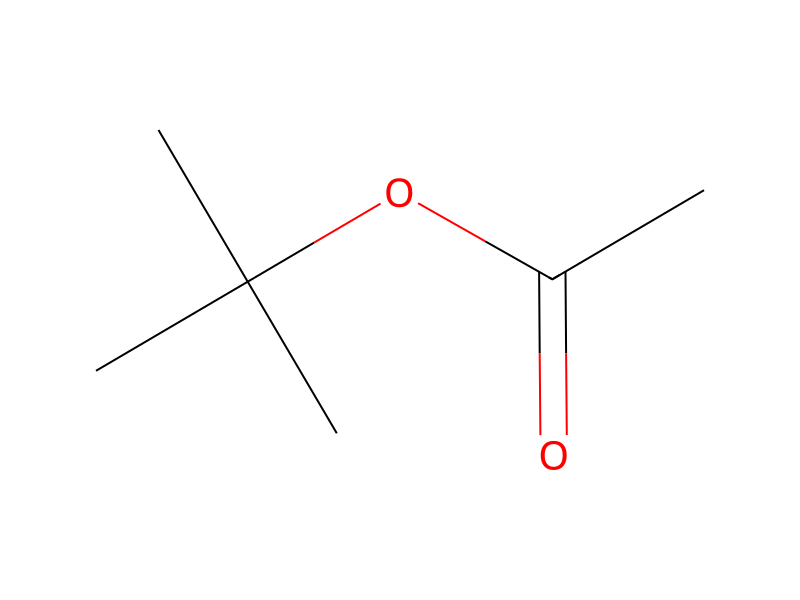
HCID 6422Trifluoroacetic acidHCID 10908tert-Butyl acetateHCID 24758Sodium hydrideHCID 433862244-(4-Nitro-3-trifluoromethyl-phenylamino)-cyclohexanol

Produkt 1

HCID 672837722-(4-(4-Nitro-3-(trifluoromethyl)phenylamino)cyclohexyloxy)acetic acidAusbeute 59 %

Reagenzien, Katalysatoren, Lösungsmittel 4

HCID 962WaterLösungsmittel
HCID 6344DichloromethaneLösungsmittel2×
HCID 8028TetrahydrofuranLösungsmittel
HCID 8857Ethyl AcetateLösungsmittel

Reaktionsbedingungen

Temperatur
5 °C

Versuchsvorschrift

4-(4-Nitro-3-trifluoromethyl-phenylamino)-cyclohexanol (2.79 mmol) is dissolved in dry tetrahydrofuran (7 mL) and sodium hydride (60% suspension in oil, 7.0 mmol) is added. The resulting mixture is stirred for 15 min and is cooled down to 5° C. prior to the addition of acetic acid tert-butyl ester (2.79 mmol). After 1.5 hours reaction time, water (5 mL) is slowly added under vigorous stirring and the mixture is then diluted with ethyl acetate (20 mL). The organic phase is collected and is concentrated under reduced pressure. The residue obtained is then treated with a 1 to 1 mixture of dichloromethane and trifluoroacetic acid (7 mL). After complete conversion of the intermediate ester into the desired acid, the reaction mixture is again concentrated under reduced pressure. The residue obtained is taken up in dichloromethane (20 mL) and the organic phase is extracted with aqueous 3N sodium hydroxide solution (10 mL). The organic phase is then washed with water (2×7 mL), and these aqueous phases are in turn extracted with dichloromethane (2×7 mL). The pH of all combined aqueous phases is then brought to 5-6 by the addition of aqueous 5N hydrochloric acid. The acidic aqueous phase is extracted with dichloromethane (2×15 mL) and the combined organic layers are dried over magnesium sulphate, filtered and concentrated under reduced pressure to afford the desired acid (59% yield).

Aufarbeitung

  1. additionis slowly added
  2. stirringunder vigorous stirring
  3. customThe organic phase is collected
  4. concentrationis concentrated under reduced pressure
  5. customThe residue obtained
  6. concentrationAfter complete conversion of the intermediate ester into the desired acid, the reaction mixture is again concentrated under reduced pressure
  7. customThe residue obtained
  8. extractionthe organic phase is extracted with aqueous 3N sodium hydroxide solution (10 mL)
  9. washThe organic phase is then washed with water (2×7 mL)
  10. extractionextracted with dichloromethane (2×7 mL)
  11. additionThe pH of all combined aqueous phases is then brought to 5-6 by the addition of aqueous 5N hydrochloric acid
  12. extractionThe acidic aqueous phase is extracted with dichloromethane (2×15 mL)
  13. dry with materialthe combined organic layers are dried over magnesium sulphate
  14. filtrationfiltered
  15. concentrationconcentrated under reduced pressure

Quellen und Nachweise

ORD-Eintrag
ord-ec22e325317949429acacd7a1cff77fa
Quelldatensatz
uspto-grants-2013_08
DOI
10.6084/m9.figshare.5104873.v1
Patentnummer
US08507474B2

Notizen zur Reaktion

Wird geladen…

Auf dieser SeiteKomponentenReaktionsbedingungenVersuchsvorschriftAufarbeitungQuellen und NachweiseNotizen zur Reaktion