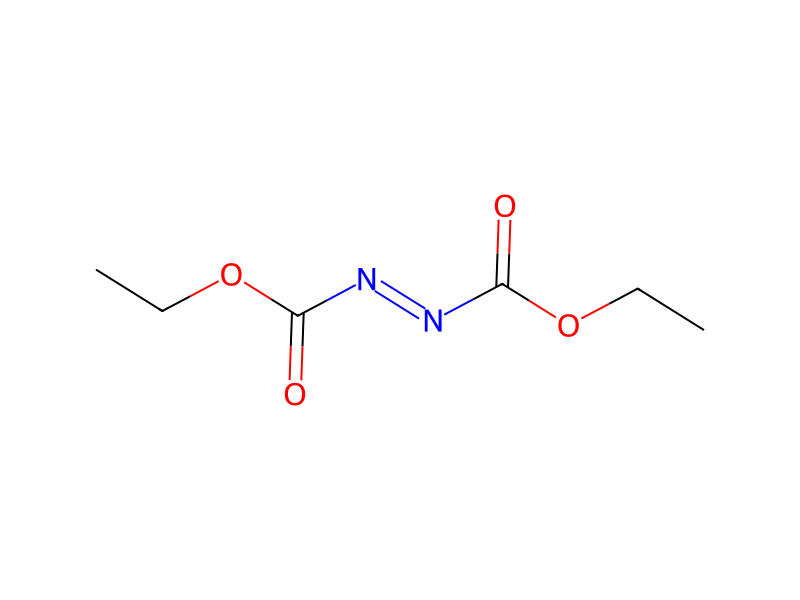
C[C:2]1[CH:18]=[CH:17][CH:16]=[CH:15][C:3]=1[O:4][CH:5]([C:12]([OH:14])=O)[CH2:6][C@@H:7]([C:9]([OH:11])=[O:10])[NH2:8].[C:19]1(P(C2C=CC=CC=2)C2C=CC=CC=2)C=CC=CC=1.[CH2:38]([C:41]1[CH:42]=[C:43](C2C=CC(O)=CC=2)[CH:44]=[CH:45][CH:46]=1)[CH2:39][CH3:40].CCOC(/N=N/C(OCC)=O)=O>O1CCCC1>[C:41]1([CH2:38][CH2:39][CH2:40][C:17]2[CH:18]=[CH:2][C:3]([O:4][CH:5]3[CH2:6][CH:7]([C:9]([O:11][CH3:19])=[O:10])[NH:8][C:12]3=[O:14])=[CH:15][CH:16]=2)[CH:42]=[CH:43][CH:44]=[CH:45][CH:46]=1A mixture of the compound prepared as described in Example 4 (0.5349 g), triphenylphosphine (1.00 g), and 4-(3-propylphenyl) phenol (0.8100 g) in tetrahydrofuran (4.7 ml) was cooled to approximately 1°-2° C., and treated with a solution of diethylazodicarboxylate (0.6645 g) over a two minute period. After the addition was complete, the reaction suspension was allowed to warm to room temperature. After about 28.5 hours, the resulting brown solution was concentrated in vacuo. The residue was diluted with chloroform (2 ml), the insoluble material removed by filtration, and the filtrate concentrated in vacuo to an oil. The oil was dissolved in methylene chloride and purified by preparative centrifugal thin-layer chromatography (4 mm plate, flow rate=8 ml/min), eluting with 50% ethyl acetate/hexane until the first band elutes then solvent switched to 100% ethyl acetate. The fractions containing the desired compound were combined, dried over magnesium sulfate, filtered and concentrated in vacuo to give 0.916 g of methyl 3-(4-(3-phenylpropyl)phenoxy]-2-pyrrolidone-5-carboxylate as a white solid.