Reaktionsgleichung

OS(O)(=O)=O.O=S(=O)=O.C=[O:11].[NH2:12][C:13]1[C:26]2[C:25](=[O:27])[C:24]3[C:19](=[CH:20][CH:21]=[CH:22][CH:23]=3)[C:18](=[O:28])[C:17]=2[C:16](Br)=[CH:15][C:14]=1[Br:30]>O>[NH2:12][C:13]1[C:26]2[C:25](=[O:27])[C:24]3[C:19](=[CH:20][CH:21]=[CH:22][CH:23]=3)[C:18](=[O:28])[C:17]=2[C:16]([OH:11])=[CH:15][C:14]=1[Br:30]Komponenten
Edukt 3


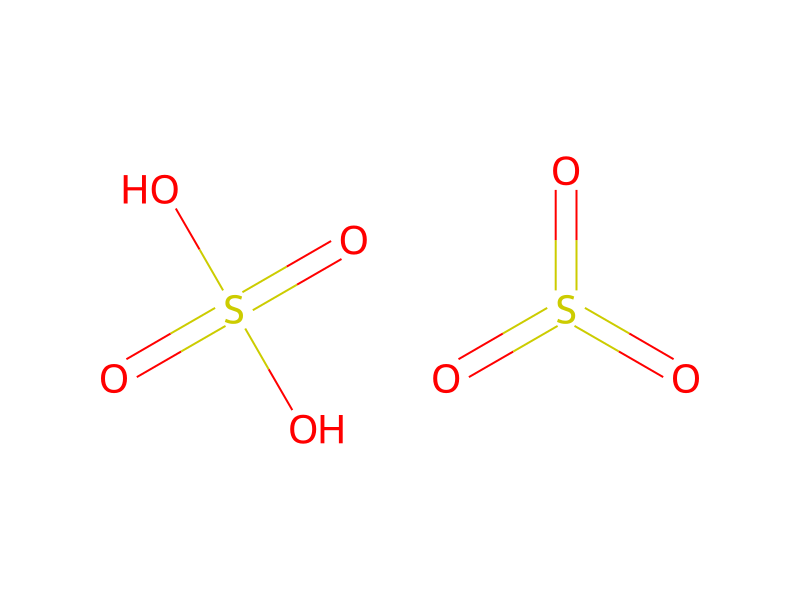
Produkt 1

Reagenzien, Katalysatoren, Lösungsmittel 1

Reaktionsbedingungen
- Temperatur
- 110 °C
Versuchsvorschrift
Hydrolysis is carried out by adding 195.3 parts of 66% oleum and 16 parts of paraformaldehyde to the reaction mixture and heating it to 110° C. The mixture is heated in a stream of nitrogen to 110° C. until the presence of 1-amino-2,4-dibromoanthraquinone can no longer be detected. The reaction time is from 1 to 2 hours. Upon completion of the reaction, the reaction mixture is cooled to room temperature and diluted with 523 parts of water. The precipitated crystals of 1-amino-2-bromo-4-hydroxyanthraquinone are isolated by filtration and washed with water until neutral, affording 149 parts of product, corresponding to a yield of 93.7%, based on 1-aminoanthraquinone. Melting point: 226°-228° C. (lit.: 231°-232° C.). According to elemental analysis, the bromine content is 25.0% (calculated: 25.2%).
Aufarbeitung
- customHydrolysis
- customUpon completion of the reaction
- temperaturethe reaction mixture is cooled to room temperature
Quellen und Nachweise
- ORD-Eintrag
- ord-a6ea770377d74cb7b3b2f253466d2d71
- Quelldatensatz
- uspto-grants-1987_03
- Patentnummer
- US04648994
Verknüpfte Notizen
Wird geladen…