Reaktionsgleichung

[Cl:1][C:2]1[CH:3]=[C:4]2[C:9](=[CH:10][CH:11]=1)[N:8]=[C:7]([NH:12][C:13](=[O:17])OCC)[C:6]([O:18][CH3:19])=[N:5]2.[CH3:20][C:21]1[CH:26]=[CH:25][CH:24]=[CH:23][C:22]=1[N:27]1[CH2:32][CH2:31][NH:30][CH2:29][CH2:28]1>>[Cl:1][C:2]1[CH:3]=[C:4]2[C:9](=[CH:10][CH:11]=1)[N:8]=[C:7]([NH:12][C:13]([N:30]1[CH2:31][CH2:32][N:27]([C:22]3[CH:23]=[CH:24][CH:25]=[CH:26][C:21]=3[CH3:20])[CH2:28][CH2:29]1)=[O:17])[C:6]([O:18][CH3:19])=[N:5]2Komponenten
3
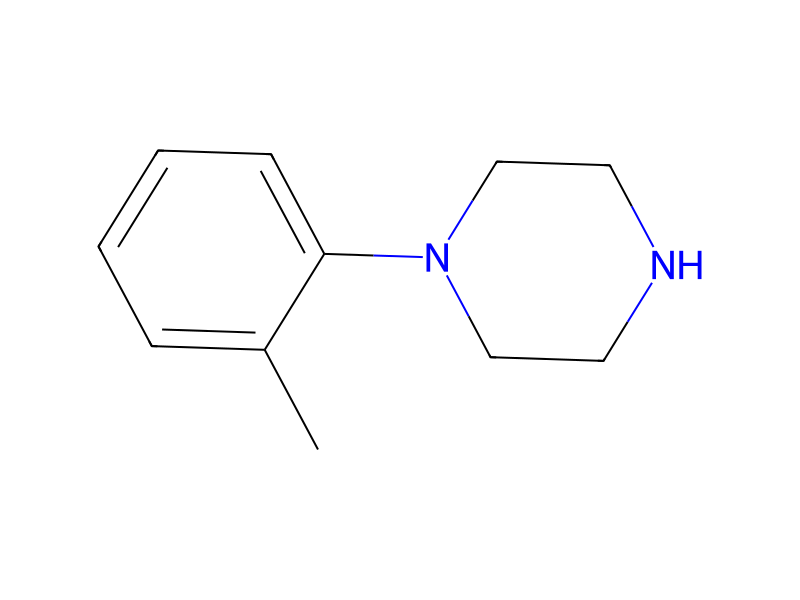


Versuchsvorschrift
Ethyl N-(6-chloro-3-methoxyquinoxalin-2-yl)carbamate and 1-(2-methylphenyl)piperazine were reacted by the same way with the example 106 to obtain the titled compound (yield, 89%). H NMR (300 MHz, CDCl3): δ 2.35 (s, 3H), 3.01 (s, 4H), 3.76 (s, 4H), 4.14 (s, 3H), 7.03-7.52 (m, 6H), 7.68-7.77 (m, 2H).
Quellen und Nachweise
- ORD-Eintrag
- ord-0fdacc8c79aa47078e7fef4b14f87e8c
- Quelldatensatz
- uspto-grants-2013_12
- Patentnummer
- US08598173B2
Verknüpfte Notizen
Wird geladen…