StartseiteMCPWorkbenchSkills
StartseiteWorkbenchBenachrichtigungenMein Bereich
llms.txt · MCP-AnleitungDatenschutz · Nutzungsbedingungen · Supportv1.8.0
  1. Startseite
  2. /Reaktion

Hydrochloric Acid → 3-Fluoro-2-methyl-4-(pentafluoroethyl)benzoic acid

HRID 1910381
Notizen
Druckvorschau

Reaktionsgleichung

Reaktionsgleichung von HRID 1910381
[F:1][C:2]1[CH:3]=[C:4]([CH:8]=[CH:9][C:10]=1[C:11]([F:17])([F:16])[C:12]([F:15])([F:14])[F:13])[C:5]([OH:7])=[O:6].[CH3:18]N(C)CCN(C)C.C([Li])CCC.IC.Cl>CCCCCC.O1CCCC1>[F:1][C:2]1[C:3]([CH3:18])=[C:4]([CH:8]=[CH:9][C:10]=1[C:11]([F:16])([F:17])[C:12]([F:13])([F:14])[F:15])[C:5]([OH:7])=[O:6]
KomponentenReaktionsbedingungenVersuchsvorschriftAufarbeitungQuellen und NachweiseNotizen zur Reaktion

Komponenten

8

Edukt 5

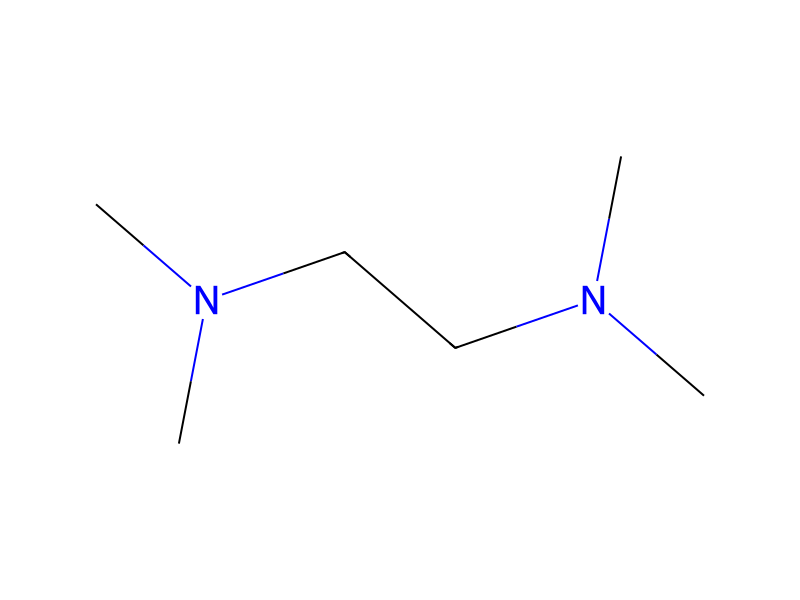
HCID 313Hydrochloric AcidHCID 6328Methyl iodideHCID 8037N,N,N',N'-TetramethylethylenediamineHCID 866614283-Fluoro-4-(pentafluoroethyl)benzoic acidHCID 178418339Butyllithium

Produkt 1

HCID 866614303-Fluoro-2-methyl-4-(pentafluoroethyl)benzoic acid
Ausbeute 11,4 %

Reagenzien, Katalysatoren, Lösungsmittel 2

HCID 8028TetrahydrofuranLösungsmittel2×HCID 8058HexaneLösungsmittel

Reaktionsbedingungen

Temperatur
-40 °C

Versuchsvorschrift

5.00 g (98% by weight; 19.0 mmol) of 3-fluoro-4-(pentafluoroethyl)benzoic acid were introduced into 40 ml of dry tetrahydrofuran. 4.73 g (40.7 mmol) of 1,2-bis(dimethyl-amino)ethane were added, and the mixture was then cooled to −40° C. Then 16.3 ml of a 2.5 M solution (40.7 mmol) of n-butyllithium in hexane were added dropwise at a rate such that the temperature was in a range from −33° C. to −35° C. The contents were stirred at a temperature of −35° C. for 4 hours. Then a solution of 8.25 g (58.1 mmol) of iodomethane in 10 ml of dry tetrahydrofuran was added dropwise, and the mixture was stirred at a temperature of −35° C. for 1 hour. Thereafter the contents were warmed to room temperature (RT) and stirred at this temperature for 16 hours. For working up, 50 ml of 2M hydrochloric acid were cautiously added, and then the aqueous phase was extracted with diethyl ether. The combined organic phases were dried and freed from the solvents on a rotary evaporator. The residue was stirred in n-heptane and subsequently filtered. This gave 2.33 g of residue as a clean product. The filtrate was freed from the solvent, and the residue was again stirred in n-heptane. Filtration produced 590 mg of residue, which was identified as a product with a purity of 70% by weight.


Aufarbeitung

  1. customwas in a range from −33° C. to −35° C
  2. stirringthe mixture was stirred at a temperature of −35° C. for 1 hour
  3. temperatureThereafter the contents were warmed to room temperature (RT)
  4. stirringstirred at this temperature for 16 hours
  5. extractionthe aqueous phase was extracted with diethyl ether
  6. customThe combined organic phases were dried
  7. customfreed from the solvents on a rotary evaporator
  8. stirringThe residue was stirred in n-heptane
  9. filtrationsubsequently filtered
  10. stirringthe residue was again stirred in n-heptane
  11. filtrationFiltration

Quellen und Nachweise

ORD-Eintrag
ord-bf5c44d118d845cb9db4b48ac01fcacf
Quelldatensatz
uspto-grants-2013_12
DOI
10.6084/m9.figshare.5104873.v1
Patentnummer
US08603947B2

Notizen zur Reaktion

Wird geladen…

Auf dieser SeiteKomponentenReaktionsbedingungenVersuchsvorschriftAufarbeitungQuellen und NachweiseNotizen zur Reaktion