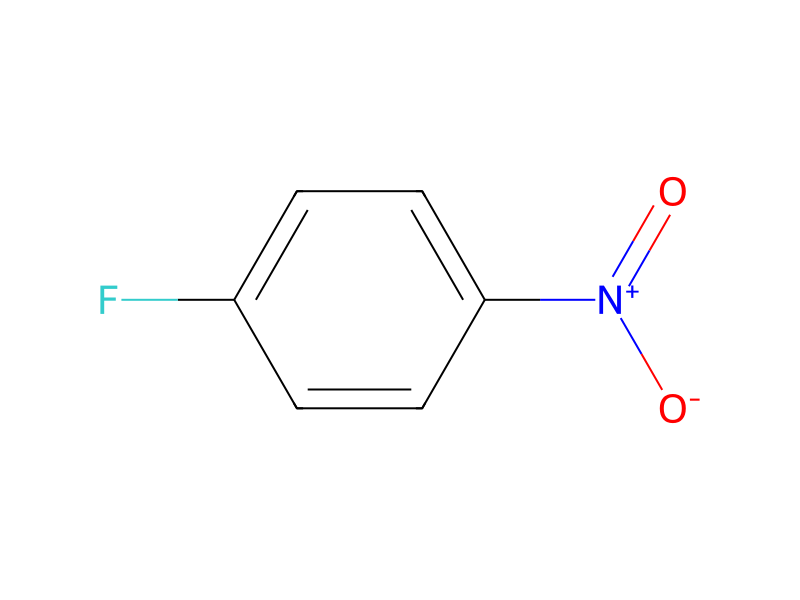
[NH:1]1[C:9]2[CH:8]=[CH:7][N:6]=[CH:5][C:4]=2[N:3]=[CH:2]1.C(=O)([O-])[O-].[K+].[K+].F[C:17]1[CH:22]=[CH:21][C:20]([N+:23]([O-:25])=[O:24])=[CH:19][CH:18]=1>CN(C)C=O.O>[N+:23]([C:20]1[CH:21]=[CH:22][C:17]([N:3]2[C:4]3[CH:5]=[N:6][CH:7]=[CH:8][C:9]=3[N:1]=[CH:2]2)=[CH:18][CH:19]=1)([O-:25])=[O:24].[N+:23]([C:20]1[CH:21]=[CH:22][C:17]([N:1]2[C:9]3[CH:8]=[CH:7][N:6]=[CH:5][C:4]=3[N:3]=[CH:2]2)=[CH:18][CH:19]=1)([O-:25])=[O:24]In 3 mL of dimethylformamide, 119 mg (1.00 mmol) of imidazo[4,5-c]pyridine was dissolved, and 138 mg (1.00 mmol) of potassium carbonate and 141 mg (1.00 mmol) of 4-fluoronitrobenzene were added thereto and the mixture solution was stirred at 80° C. for two hours. The solution was diluted with 10 mL of water, and the formed precipitate was collected by filtration, washed with water, and vacuum dried. The obtained crude product was separated by a silica gel column (Si-10, a product of Kusano Co., Ltd., column 30 cm, dichloromethane:methanol=15:1) to obtain 18.9 mg (8%) of 3-(4-nitrophenyl)-3H-imidazo[4,5-c]pyridine and 66.6 mg (28%) of 1-(4-nitrophenyl)-1H-imidazo[4,5-c]pyridine as yellow solids, respectively.