Reaktionsgleichung

[O:1]1[CH2:6][CH2:5][O:4][C:3]2[CH:7]=[C:8]([C:11](=[O:13])[CH3:12])[CH:9]=[CH:10][C:2]1=2.Cl.[CH3:15][NH:16][CH3:17].[CH2:18]=O>Cl.C(O)C>[O:1]1[CH2:6][CH2:5][O:4][C:3]2[CH:7]=[C:8]([C:11](=[O:13])[CH2:12][CH2:15][N:16]([CH3:18])[CH3:17])[CH:9]=[CH:10][C:2]1=2Komponenten
6
Edukt 3

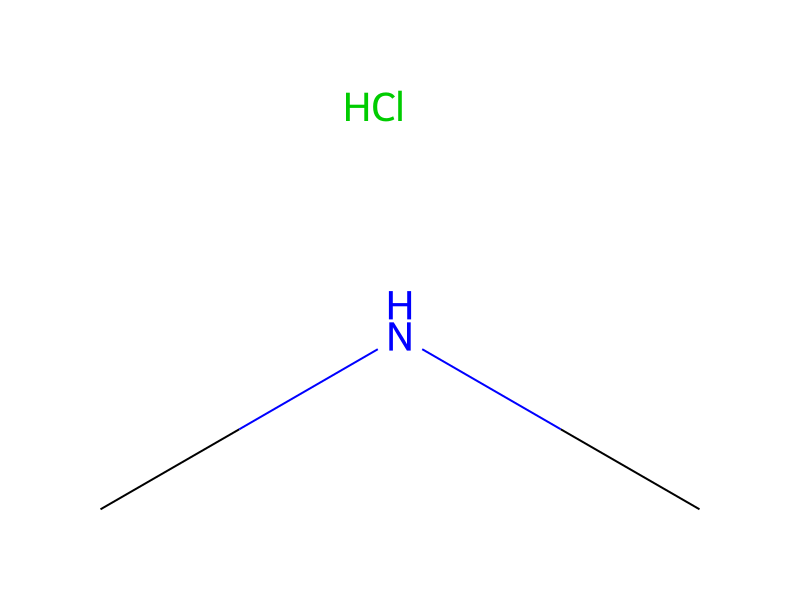

Produkt 1

Reagenzien, Katalysatoren, Lösungsmittel 2


Versuchsvorschrift
A solution of 1-(2,3-dihydrobenzo[b][1,4]dioxin-6-yl)ethanone (XV) (11 mmol), dimethylamine hydrochloride (14 mmol), paraformaldehyde (16 mmol) and 12 N HCl (2 drops) in ethanol (5 mL) was refluxed overnight. The solution was cooled to room temperature and the ethanol was evaporated under vacuum. The residue was treated with ethyl acetate, heated slightly and sonicated to disperse into fine particles. The solids were filtered and dried at room temperature to produce 1-(2,3-dihydrobenzo[b][1,4]dioxin-6-yl)-3-(dimethylamino)propan-1-one (XVI) as a white solid, (82% yield), 1H NMR (CDCl3, 400 MHz): δ ppm 2.77 (s, 6H), 3.41 (m, 2H), 3.56 (m, 2H), 4.25 (m, 4H), 6.85 (m, 1H), 7.45 (m, 2H).
Aufarbeitung
- customthe ethanol was evaporated under vacuum
- additionThe residue was treated with ethyl acetate
- temperatureheated slightly
- customsonicated
- additionto disperse into fine particles
- filtrationThe solids were filtered
- customdried at room temperature
Quellen und Nachweise
- ORD-Eintrag
- ord-4349373024974d779f9d75d81ecb11a8
- Quelldatensatz
- uspto-grants-2013_12
- Patentnummer
- US08609717B2
Verknüpfte Notizen
Wird geladen…