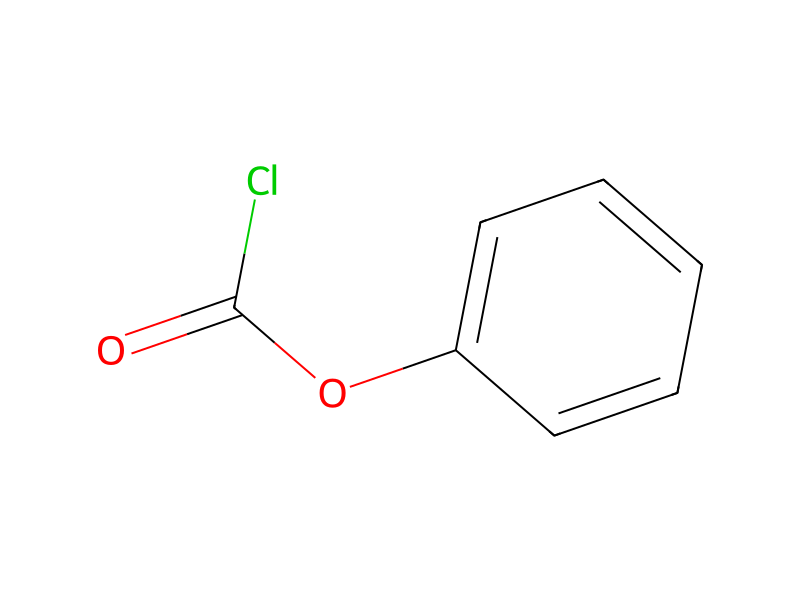
[CH:1]1([C:4]2[CH:8]=[C:7]([NH2:9])[N:6]([C:10]3[CH:15]=[CH:14][CH:13]=[CH:12][CH:11]=3)[N:5]=2)[CH2:3][CH2:2]1.C(N(CC)CC)C.Cl[C:24]([O:26][C:27]1[CH:32]=[CH:31][CH:30]=[CH:29][CH:28]=1)=[O:25]>C1CCCCC1>[CH:1]1([C:4]2[CH:8]=[C:7]([NH:9][C:24](=[O:25])[O:26][C:27]3[CH:32]=[CH:31][CH:30]=[CH:29][CH:28]=3)[N:6]([C:10]3[CH:15]=[CH:14][CH:13]=[CH:12][CH:11]=3)[N:5]=2)[CH2:3][CH2:2]1To a stirred solution of 3-cyclopropyl-1-phenyl-1H-pyrazol-5-amine (1.00 g, 5.03 mmol) and triethylamine (0.66 g, 6.53 mmol) at rt, was added phenyl chloroformate (0.94 g, 6.01 mmol). The reaction mixture was stirred at rt for 15 h. The reaction mixture was partitioned between a mixture of dichloromethane (20 mL) and water (20 mL) and the organic layer was washed thrice with water, dried over sodium sulfate, filtered and concentrated under reduced pressure to give yellow oil. Trituration with cyclohexane afforded phenyl 3-cyclopropyl-1-phenyl-1H-pyrazol-5-ylcarbamate (1.01 g, 63%) as a colorless solid. 1H NMR (400 MHz, DMSO-d6) δ 10.05 (s, 1H), 6.71-7.55 (m, 10H), 6.18 (s, 1H), 1.92 (m, 1H), 0.91 (m, 2H), 0.73 (m, 2H).