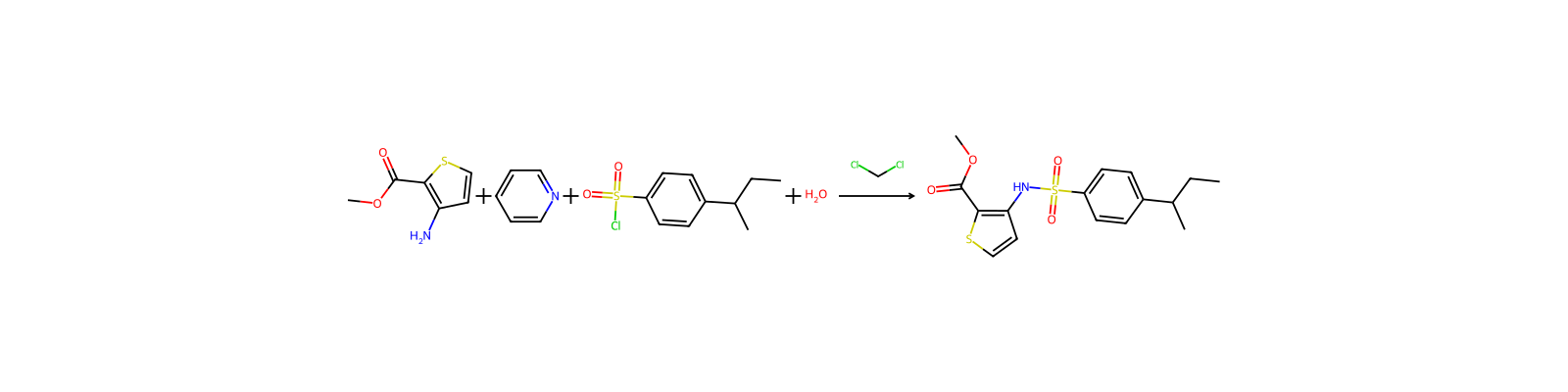
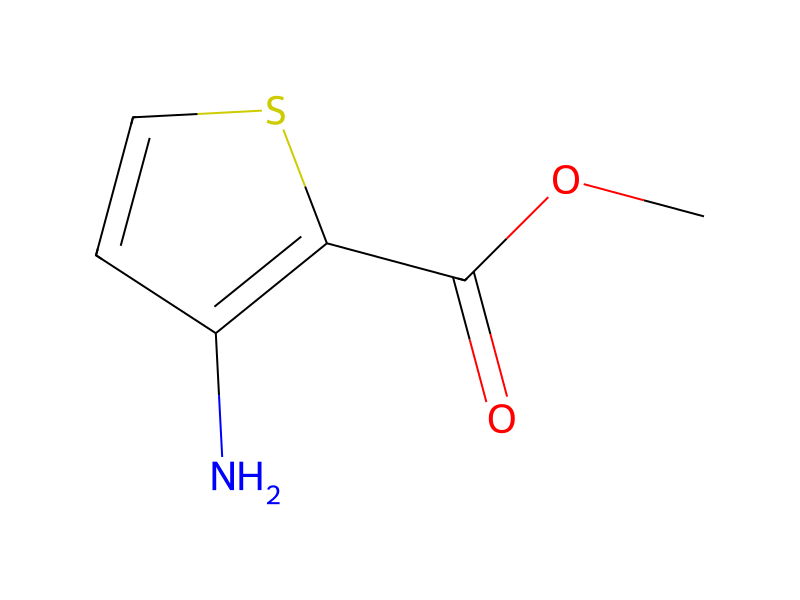
[NH2:1][C:2]1[CH:6]=[CH:5][S:4][C:3]=1[C:7]([O:9][CH3:10])=[O:8].N1C=CC=CC=1.[CH:17]([C:21]1[CH:26]=[CH:25][C:24]([S:27](Cl)(=[O:29])=[O:28])=[CH:23][CH:22]=1)([CH2:19][CH3:20])[CH3:18].O>ClCCl>[CH:17]([C:21]1[CH:26]=[CH:25][C:24]([S:27]([NH:1][C:2]2[CH:6]=[CH:5][S:4][C:3]=2[C:7]([O:9][CH3:10])=[O:8])(=[O:29])=[O:28])=[CH:23][CH:22]=1)([CH2:19][CH3:20])[CH3:18]To a solution of methyl 3-aminothiophene-2-carboxylate (0.68 g; 4.3 mmol) in pyridine (0.52 mL; 6.4 mmol) and anhydrous dichloromethane (15 mL), was added a solution of 51 (1.0 g; 4.3 mmol) in dichloromethane (3 mL). After stirring 16 hours at room temperature, the reaction was mixed with water (50 mL), and the organic phase was separated. The aqueous phase was extracted with dichloromethane (2×10 mL), and the combined organic phases were dried over magnesium sulfate, filtered, and concentrated under reduced pressure. The crude residue was purified by flash chromatography on silica gel eluting with ethyl acetate/hexanes (0 to 25% v/v gradient elution) to yield the title product as a white solid (0.75 g).