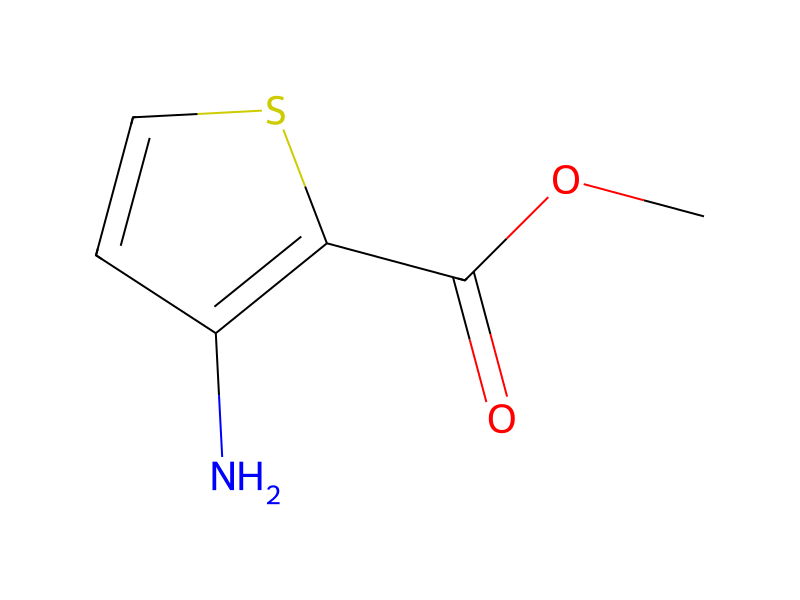
[NH2:1][C:2]1[CH:6]=[CH:5][S:4][C:3]=1[C:7]([O:9][CH3:10])=[O:8].N1C=CC=CC=1.[Br:17][C:18]1[CH:23]=[C:22]([C:24]([F:27])([F:26])[F:25])[CH:21]=[CH:20][C:19]=1[S:28](Cl)(=[O:30])=[O:29]>CN(C)C1C=CN=CC=1.ClCCl>[Br:17][C:18]1[CH:23]=[C:22]([C:24]([F:26])([F:25])[F:27])[CH:21]=[CH:20][C:19]=1[S:28]([NH:1][C:2]1[CH:6]=[CH:5][S:4][C:3]=1[C:7]([O:9][CH3:10])=[O:8])(=[O:30])=[O:29]To a cooled (0° C.) solution of methyl 3-aminothiophene-2-carboxylate (534.0 mg; 3.4 mmol), 4-dimethylaminopyridine (94.3 mg; 0.77 mmol) and pyridine (2.5 mL; 30.9 mmol) in anhydrous dichloromethane (60 mL) was added 2-bromo-4-(trifluoromethyl)benzene-1-sulfonyl chloride (1.0 g; 3.09 mmol) portion-wise. After addition was complete the reaction mixture was stirred at 0° C. for 20 minutes, gradually allowed to war to room temperature, stirred for 16 hours, and then washed with aqueous hydrochloric acid (50 mL; 2N). The organic phase was dried over magnesium sulfate, filtered, and concentrated under reduced pressure. The crude residue was purified by automated silica gel column chromatography (Biotage®) eluting with ethyl acetate/hexanes (0 to 30% v/v over 400 mL gradient elution) to give the title product as a white solid (330 mg).