StartseiteMCPWorkbenchSkills
StartseiteWorkbenchBenachrichtigungenMein Bereich
llms.txt · MCP-AnleitungDatenschutz · Nutzungsbedingungen · Supportv1.8.3
  1. Startseite
  2. /Reaktion

1,4-Dioxane → (2S,4S)-4-[4-(6-Amino-5-benzothiazol-2-ylpyridin-3-yl)-pyrazol-1-yl]-pyrrolidine-2-carboxylic acid

HRID 1926356
Drucken

Reaktionsgleichung

Reaktionsgleichung von HRID 1926356
[S:1]1[C:5]2[CH:6]=[CH:7][CH:8]=[CH:9][C:4]=2[N:3]=[C:2]1[C:10]1[C:11]([NH2:25])=[N:12][CH:13]=[C:14](B2OC(C)(C)C(C)(C)O2)[CH:15]=1.C[O:27][C:28]([C@@H:30]1[CH2:34][C@H:33]([N:35]2[CH:39]=[C:38](I)[CH:37]=[N:36]2)[CH2:32][N:31]1C(OCC1C=CC=CC=1)=O)=[O:29].[F-].[K+].O1CCOCC1>C1C=CC([P]([Pd]([P](C2C=CC=CC=2)(C2C=CC=CC=2)C2C=CC=CC=2)([P](C2C=CC=CC=2)(C2C=CC=CC=2)C2C=CC=CC=2)[P](C2C=CC=CC=2)(C2C=CC=CC=2)C2C=CC=CC=2)(C2C=CC=CC=2)C2C=CC=CC=2)=CC=1.O>[NH2:25][C:11]1[N:12]=[CH:13][C:14]([C:38]2[CH:37]=[N:36][N:35]([C@@H:33]3[CH2:32][NH:31][C@H:30]([C:28]([OH:29])=[O:27])[CH2:34]3)[CH:39]=2)=[CH:15][C:10]=1[C:2]1[S:1][C:5]2[CH:6]=[CH:7][CH:8]=[CH:9][C:4]=2[N:3]=1

KomponentenReaktionsbedingungenVersuchsvorschriftAufarbeitungQuellen und NachweiseNotizen zur Reaktion

Komponenten

7

Edukt 4

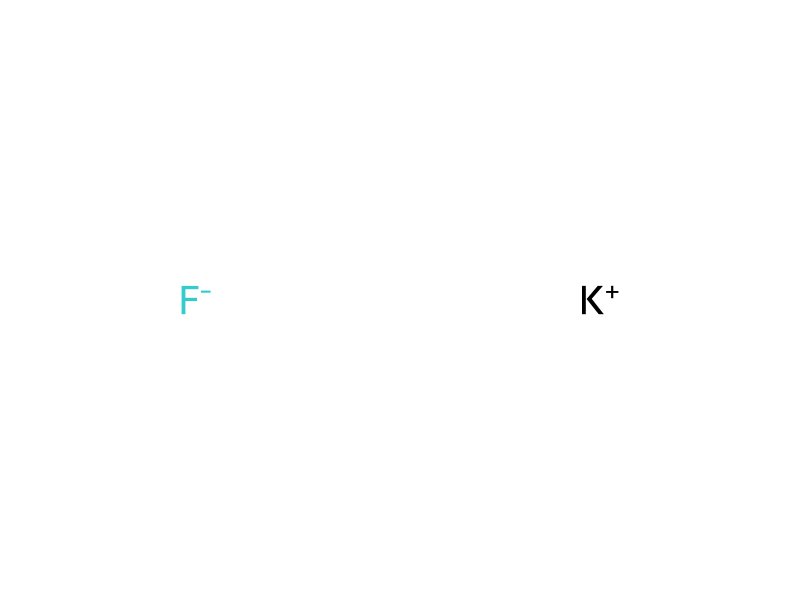
HCID 312751,4-DioxaneHCID 522689Potassium FluorideHCID 574165133-(1,3-Benzothiazol-2-yl)-5-(4,4,5,5-tetramethyl-1,3,2-dioxaborolan-2-yl)pyridin-2-amineHCID 67520517(2S,4S)-4-(4-iodopyrazol-1-yl)-pyrrolidine-1,2-dicarboxylic acid 1-benzyl ester 2-methyl ester

Produkt 1

HCID 44160252
(2S,4S)-4-[4-(6-Amino-5-benzothiazol-2-ylpyridin-3-yl)-pyrazol-1-yl]-pyrrolidine-2-carboxylic acid

Reagenzien, Katalysatoren, Lösungsmittel 2

HCID 178418397HCID 178418397, VerbindungKatalysatorHCID 962WaterLösungsmittel

Reaktionsbedingungen

Temperatur
60 °C

Versuchsvorschrift

A mixture of 3-benzothiazol-2-yl-5-(4,4,5,5-tetramethyl-[1,3,2]dioxaborolan-2-yl)-pyridin-2-ylamine (BB8) (200 mg, 0.566 mmol), (2S,4S)-4-(4-iodopyrazol-1-yl)-pyrrolidine-1,2-dicarboxylic acid 1-benzyl ester 2-methyl ester (309.0 mg, 0.679 mmol), Pd(PPh3)4 (60 mg, 0.06 mmol), potassium fluoride (98.7 mg, 1.70 mmol), and 4:1 dioxane:water (5 mL) was heated in the microwave reactor at 85° C. for 30 min. The material was concentrated in vacuo, then dry-loaded onto silica gel for column chromatography. The product was eluted with 2→5% MeOH/DCM, and the fractions containing the product were concentrated in vacuo. The material was dissolved in conc. HCl, transferred to a sealed tube and heated at 60° C. for 2 h. The solvent was removed using the corrosive pump to afford the title compound as a brown solid. 1H NMR (400 MHz, CD3OD): δ=2.73 (ddd, J=14.0, 6.5, 4.5 Hz, 1H), 3.07 (ddd, J=14.1, 10.0, 7.5 Hz, 1H), 3.81-3.93 (m, 2H), 4.68 (dd, J=10.0, 6.7 Hz, 1H), 5.36 (ddd, J=6.8, 3.8, 3.5 Hz, 1H), 7.56-7.63 (m, 2H), 8.05 (s, 1H), 8.08-8.11 (m, 1H), 8.16 (d, J=7.6 Hz, 1H), 8.32-8.36 (m, 2H), 8.72 (d, J=2.0 Hz, 1H). MS (ES′): m/z=407.13 (100) [MH+]. HPLC: tR=2.28 min (ZQ2, polar—5 min).

Aufarbeitung

  1. concentrationThe material was concentrated in vacuo
  2. washThe product was eluted with 2→5% MeOH/DCM
  3. additionthe fractions containing the product
  4. concentrationwere concentrated in vacuo
  5. dissolutionThe material was dissolved in conc. HCl
  6. customtransferred to a sealed tube
  7. customThe solvent was removed

Quellen und Nachweise

ORD-Eintrag
ord-50b95182a4154d57bf58742bf3738b16
Quelldatensatz
uspto-grants-2012_05
DOI
10.6084/m9.figshare.5104873.v1
Patentnummer
US08178668B2

Notizen zur Reaktion

Auf dieser SeiteKomponentenReaktionsbedingungenVersuchsvorschriftAufarbeitungQuellen und NachweiseNotizen zur Reaktion

