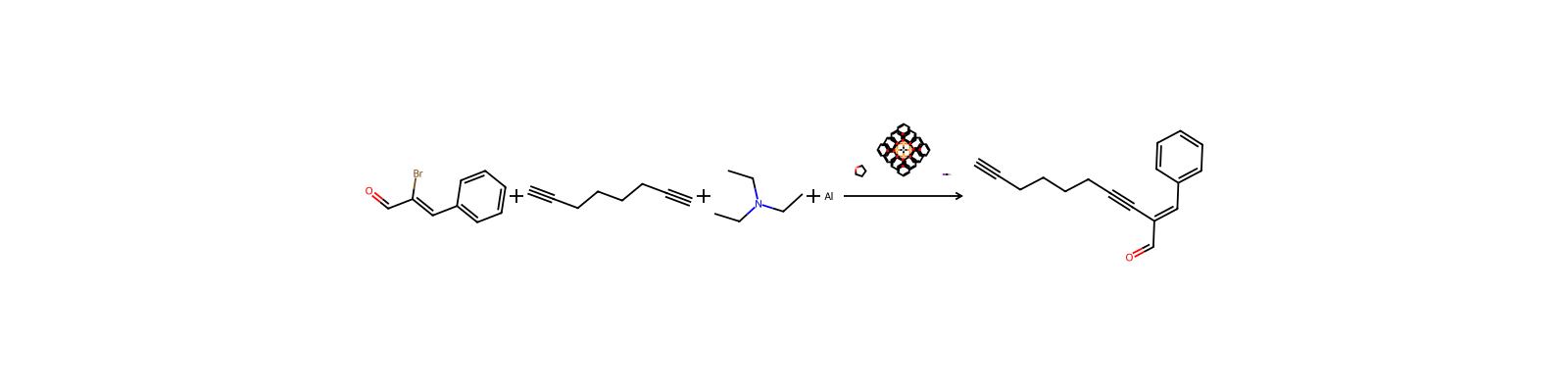
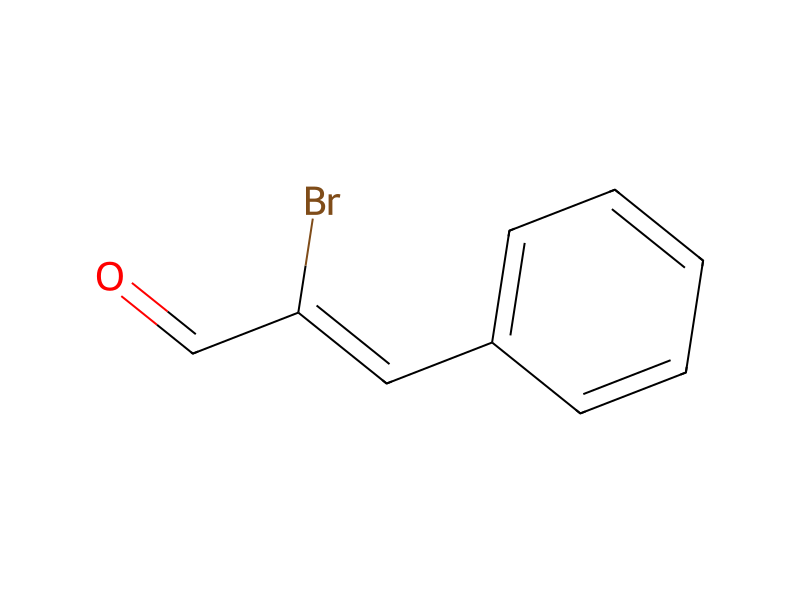
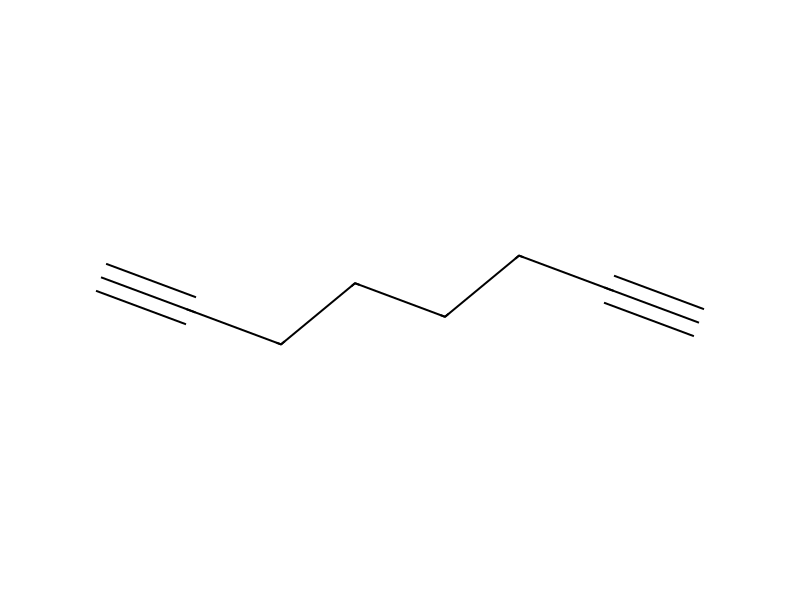
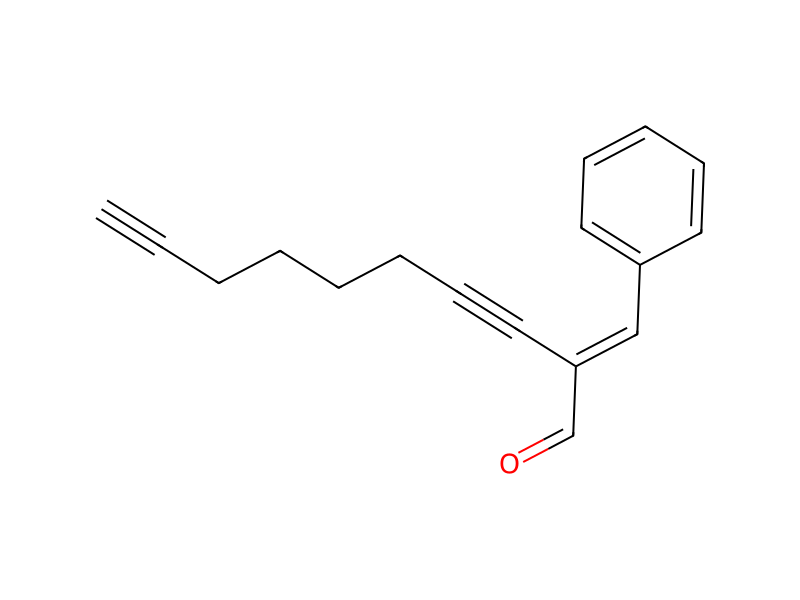
To a solution of Pd(PPh3)4 (0.55 g, 0.24 mmol) and α-bromocinnamaldehyde Compound 1 (2.08 g, 4.74 mmol) in degassed THF (170 mL) cooled in an ice-water bath was added a solution of 1,7-octadiyne (2.23 g, 9.48 mmol), triethylamine (15 mL), and CuI (0.36 g, 0.95 mmol) in degassed THF (30 mL) via a syringe under a nitrogen atmosphere. The reaction flask was then covered by a sheet of aluminum foil. After stirring at room temperature for 8 hours the reaction was quenched with saturated aqueous NH4Cl (50 mL) and diluted with EtOAc (100 mL). The organic layer was washed with brine, dried over anhydrous MgSO4, filtered, and concentrated in vacuo. The residue was purified by flash column chromatography (silica gel, 10 percent EtOAc in hexane) to give 2.13 g (91 percent) of Compound 2: yellow oil; Rf=0.50 (15 percent EtOAc in hexane); IR (neat) 3294, 2944, 2230, 2116, 1692, 1598, 1450, 1324, 1180 cm−1; 1H NMR (300 MHz, CDCl3) δ9.56 (s, 1H), 8.11-8.07 (m, 2H), 7.48-7.43 (m, 3H), 7.43 (s, 1H), 2.60 (t, J=6.65 Hz, 2H), 2.27 (td, J=6.78, 2.64 Hz, 2H), 1.97 (t, J=2.64 Hz, 1H), 1.86-1.69 (m, 4H); 13C NMR (75 MHz, CDCl3) δ192.4, 151.8, 134.9, 132.0, 131.1, 129.4, 124.1, 103.4, 84.6, 75.4, 69.4, 28.2, 28.0, 20.3, 18.7; MS (+FAB) m/z (relative intensity) 237 (M+H+, 100).