StartseiteMCPWorkbenchSkills
StartseiteWorkbenchBenachrichtigungenMein Bereich
llms.txt · MCP-AnleitungDatenschutz · Nutzungsbedingungen · Supportv1.8.3
  1. Startseite
  2. /Reaktion

2-Bromopyridine → Ethyl 5-(pyridin-2-yl)isoxazole-3-carboxylate

HRID 1951934
Drucken

Reaktionsgleichung

Reaktionsgleichung von HRID 1951934
Br[C:2]1[CH:7]=[CH:6][CH:5]=[CH:4][N:3]=1.C([Sn](CCCC)(CCCC)[C:13]1[O:17][N:16]=[C:15]([C:18]([O:20][CH2:21][CH3:22])=[O:19])[CH:14]=1)CCC.F[P-](F)(F)(F)(F)F.C([N+]1C=CN(C)C=1)CCC>Cl[Pd](Cl)([P](C1C=CC=CC=1)(C1C=CC=CC=1)C1C=CC=CC=1)[P](C1C=CC=CC=1)(C1C=CC=CC=1)C1C=CC=CC=1.O1CCOCC1>[N:3]1[CH:4]=[CH:5][CH:6]=[CH:7][C:2]=1[C:13]1[O:17][N:16]=[C:15]([C:18]([O:20][CH2:21][CH3:22])=[O:19])[CH:14]=1
KomponentenVersuchsvorschriftAufarbeitungQuellen und NachweiseNotizen zur Reaktion

Komponenten

6

Edukt 3

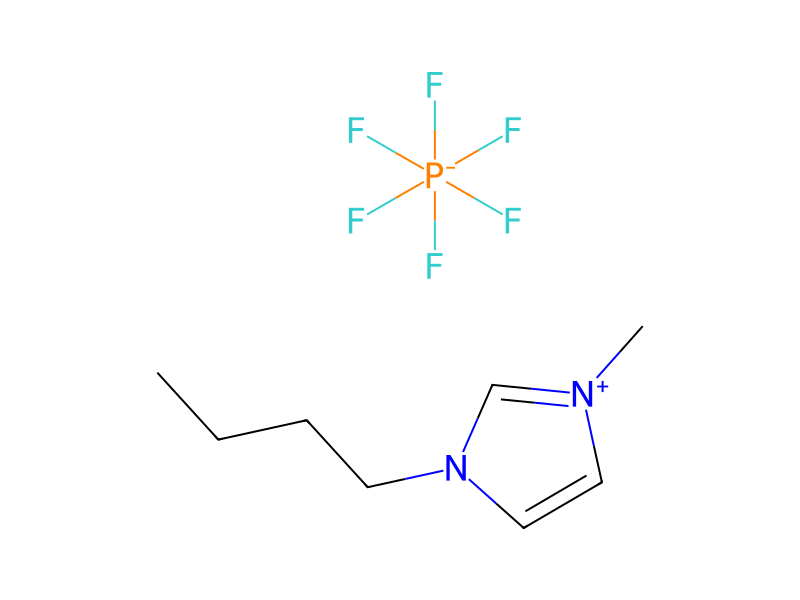
HCID 79732-BromopyridineHCID 27341741-Butyl-3-methylimidazolium hexafluorophosphateHCID 2763256Ethyl 5-(tributylstannyl)-1,2-oxazole-3-carboxylate

Produkt 1

HCID 23006229Ethyl 5-(pyridin-2-yl)isoxazole-3-carboxylateAusbeute 43 %

Reagenzien, Katalysatoren, Lösungsmittel 2

HCID 178418476
HCID 178418476, Verbindung
Katalysator
HCID 312751,4-DioxaneLösungsmittel

Versuchsvorschrift

A 20 mL BIOTAGE® microwave vial and stir bar were oven dried and cooled under a stream of dry nitrogen. The vial was flushed with argon and charged with dichlorobis(triphenylphosphine)-palladium(II) (96 mg, 0.137 mmol) and dioxane (12 mL) followed by sparging with argon for several minutes. 2-Bromopyridine (0.217 mL, 2.28 mmol), ethyl 5-(tributylstannyl)isoxazole-3-carboxylate (980 mg, 2.28 mmol), and 1-butyl-3-methylimidazolium hexafluorophosphate (0.047 mL, 0.228 mmol) were added and sparging was continued for several minutes. The vial was sealed and processed in a BIOTAGE® microwave at 150° C. for 60 minutes. The solution was cooled, evaporated, and the residue was loaded onto a 120 g Isco silica gel cartridge, which was pre-equilibrated with hexanes, and then eluted with 0-50% EtOAc/Hexanes. The product fractions were evaporated to give a pale yellow oil, which solidified after being placed under high vacuum to afford ethyl 5-(pyridin-2-yl)isoxazole-3-carboxylate (212 mg, 0.972 mmol, 43% yield). The product had an HPLC retention. time=2.48 min.—Column: YMC S5 COMBISCREEN® 4.6×50 mm (4 min.); Solvent A=10% MeOH, 90% H2O, 0.1% TFA; Solvent B=90% MeOH, 10% H2O, 0.1% TFA. LC/MS M+1=219.1. 1H NMR (400 MHz, chloroform-d) δ ppm 1.42-1.48 (m, 3H), 4.49 (q, J=7.28 Hz, 2H), 7.31 (s, 1H), 7.39 (ddd, J=7.53, 4.89, 1.13 Hz, 1H), 7.87 (td, J=7.78, 1.76 Hz, 1H), 7.96 (d, J=7.78 Hz, 1H), and 8.73 (d, 1H).

Aufarbeitung

  1. customdried
  2. temperaturecooled under a stream of dry nitrogen
  3. customThe vial was flushed with argon
  4. customby sparging with argon for several minutes
  5. customsparging
  6. waitwas continued for several minutes
  7. customThe vial was sealed
  8. temperatureThe solution was cooled
  9. customevaporated
  10. washeluted with 0-50% EtOAc/Hexanes
  11. customThe product fractions were evaporated
  12. customto give a pale yellow oil, which

Quellen und Nachweise

ORD-Eintrag
ord-b2ea9ee5b3984f71a9b2c7872c5f90ac
Quelldatensatz
uspto-grants-2013_03
DOI
10.6084/m9.figshare.5104873.v1
Patentnummer
US08404672B2

Notizen zur Reaktion

Auf dieser SeiteKomponentenVersuchsvorschriftAufarbeitungQuellen und NachweiseNotizen zur Reaktion