Reaktionsgleichung

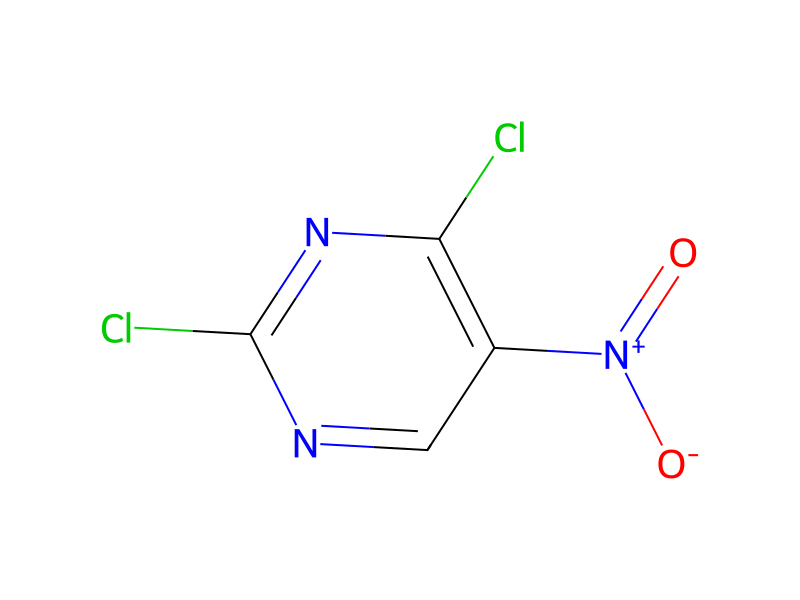
[Cl:1][C:2]1[N:7]=[C:6](Cl)[C:5]([N+:9]([O-:11])=[O:10])=[CH:4][N:3]=1.[CH2:12]([O:14][C:15](=[O:21])[CH2:16][NH:17][CH:18]([CH3:20])[CH3:19])[CH3:13].C(=O)([O-])[O-].[K+].[K+]>CC(C)=O.O>[CH2:12]([O:14][C:15](=[O:21])[CH2:16][N:17]([C:6]1[C:5]([N+:9]([O-:11])=[O:10])=[CH:4][N:3]=[C:2]([Cl:1])[N:7]=1)[CH:18]([CH3:20])[CH3:19])[CH3:13]Komponenten
6
Edukt 3


Produkt 1

Reagenzien, Katalysatoren, Lösungsmittel 2


Versuchsvorschrift
2,4-Dichloro-5-nitro-pyrimidine (40 g; 0.207 mol) was added to a cooled (0-10° C.) solution of isopropylamino-acetic acid ethyl ester (30 g; 0.207 mol) in 300 ml of acetone. A solution of potassium carbonate (28.5 g; 0.207 mol) in water was then added to the cooled reaction mixture. The reaction mixture was allowed to reach room temperature and was maintained at that temperature until complete conversion of the starting material into the desired product.
Aufarbeitung
- customto reach room temperature
Quellen und Nachweise
- ORD-Eintrag
- ord-412617fd421040c9b5955d19df5f669e
- Quelldatensatz
- uspto-grants-2013_04
- Patentnummer
- US08410100B2
Verknüpfte Notizen
Wird geladen…