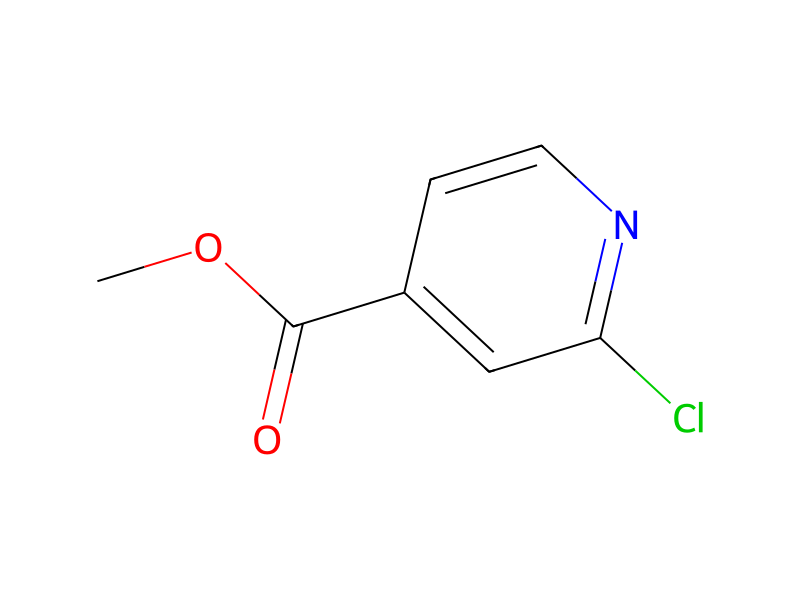
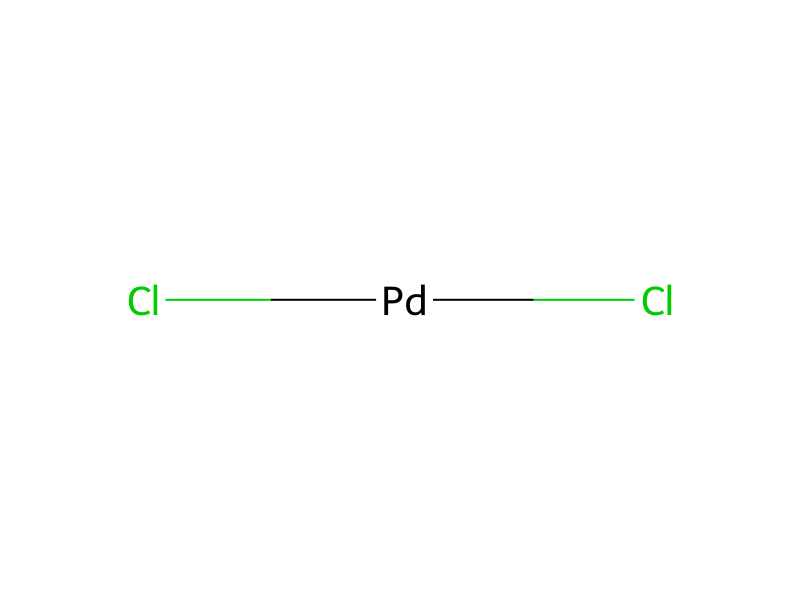
Methyl 2-chloroisonicotinate (3.01 g, 17.53 mmol), PdCl2 (dppf) (0.317 g, 0.44 mmol) and potassium carbonate (1.322 mL, 21.91 mmol) were distributed equally over 3 microwave reaction vials. 2-(4-Chloro-3,5-difluorophenyl)-4,4,5,5-tetramethyl-1,3,2-dioxaborolane (4.01 g, 14.61 mmol) was dissolved in methanol (45 mL) to give a colorless solution. The solution was split into 3 equal portions and added to the vials. The vials were capped and heated in a single node microwave reactor at 100° C. for 10 min each. The content of the vials was combined and the solvent evaporated. The residue was dissolved in DCM and washed with water. The organic phase was filtered through a phase separator and evaporated. The residue was dissolved in MTBE and solids were filtered off. Hydrogen chloride (4 M in dioxane, 3.65 mL, 14.61 mmol) was added and the precipitate collected to yield methyl 2-(4-chloro-3,5-difluorophenyl)isonicotinate hydrochloride (1.72 g, 42%) as a solid. 1H NMR (400 MHz, cdcl3) δ 4.06 (s, 3H), 7.86 (d, 2H), 8.09 (d, 1H), 8.39 (s, 1H), 8.96 (d, 1H). MS m/z 284 (M+H)+