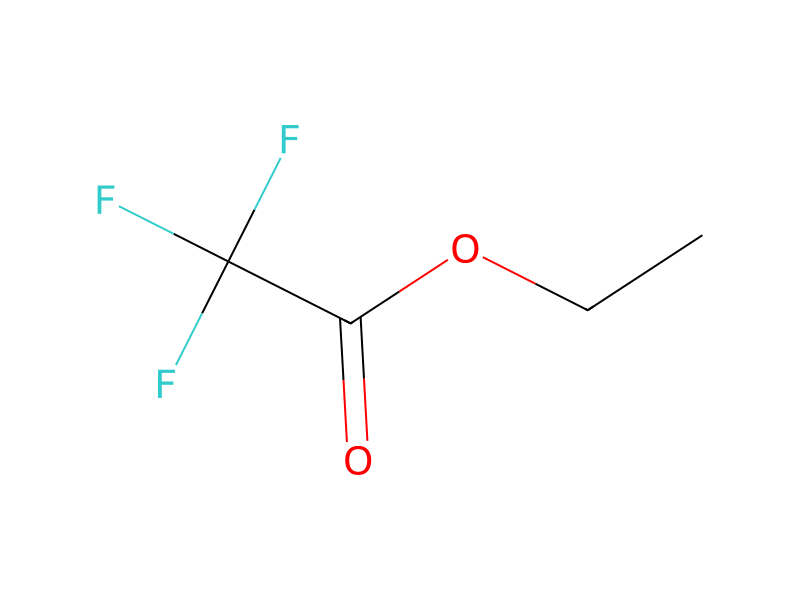
To a −40° C. mixture of N-(4-chlorophenyl)-2,2-dimethylpropanamide (4.0 g, 18.9 mmol) and anhydrous tetrahydrofuran (38 ml), n-butyllithium (1.6M, 45.2 mmol) was added under nitrogen atmosphere. The reaction was stirred for 30 minutes at −40° C. and allowed to warm to 0° C. where upon the yellow homogenous mixture turned gradually darker to a deep yellow color. After 30 minutes of stirring at 0° C., the reaction was cooled to 40° C. Ethyl trifluoroacetate (6.1 g, 43.5 mmol) was added to the mixture and allowed to warm to room temperature overnight. The reaction was quenched with water (100 ml) and saturated aqueous ammonium chloride solution (80 ml). The aqueous layer was extracted with ethyl acetate (3×75 ml). Combined organic extracts were dried over MgSO4, filtered and concentrated in vacuo to afford a dark yellow oil. Flash chromatography on silica gel (0-50% ethyl acetate/hexanes) afforded N-[4-chloro-2-(trifluoroacetyl)phenyl]-2,2-dimethyl-propanamide. 1H NMR (CDCl3, 400 MHz) δ 11.15 (s), 8.89 (d, J=9.2 Hz, 1H), 7.92 (m, 1H), 7.65 (dd, J=2.4 and 9.2 Hz, 1H), 1.36 (s, 9H). MS (Electrospray): m/z 308.0 (M+).