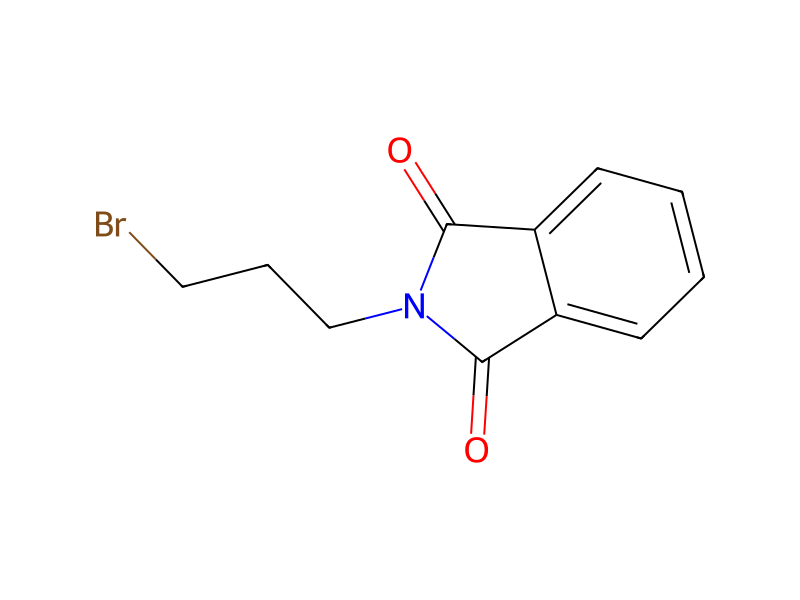
[H-].[Na+].[C:3]([O:7][C:8]([N:10]1[CH2:15][CH2:14][NH:13][C:12](=[O:16])[CH2:11]1)=[O:9])([CH3:6])([CH3:5])[CH3:4].Br[CH2:18][CH2:19][CH2:20][N:21]1[C:25](=[O:26])[C:24]2=[CH:27][CH:28]=[CH:29][CH:30]=[C:23]2[C:22]1=[O:31].O>CN(C)C=O>[C:3]([O:7][C:8]([N:10]1[CH2:15][CH2:14][N:13]([CH2:18][CH2:19][CH2:20][N:21]2[C:25](=[O:26])[C:24]3=[CH:27][CH:28]=[CH:29][CH:30]=[C:23]3[C:22]2=[O:31])[C:12](=[O:16])[CH2:11]1)=[O:9])([CH3:6])([CH3:4])[CH3:5]Sodium hydride (60% in oil, 1.78 g, 44.5 mmol) was added in a small portions to a stirred solution of 4-tert-butoxycarbonyl-2-oxopiperazine (8.00 g, 40.0 mmol) in N,N-dimethylformamide (100 ml) at room temperature and the mixture was stirred at room temperature for 1 hour. Then, N-(3-bromopropyl)phthalimide (12.5 g, 46.6 mmol) was added to the mixture. After stirring at room temperature for 1 hour, the reaction mixture was poured into water and extracted with ethyl acetate. The extract was successively washed with water, brine, dried over MgSO4 and concentrated in vacuo. The residue was chromatographed on silica gel (150 g) with hexane-ehtyl acetate (1:1) to give 4-tert-butoxycarbonyl-1-(3-phthalimidopropan-1-yl)-2-oxopiperazine as a colorless oil (9.02 g, 55%).