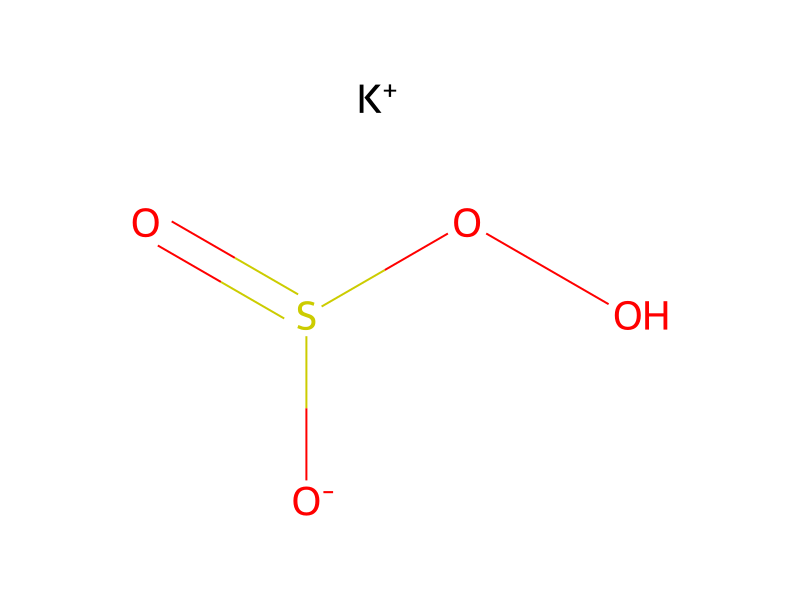
2-Methylpropyl[4-(3,6-dihydro-2H-thiopyran-4-yl)-3-fluorophenyl]carbamate in methanol (250 ml) is added to a slurry of oxone (140.8 g, 229.1 mmol, 1.5 equiv.) in a slurry of water (250 ml). Acetone (375 ml) is added to the reaction mixture and an exotherm of 30° to give 53° is noticed. The reaction mixture is stirred for 3 hr, during which time the reaction gradually cooled to 25°. The slurry is quenched with aqueous sodium bisulfite (10%, 250 ml) and stirred 1 hr. The slurry is filtered to remove salts and the cake washed with methylene chloride (250 ml) followed by water (250 ml). The filtrate is separated into two phases and the lower organic phase is collected. The aqueous phase is washed with methylene chloride (2×250 ml). The combined organic phases are washed with saline (250 ml) and then concentrated. The concentrate is dried under reduced pressure overnight to give the title compound, TLC Rf=0.73 (methanol/methylene chloride, 5/95); mp=147-149°; NMR (CDCl3) d 7.36, 7.13, 7.03, 6.92, 5.75, 3.96, 3.80, 3.22, 3.10, 2.02-1.93 and 0.96; CMR (CDCl3) d 159.5, 153.4, 139.5, 134.1, 129.5, 123.0, 119.1, 113.9, 106.2, 71.6, 50.7, 47.8, 29.2, 27.9 and 18.9; MS (CI, NH3) m/z (relative intensity) 359 (100), 341 (5), 295 (18), 285 (20), 277 (23) and 178 (18).