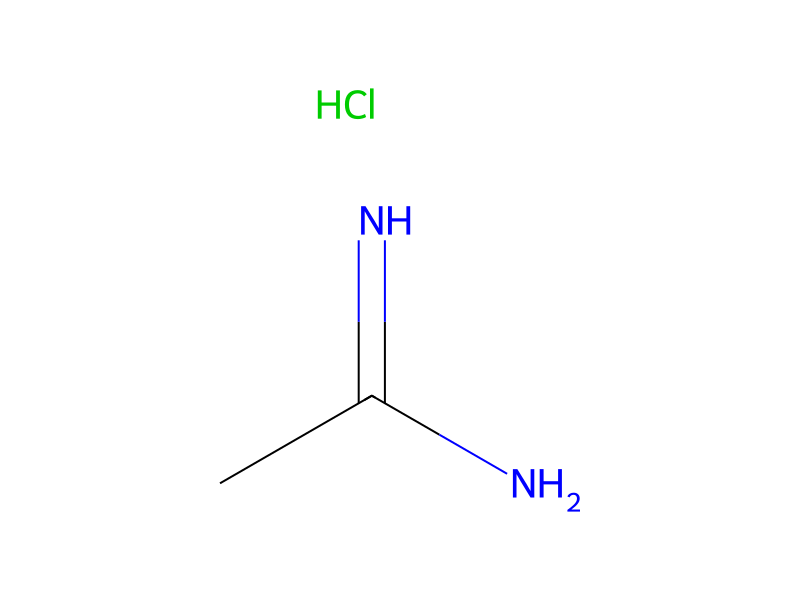
[ClH:1].[C:2]([NH2:5])(=[NH:4])[CH3:3].C[O-].[Na+].[C:9]1([C:15]2[C:21]3[CH:22]=[CH:23][CH:24]=[CH:25][C:20]=3[C:19](=O)[C:18](=[CH:27]N(C)C)[CH2:17][N:16]=2)[CH:14]=[CH:13][CH:12]=[CH:11][CH:10]=1.Cl>CO.C(Cl)Cl>[ClH:1].[ClH:1].[CH3:3][C:2]1[N:4]=[CH:27][C:18]2[CH2:17][N:16]=[C:15]([C:9]3[CH:14]=[CH:13][CH:12]=[CH:11][CH:10]=3)[C:21]3[CH:22]=[CH:23][CH:24]=[CH:25][C:20]=3[C:19]=2[N:5]=1In five equal portions 9.0 g (95 mmole) of acetamidine hydrochloride and 22.5 ml (0.1 mole) of a 4.46 M methanol solution of sodium methoxide was added over 3 hr to a solution of 4.5 g (15 mmole) of 1-phenyl-3,4-dihydro-4-[(dimethylamino)methylene]-5H-2-benzazepin-5-one in 180 ml of methanol and 180 ml of methylene chloride. The methylene chloride solution was washed with water, dried over anhydrous sodium sulfate, and concentrated at reduced pressure to give an oil. The oil was dissolved in an excess of 6% methanolic hydrogen chloride and the solvent was removed at reduced pressure to dryness. The residue was crystallized from a mixture of ether and methylene chloride to give a white solid mp 211°-221° C. Recrystallization from a mixture of methanol and ether gave white flakes, mp 217°-227° C.