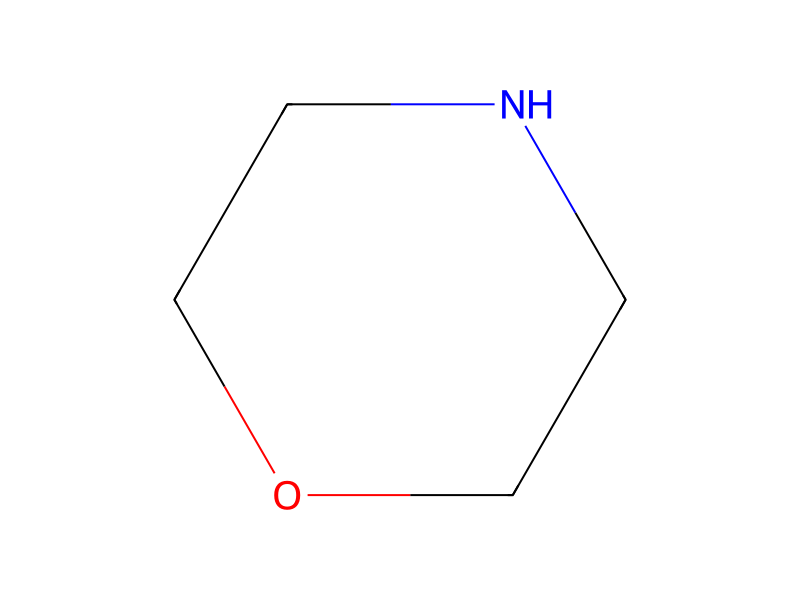
Cl[C:2]1[CH:7]=[C:6]([C:8]2[O:9][C:10]([C:13]3[C:14]([C:19]4[CH:24]=[CH:23][CH:22]=[CH:21][CH:20]=4)=[N:15][O:16][C:17]=3[CH3:18])=[N:11][N:12]=2)[CH:5]=[CH:4][N:3]=1.[NH:25]1[CH2:30][CH2:29][O:28][CH2:27][CH2:26]1>CS(C)=O>[CH3:18][C:17]1[O:16][N:15]=[C:14]([C:19]2[CH:24]=[CH:23][CH:22]=[CH:21][CH:20]=2)[C:13]=1[C:10]1[O:9][C:8]([C:6]2[CH:5]=[CH:4][N:3]=[C:2]([N:25]3[CH2:30][CH2:29][O:28][CH2:27][CH2:26]3)[CH:7]=2)=[N:12][N:11]=1To a solution of 2-chloro-4-[5-(5-methyl-3-phenyl-isoxazol-4-yl)-[1,3,4]oxadiazol-2-yl]-pyridine (200 mg, 0.59 mmol) in DMSO (2 mL) was added morpholine (257 μL, 2.95 mmol) and stirred for 18 h under an argon atmosphere at 170° C. After cooling to ambient temperature the resulting dark brown solution was extracted with ethyl acetate (20 mL) and aqueous sodium carbonate (saturated, 20 mL). The aqueous layer was extracted with ethyl acetate (20 mL) and the combined organic layers were washed with water (20 mL) and brine (20 mL). Drying over sodium sulfate and purification by chromatography (SiO2, heptane:ethyl acetate:dichloromethane=70:10:20 to 40:40:20) afforded the title compound (166 mg, 72%) as a white solid. MS: m/e=390.1 [M+H]+.