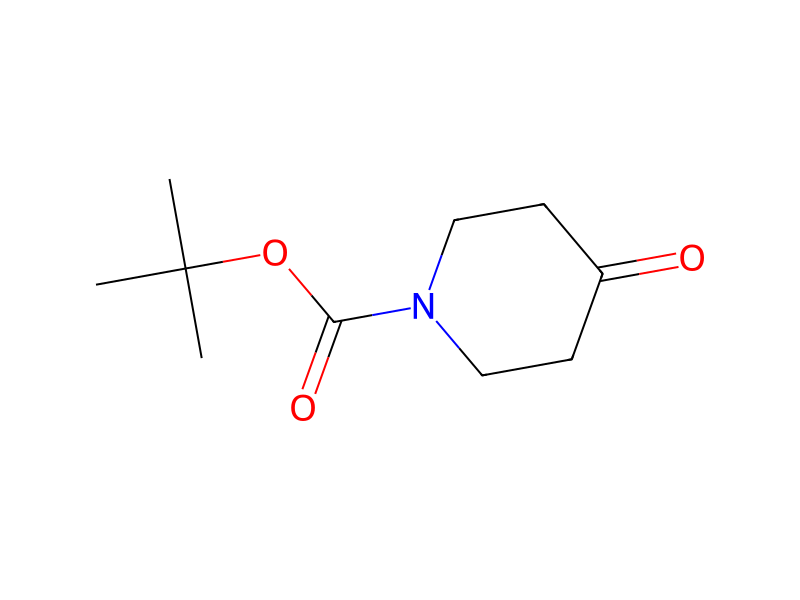
Br[C:2]1[C:12]2[C:13]3[C:5]([CH:6]=[CH:7][C:8]=3[CH:9]=[CH:10][CH:11]=2)=[CH:4][CH:3]=1.C([Li])CCC.[O:19]=[C:20]1[CH2:25][CH2:24][N:23]([C:26]([O:28][C:29]([CH3:32])([CH3:31])[CH3:30])=[O:27])[CH2:22][CH2:21]1.[Cl-].[NH4+]>C1COCC1>[CH2:7]1[C:8]2=[C:13]3[C:12](=[CH:11][CH:10]=[CH:9]2)[C:2]([C:20]2([OH:19])[CH2:21][CH2:22][N:23]([C:26]([O:28][C:29]([CH3:31])([CH3:30])[CH3:32])=[O:27])[CH2:24][CH2:25]2)=[CH:3][CH:4]=[C:5]3[CH2:6]1To a solution of 5-bromoacenaphthylene (1.00 g, 4.29 mmol) in dry THF (20 mL), under nitrogen at −78° C., was added a solution of n-butyllithium (2.5M in hexanes) (1.89 mL, 4.72 mmol) over a period of 30 min. The resulting deep red solution was left to stir for a further 30 minutes at −78° C. A solution of tert-butyl 4-oxo-1-piperidinecarboxylate (0.94 g, 4.72 mmol) in dry THF (10 mL) was then added over 30 min. After 2.5 h a cooled solution of saturated ammonium chloride (30 mL) was added, the reaction mixture allowed to warm to room temperature and then extracted with diethyl ether. The combined organic extracts were dried (Na2SO4) and concentrated in vacuo to yield a thick, yellowish tan oil. This oil was purified by flash chromatography on silica, eluting with a methanol/dichloromethane gradient, to yield tert-butyl 4-(1,2-dihydro-5-acenaphthylenyl)-4-hydroxy-1-piperidinecarboxylate as a sticky yellow residue.