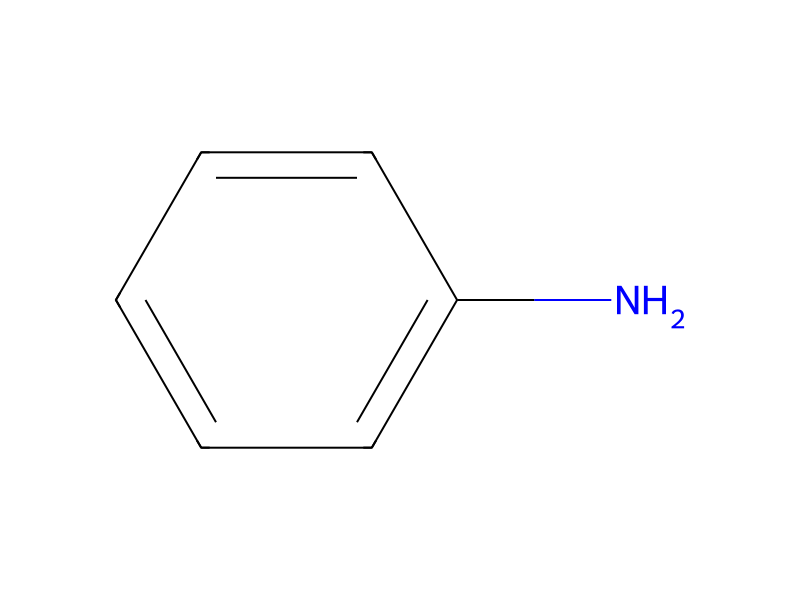
Cl[C:2]1[C:11]2[C:6](=[CH:7][C:8]([Cl:12])=[CH:9][CH:10]=2)[N:5]=[CH:4][N:3]=1.[NH2:13][C:14]1[CH:19]=[CH:18][CH:17]=[CH:16][CH:15]=1.C(N(CC)CC)C.O>C1C=CC=CC=1>[NH:13]([C:2]1[C:11]2[C:6](=[CH:7][C:8]([Cl:12])=[CH:9][CH:10]=2)[N:5]=[CH:4][N:3]=1)[C:14]1[CH:19]=[CH:18][CH:17]=[CH:16][CH:15]=18.0 g of 4,7-dichloroquinazoline were dissolved in 250 ml of benzene, and then 4.0 g of aniline and 4.8 g of triethylamine were added to the solution. The resulting mixture was heated to reflux for 5 hours, with stirring. After completion of the reaction, 200 ml of water were added to the reaction mixture. The mixture was shaken and the benzene phase was separated and dried over anhydrous sodium sulphate. The benzene was distilled off and the resulting crystals were recrystallized from ethyl acetate to give 8.5 g (yield 83%) of the desired Compound No. 5 in the form of colourless granules having a melting point of 215°-217° C.