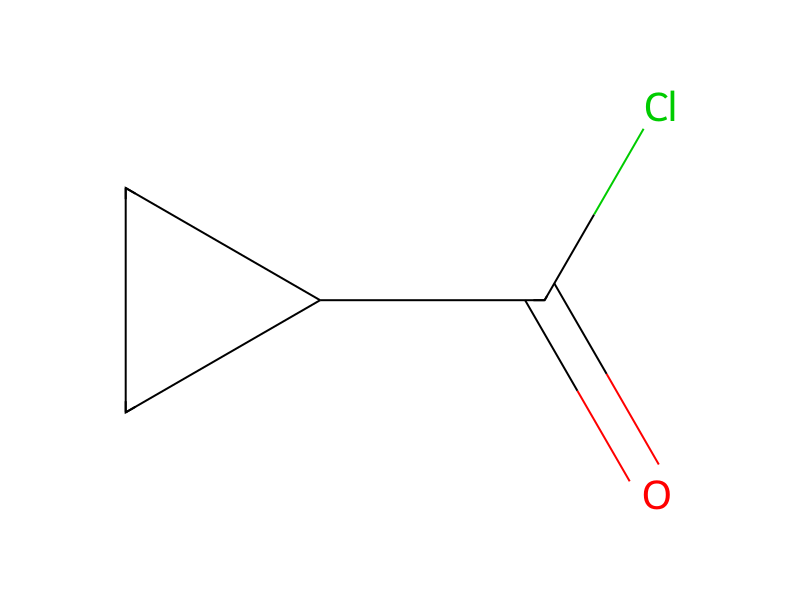
To a mixture of 2-amino-3-hydroxybenzoic acid hydrobromide (0.25 g, 1.07 mmol) and cyclopropanecarbonyl chloride (0.10 mL, 1.07 mmol) in dichloromethane (8 mL) was added triethylamine (0.60 mL, 4.28 mmol) dropwise, then the reaction mixture was stirred at room temperature for 12 h. The reaction mixture was diluted with dichloromethane, and then washed with 2 N HCl. The aqueous layer was extracted with dichloromethane. The combined organic layers were washed with brine, dried (Na2SO4), filtered and concentrated. The crude product was dissolved in toluene (8 mL) and the solution was treated with p-toluenesulfonic acid monohydrate (204 mg, 1.07 mmol). The reaction mixture was then heated to reflux for 5 h. The reaction was cooled to room temperature, poured into water and extracted with ethyl acetate. The organic layer was separated then washed with water, brine, dried (Na2SO4), filtered and concentrated. The crude product was purified by column chromatography (silica gel, 9:1 to 3:1 ethyl acetate/methanol) to afford 2-cyclopropylbenzoxazole-4-carboxylic acid (0.14 g, 65%) as a white solid: 1H NMR (500 MHz, DMSO-d6) δ 12.92 (br s, 1H), 7.85 (dd, J=8.0, 0.6 Hz, 1H), 7.81 (d, J=7.8 Hz, 1H), 7.38 (t, J=7.8 Hz, 1H), 2.37-2.31 (m, 1H), 1.26-1.16 (m, 4H); MS (ESI+) m/z 204 (M+H).