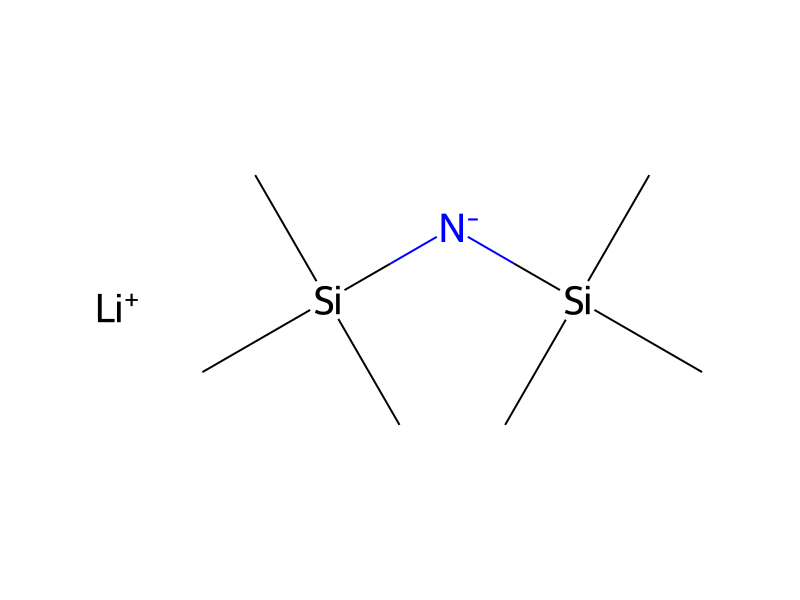
[F:1][C:2]1[CH:7]=[C:6]([Si:8]([CH3:11])([CH3:10])[CH3:9])[CH:5]=[CH:4][C:3]=1[NH2:12].[Li+].C[Si]([N-][Si](C)(C)C)(C)C.Cl[C:24]1[C:25]([C:31]([OH:33])=[O:32])=[N:26][CH:27]=[C:28]([Cl:30])[N:29]=1>C1COCC1>[Cl:30][C:28]1[N:29]=[C:24]([NH:12][C:3]2[CH:4]=[CH:5][C:6]([Si:8]([CH3:9])([CH3:11])[CH3:10])=[CH:7][C:2]=2[F:1])[C:25]([C:31]([OH:33])=[O:32])=[N:26][CH:27]=1To a solution of 2-fluoro-4-trimethylsilanyl-phenylamine (3.8 g, 20.7 mmol, 2.0 eq) in anhydrous THF (150 mL) at −78° C. under N2 was added dropwise a solution of 1.0 M LHMDS in THF (33.2 mL, 30 mmol, 3.2 eq) over 20 minutes. After 1 hour at −78° C., a solution of 3,5-dichloro-pyrazine-2-carboxylic-acid (2.0 g, 10.3 mmol) in anhydrous THF (30 mL) was added. The mixture was stirred at −78° C. for 30 minutes, and then stirred at ambient temperature for 18 hours. The mixture was quenched with water and the pH adjusted to pH 2 by the addition of 2 N HCl. The reaction mixture was extracted with ethyl acetate, and the organic layer washed with water and brine, then dried (Na2SO4), filtered and evaporated in vacuo. The resultant residue was purified by column chromotagraphy (Si-PPC, gradient 20 to 50% ethyl acetate in hexane, followed by 0% to 30%, methanol in dichloromethane) to give the desired compound as a yellow solid (2.95 g, 83.8%). 1H NMR (CDCl3, 400 MHz) δ ppm 10.41 (s, 1H), 8.28 (t, J=7.79 Hz, 1H), 7.93 (s, 1H), 7.40-7.23 (m, 2H), 0.27 (s, 9H).