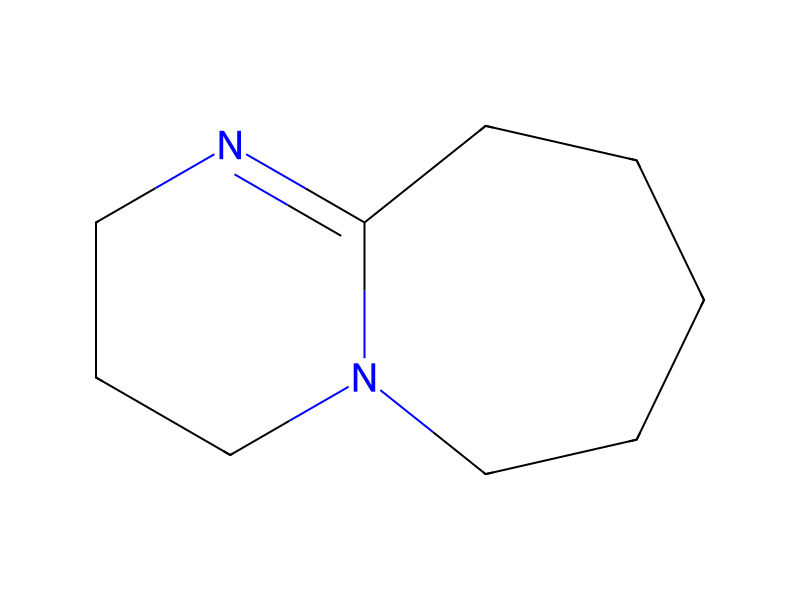
1,8-Diazabicyclo(5.4.0)undec-7-ene → (+)-8-fluoro-2-methyl-9-(3-amino-1-pyrrolidyl)-6-oxo-1,2-dihydro-6H-pyrrolo[3,2,1-ij]quinoline-5-carboxylic acid hydrochloride
HRID 2081567
Reaktionsgleichung

[F:1][C:2]1[CH:3]=[C:4]2[C:9]3=[C:10]([CH2:13][C@H:14]([CH3:15])[N:8]3[CH:7]=[C:6]([C:16]([OH:18])=[O:17])[C:5]2=[O:19])[C:11]=1F.[ClH:20].Cl.NN1CCCC1.C1C[CH2:37][N:36]2C(=[N:32][CH2:33][CH2:34][CH2:35]2)CC1>CN(C)P(=O)(N(C)C)N(C)C>[ClH:20].[F:1][C:2]1[CH:3]=[C:4]2[C:9]3=[C:10]([CH2:13][CH:14]([CH3:15])[N:8]3[CH:7]=[C:6]([C:16]([OH:18])=[O:17])[C:5]2=[O:19])[C:11]=1[N:36]1[CH2:35][CH2:34][CH:33]([NH2:32])[CH2:37]1Komponenten
5
Edukt 3


Produkt 1

Reagenzien, Katalysatoren, Lösungsmittel 1
