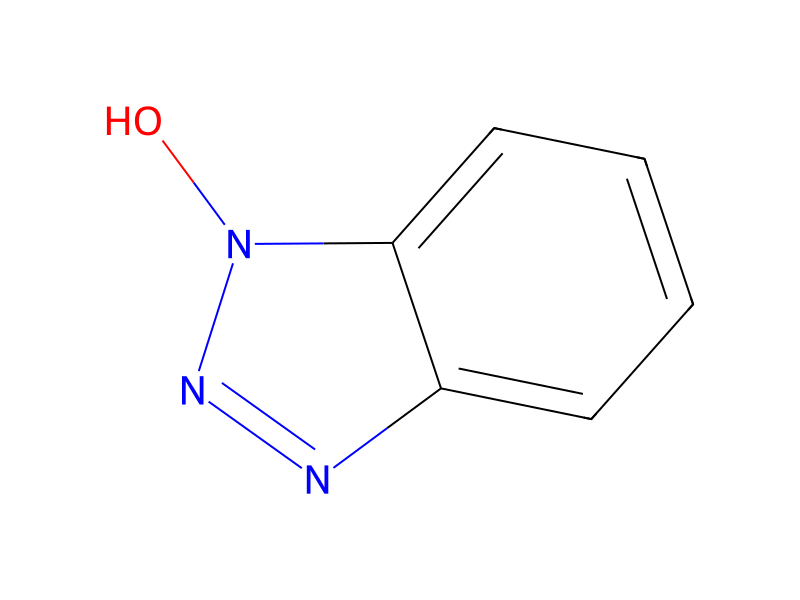
To a solution of 0.28 g (0.56 mmol) of 2,2-dimethyl-4-[(4-{[5-(tetrahydro-2H-pyran-2-yloxy)-2-pentynyl]oxy}phenyl)sulfonyl]-3-thiomorpholine carboxylic acid and 0.091 g (0.675 mmol) of 1-hydroxybenzotriazole in 2.5 mL of DMF was added 0.151 g (0.788 mmol) of 1-(3-dimethylaminopropyl)-3-ethylcarbodiimide hydrochloride and stirred at room temperature for 1 h. Then 0.173 mL (2.8 mmol) of 50% aqueous hydroxylamine was added and the reaction was stirred for 18 h. The resulting mixture was diluted with ethyl acetate, washed with water, brine, dried over MgSO4, filtered and concentrated in vacuo. The residue was chromatographed on silica gel eluting with 5% methanol/dichloromethane. The product was triturated with ether to provide 0.024 g (8%) of N-hydroxy-2,2-dimethyl-4-[(4-{[5-tetrahydro-2H-pyran-2-yloxy)-2-pentynyl]oxy}phenyl)sulfonyl]-3-thiomorpholine carboxamide as a white solid.