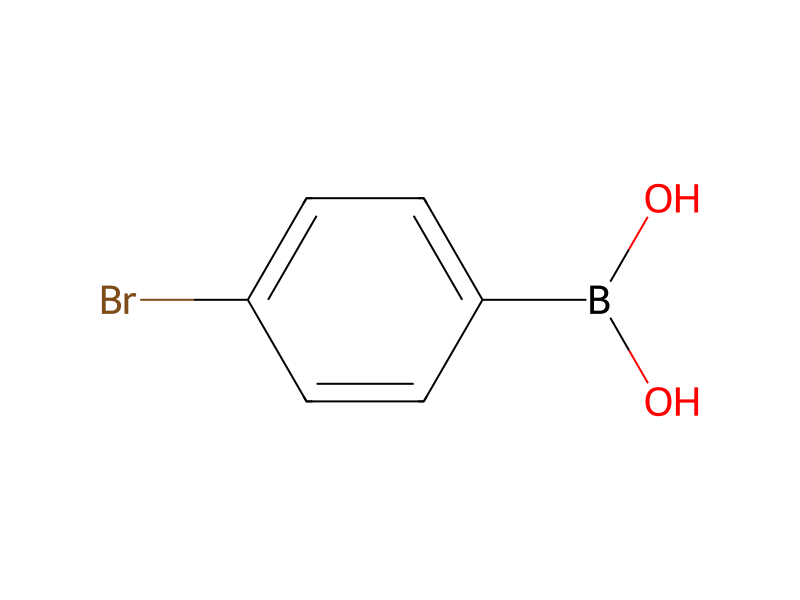
[Br:1][C:2]1[CH:7]=[CH:6][C:5](B(O)O)=[CH:4][CH:3]=1.Br[C:12]1[CH:17]=[CH:16][C:15]([CH3:18])=[CH:14][N:13]=1.C(=O)([O-])[O-].[K+].[K+].COCCOC>C(OCC)(=O)C.O>[Br:1][C:2]1[CH:7]=[CH:6][C:5]([C:12]2[CH:17]=[CH:16][C:15]([CH3:18])=[CH:14][N:13]=2)=[CH:4][CH:3]=1To a 500 mL round bottom flask, 4-bromophenylboronic acid (25.0 g, 0.125), 2-bromo-5-methylpyridine (20.0 g, 0.114 mol), palladium(0)tetrakistriphenylphosphine (4.0 g, 0.0035 mol), potassium carbonate (47.0 g, 0.34 mol.), 1,2 dimethoxyethane (120 mL) and water (120 mL.) were added. The mixture was heated to reflux under nitrogen atmosphere for 18 hours. After the reaction was cooled down, 100 mL of water and 150 mL of ethyl acetate were added. The mixture was separated in a separatory funnel. The organic phases were collected, combined and evaporated. The mixture was distilled using a kugelrohred (spelling?) to obtain 2-(4-bromophenyl)-5-methylpyridine (26.0 g) as a white solid that was further purified by recrystallization in hexanes.
Wird geladen…