4-Methylbenzylamine → 2,2-difluoro-N-(4-methylbenzyl)ethanamine
HRID 2098415
Reaktionsgleichung

[F:1][CH:2]([F:5])[CH2:3]Cl.[CH3:6][C:7]1[CH:14]=[CH:13][C:10]([CH2:11][NH2:12])=[CH:9][CH:8]=1>O>[F:1][CH:2]([F:5])[CH2:3][NH:12][CH2:11][C:10]1[CH:13]=[CH:14][C:7]([CH3:6])=[CH:8][CH:9]=1Komponenten
4
Edukt 2
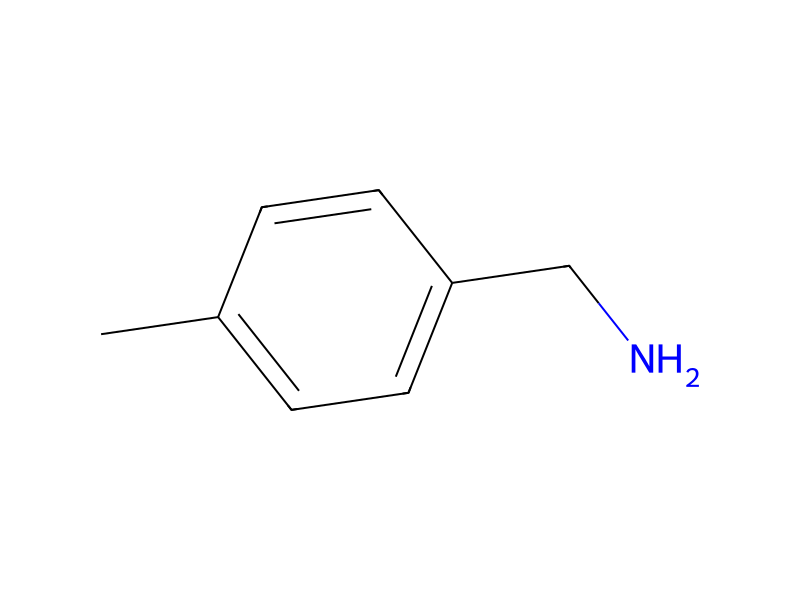

Produkt 1

Reagenzien, Katalysatoren, Lösungsmittel 1

Versuchsvorschrift
An amount of 26.2 g (242 mmol) of 2,2-difluoro-1-chloroethane and 10 g of 4-methylbenzylamine (80.8 mmol) are heated in an autoclave at an internal temperature of 120° C. for 16 hours. Subsequently, 50 g of water are added and the aqueous phase is separated. The aqueous phase is again extracted with 2,2-difluoro-1-chloroethane and the combined organic phases are distilled as described in Example 1.1. Here also, the 4-methylbenzylamine hydrochloride which is present in the aqueous phase can be converted back into free 4-methylbenzylamine by addition of sodium hydroxide solution. After distillation, 4.3 g of 2,2-difluoro-N-(4-methylbenzyl)ethanamine are obtained, which corresponds to a yield of 58%, based on reacted 4-methylbenzylamine.