StartseiteMCPWorkbenchSkills
StartseiteWorkbenchBenachrichtigungenMein Bereich
llms.txt · MCP-AnleitungDatenschutz · Nutzungsbedingungen · Supportv1.8.3
  1. Startseite
  2. /Reaktion

Dimethylformamide → Ethyl (2E)-3-{4-[(3-fluoro-4-hydroxyphenyl)(3,3,5,5-tetramethylcyclohexylidene)methyl]phenyl}-2-propenoate

HRID 2100122
Drucken

Reaktionsgleichung

Reaktionsgleichung von HRID 2100122
Br[C:2]1[CH:7]=[CH:6][C:5]([C:8](=[C:17]2[CH2:22][C:21]([CH3:24])([CH3:23])[CH2:20][C:19]([CH3:26])([CH3:25])[CH2:18]2)[C:9]2[CH:14]=[CH:13][C:12]([OH:15])=[C:11]([F:16])[CH:10]=2)=[CH:4][CH:3]=1.[C:27]([O:31][CH2:32][CH3:33])(=[O:30])[CH:28]=[CH2:29].CCN(CC)CC.CN(C=O)C>Cl[Pd](Cl)([P](C1C=CC=CC=1)(C1C=CC=CC=1)C1C=CC=CC=1)[P](C1C=CC=CC=1)(C1C=CC=CC=1)C1C=CC=CC=1.CCOC(C)=O.O>[F:16][C:11]1[CH:10]=[C:9]([C:8](=[C:17]2[CH2:18][C:19]([CH3:26])([CH3:25])[CH2:20][C:21]([CH3:23])([CH3:24])[CH2:22]2)[C:5]2[CH:6]=[CH:7][C:2](/[CH:29]=[CH:28]/[C:27]([O:31][CH2:32][CH3:33])=[O:30])=[CH:3][CH:4]=2)[CH:14]=[CH:13][C:12]=1[OH:15]
KomponentenReaktionsbedingungenVersuchsvorschriftAufarbeitungQuellen und NachweiseNotizen zur Reaktion

Komponenten

8

Edukt 4

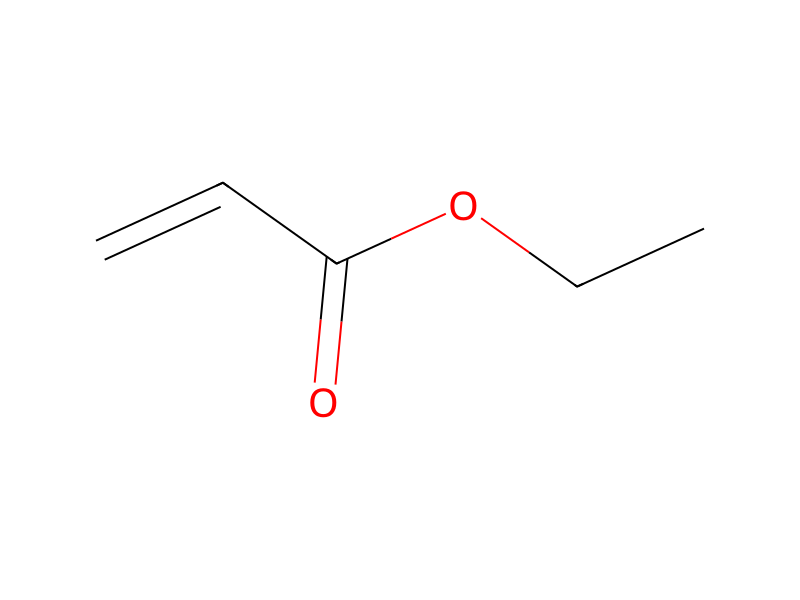
HCID 6228DimethylformamideHCID 8471TriethylamineHCID 8821Ethyl AcrylateHCID 686542754-[(4-Bromophenyl)(3,3,5,5-tetramethylcyclohexylidene)methyl]-2-fluorophenol

Produkt 1

HCID 68979876Ethyl (2E)-3-{4-[(3-fluoro-4-hydroxyphenyl)(3,3,5,5-tetramethylcyclohexylidene)methyl]phenyl}-2-propenoateAusbeute 68,1 %

Reagenzien, Katalysatoren, Lösungsmittel 3

HCID 178418476HCID 178418476, VerbindungKatalysatorHCID 962WaterLösungsmittelHCID 8857Ethyl AcetateLösungsmittel

Reaktionsbedingungen

Temperatur
100 °C

Versuchsvorschrift

To a round-bottomed flask were added 4-[(4-bromophenyl)(3,3,5,5-tetramethyl cyclohexylidene)methyl]-2-fluorophenol (139) (0.33 g, 0.79 mmol), ethyl acrylate (0.87 mL, 7.90 mmol), dichlorobis(triphenylphosphine)palladium(II) (0.056 g, 0.08 mmol), Et3N (0.55 mL, 3.95 mmol) and DMF (10 mL). The stirred reaction mixture was heated overnight at 100° C. under a nitrogen atmosphere. The reaction mixture was allowed to cool to room temperature and transferred to a separatory funnel with the aid of water and EtOAc (100 mL). The layers were separated and the organic phase washed with water, brine, dried over Na2SO4, filtered, and the filtrate was concentrated to give brown oil. The crude product was purified by chromatography on a silica gel column eluted with a gradient from hexanes to 15% EtOAc:hexanes to give 0.235 g (68%) of compound 140 as a light yellow viscous oil. 1H NMR (400 MHz, CDCl3): δ 0.92 (s, 6H), 0.94 (s, 6H), 1.29 (s, 2H), 1.32 (t, J=7.1 Hz, 3H), 1.95 (s, 2H), 1.97 (s, 2H), 4.25 (q, J=7.1 Hz, 2H), 4.98 (d, J=4.2 Hz, 1H), 6.39 (d, J=16.0 Hz, 1H), 6.80-6.95 (m, 3H), 7.16 (d, J=8.1 Hz, 2H), 7.43 (d, J=8.1 Hz, 2H), 7.65 (d, J=16.1 Hz, 1H). LCMS (ES): m/z, 437 (M+H)+, 435 (M−H)−.

Aufarbeitung

  1. customThe stirred reaction mixture
  2. temperatureto cool to room temperature
  3. customThe layers were separated
  4. washthe organic phase washed with water, brine
  5. dry with materialdried over Na2SO4
  6. filtrationfiltered
  7. concentrationthe filtrate was concentrated
  8. customto give brown oil
  9. customThe crude product was purified by chromatography on a silica gel column
  10. washeluted with a gradient from hexanes to 15% EtOAc

Quellen und Nachweise

ORD-Eintrag
ord-d18a9970389c46d09d8eb4b594bd2688
Quelldatensatz
uspto-grants-2009_08
DOI
10.6084/m9.figshare.5104873.v1
Patentnummer
US07569601B2

Notizen zur Reaktion

Auf dieser SeiteKomponentenReaktionsbedingungenVersuchsvorschriftAufarbeitungQuellen und NachweiseNotizen zur Reaktion