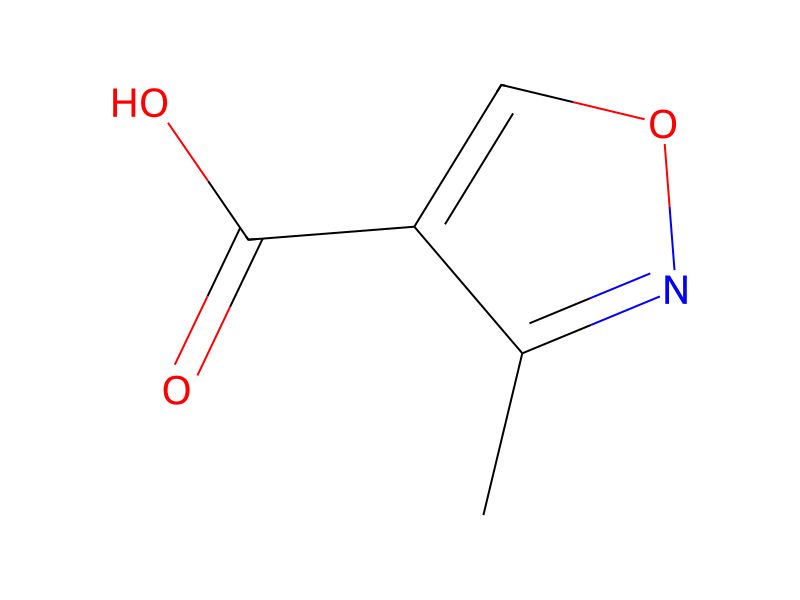
C(Cl)(=O)C(Cl)=O.[CH3:7][C:8]1[C:12]([C:13]([OH:15])=O)=[CH:11][O:10][N:9]=1.[Cl:16][C:17]1[C:18]([NH2:24])=[N:19][C:20]([NH2:23])=[CH:21][N:22]=1>CN(C)C=O.N1C=CC=CC=1>[NH2:24][C:18]1[N:19]=[C:20]([NH:23][C:13]([C:12]2[C:8]([CH3:7])=[N:9][O:10][CH:11]=2)=[O:15])[CH:21]=[N:22][C:17]=1[Cl:16]Oxalyl chloride (0.06 ml, 0.69 mmol) was added to a solution of 3-Methyl-isoxazole-4-carboxylic acid (0.06 g, 0.48 mmol) followed by 1 drop of dimethylformamide. The mixture was stirred at room temperature for 4 hours before concentrating in vacuo and azeotroping with dichloromethane. The residue was taken up in pyridine (1 ml) and added to a solution of 3-chloro-pyrazine-2,6-diamine (Preparation 1) (0.035 g, 0.24 mmol) in anhydrous pyridine (3 ml) and the mixture heated at 50° C. for 3 hours before cooling to room temperature and concentrating to dryness in vacuo. The residue was purified by silica gel column chromatography, eluting with ethyl acetate:heptane 1:1, to afford the product as a white solid (30 mg).