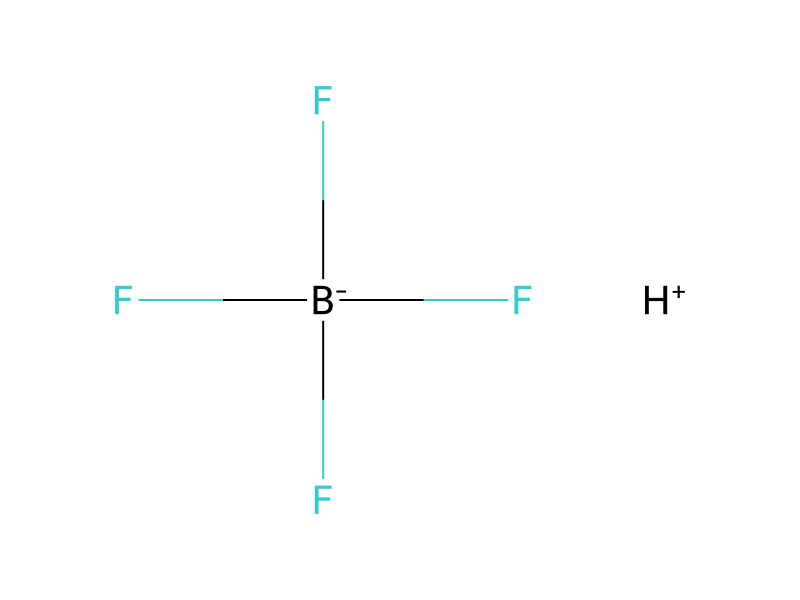
3-Amino-2-naphthoic acid (40.4 g, 216 mmol) was placed in 200 mL concentrated HCl. At 0° C., the slurry was stirred vigorously using a mechanical stirring blade. To it was added a cold solution of sodium nitrite (29.8 g, 432 mmol) in 70 mL water. After completion, the cold slurry was stirred for 30 minutes at 0° C. To it was added cold tetrafluoroboric acid (48 wt. % in water, 56 mL, 432 mmol). After stirred at 0° C. for 30 minutes, the solid was filtered using a Buchner funnel. The soild cake was carefully rinsed with cold water (10 mL×2), cold tetrafluoroboric acid (10 mL×2) and cold ethanol (5 mL×2). The solid was dried in vacuuo. It was then placed in 300 mL xylene and refluxed overnight. Xylene was removed on rotovap. The residue was acidified to pH1 with aq HCl and taken into EtOAc. It was washed with brine (×2), dried, evaporated to give 3-fluoro-2-naphthoic acid (32.6 g, 78%). ES-MS: (M+H)+ 191.