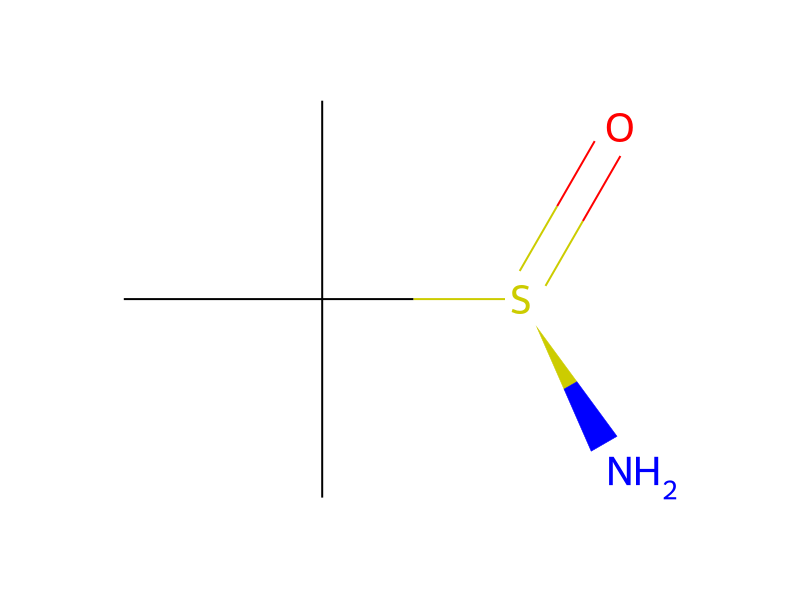
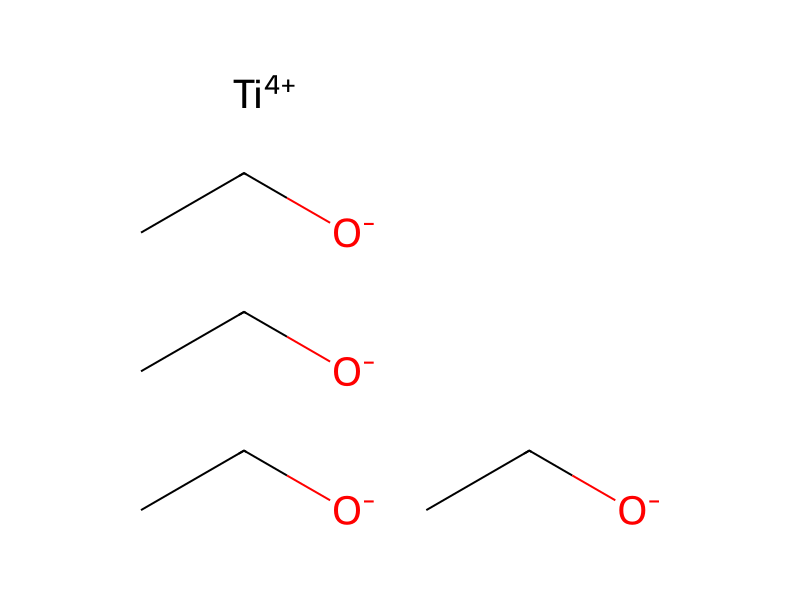
[F:1][C:2]([F:18])([F:17])[C:3]1[CH:8]=[CH:7][C:6]([C:9]2[CH:14]=[CH:13][C:12]([CH:15]=O)=[CH:11][CH:10]=2)=[CH:5][CH:4]=1.[CH3:19][C:20]([S@:23]([NH2:25])=[O:24])([CH3:22])[CH3:21].ClCCl.C(=O)(O)[O-].[Na+]>[O-]CC.[Ti+4].[O-]CC.[O-]CC.[O-]CC.[Ti].CO>[CH3:19][C:20]([S@:23](/[N:25]=[CH:15]/[C:12]1[CH:13]=[CH:14][C:9]([C:6]2[CH:7]=[CH:8][C:3]([C:2]([F:18])([F:17])[F:1])=[CH:4][CH:5]=2)=[CH:10][CH:11]=1)=[O:24])([CH3:22])[CH3:21]A round bottom flask equipped with a condenser was charged with 4′-(trifluoromethyl)biphenyl-4-carbaldehyde (20.0 g, 79.9 mmol), (R)-(+)-2-methylpropane-2-sulfinamide (9.69 g, 79.9 mmol) and dichloromethane (400 mL). Titanium(IV) ethoxide (33.2 mL, 160 mmol) was then added, and the mixture was heated to reflux for 3 hours. Methanol (50 mL) and saturated sodium bicarbonate (10 mL) were then added to the reaction, causing the titanium salts to precipitate. This mixture was stirred for 30 minutes and then filtered, rinsing with ethyl acetate. Sodium sulfate was added to the filtrate to remove the water and then filtered a second time. The solvent was removed under reduced pressure to afford (R,E)-2-methyl-N-((4′-(trifluoromethyl)biphenyl-4-yl)methylene)propane-2-sulfinamide (23.7 g, 84%) as a white solid. 1H NMR (400 MHz, CDCl3, δ): 1.30 (s, 9H) 7.70-7.74 (m, 2H) 7.74 (s, 4H) 7.95-7.99 (m, 2H) 8.66 (s, 1H). MS (M+1): 354.1.