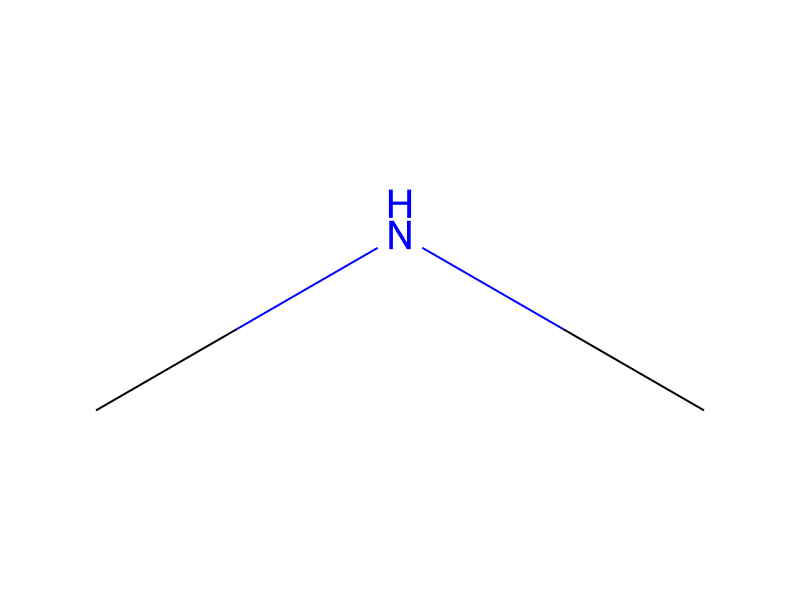
[CH3:1][N:2]1[C:10]2[C:5](=[C:6]([CH3:12])[CH:7]=[C:8]([CH3:11])[CH:9]=2)[C:4]([CH:13]=O)=[CH:3]1.[CH3:15][NH:16][CH3:17].C(O[BH-](OC(=O)C)OC(=O)C)(=O)C.[Na+]>C(Cl)Cl>[CH3:15][N:16]([CH3:17])[CH2:13][C:4]1[C:5]2[C:10](=[CH:9][C:8]([CH3:11])=[CH:7][C:6]=2[CH3:12])[N:2]([CH3:1])[CH:3]=1To a solution of 1,4,6-trimethyl-1H-indole-3-carbaldehyde (875 mg, 4.7 mmol) in CH2Cl2 (30 mL) and dimethylamine (2.0 M solution in MeOH) (4.7 mL, 9.3 mmol) was added sodium triacetoxyborohydride (NaBH(OAc)3) (2.9 g, 14 mmol) at 0° C. Upon complete addition the cooling bath was removed and the reaction mixture was stirred at room temperature for 48 h. When the reaction was complete, the mixture was diluted with CH2Cl2 and washed with saturated NaHCO3. The layers were separated and the organic phase was dried over MgSO4, filtered and concentrated. The residue was used in the next step of the synthesis without purification.