StartseiteMCPWorkbenchSkills
StartseiteWorkbenchBenachrichtigungenMein Bereich
llms.txt · MCP-AnleitungDatenschutz · Nutzungsbedingungen · Supportv1.8.3
  1. Startseite
  2. /Reaktion

Hexafluoropropylene → 1,1,1,2,4,4,5,5,6,6,7,7,7-Tridecafluoro-2-trifluoromethyl-heptan-3-one

HRID 2185604
Drucken

Reaktionsgleichung

Reaktionsgleichung von HRID 2185604
[F:1][C:2]([F:16])([C:6]([F:15])([F:14])[C:7]([F:13])([F:12])[C:8]([F:11])([F:10])[F:9])[C:3](F)=[O:4].[F-:17].[K+].F[H-]F.[K+].[F:23][C:24]([F:31])([F:30])[C:25]([F:29])=[C:26]([F:28])[F:27]>COCCOCCOC>[F:23][C:24]([F:31])([F:30])[C:25]([F:29])([C:26]([F:17])([F:28])[F:27])[C:3](=[O:4])[C:2]([F:16])([F:1])[C:6]([F:15])([F:14])[C:7]([F:13])([F:12])[C:8]([F:11])([F:10])[F:9]
KomponentenReaktionsbedingungenVersuchsvorschriftAufarbeitungQuellen und NachweiseNotizen zur Reaktion

Komponenten

6

Edukt 4

HCID 8302HexafluoropropyleneHCID 67812Pentanoyl fluoride, 2,2,3,3,4,4,5,5,5-nonafluoro-HCID 522689Potassium FluorideHCID 178506425HCID 178506425, Verbindung

Produkt 1

HCID 126545141,1,1,2,4,4,5,5,6,6,7,7,7-Tridecafluoro-2-trifluoromethyl-heptan-3-oneAusbeute 440,2 %

Reagenzien, Katalysatoren, Lösungsmittel

1
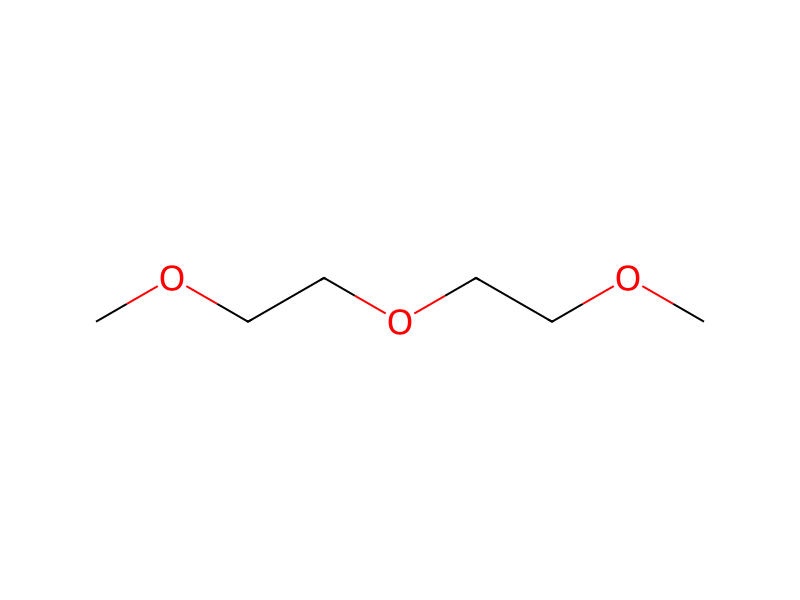
HCID 8150DiglymeLösungsmittel

Reaktionsbedingungen

Temperatur
50 °C

Versuchsvorschrift

A mixture consisting of 775 g of perfluoropentanoyl fluoride, 800 g of anhydrous diglyme, 13.1 g of potassium fluoride, 17.8 g of anhydrous potassium bifluoride and 775 g of hexafluoropropylene was heated in a 3-liter stainless steel pressure vessel under autogeneous pressure at 50° C. for 16 hours. The product was fractionally distilled to give 413 g of 1,1,1,2,4,4,5,5,6,6,7,7,7-tridecafluoro-2-trifluoromethyl-heptan-3-one, having a boiling point of 97° C. and a 99.0% purity as determined by gas chromatography and mass spectroscopy.

Aufarbeitung

  1. distillationThe product was fractionally distilled

Quellen und Nachweise

ORD-Eintrag
ord-5ea6f8fe7af64b238303f92b11956b52
Quelldatensatz
uspto-grants-2002_06
DOI
10.6084/m9.figshare.5104873.v1
Patentnummer
US06403149B1

Notizen zur Reaktion

Auf dieser SeiteKomponentenReaktionsbedingungenVersuchsvorschriftAufarbeitungQuellen und NachweiseNotizen zur Reaktion