

Grundinformationen
- Standard-SMILES
FC(F)=C(F)C(F)(F)F- InChIKey
HCDGVLDPFQMKDK-UHFFFAOYSA-N- Summenformel
- C3F6
- Durchschnittliche Molmasse
- 150,02 g/mol
- Monoisotopische Masse
- 149,99041932
Überblick
Hexafluoropropylene is an odorless, colorless gas. It is noncombustible. It can asphyxiate by the displacement of air. Exposure of the container to prolonged heat or fire can cause it to rupture violently and rocket.
Namen und Bezeichner
- Bevorzugter Name
- Hexafluoropropylene
- IUPAC
- 1,1,2,3,3,3-hexafluoroprop-1-ene
- Lokaler Name
- Hexafluorpropen
- Englischer Name
- Hexafluoropropylene
- Summenformel
- C3F6
- Molmasse
- 150.02
Namen und Synonyme
HexafluoropropeneHexafluoropropylene116-15-4PerfluoropropenePerfluoropropylenePropene, hexafluoro-Perfluoro-1-propenePropylene, hexafluoro-Hexfluoropropylene1,1,2,3,3,3-HEXAFLUORO-1-PROPENE1-Propene, 1,1,2,3,3,3-hexafluoro-propylene hexafluoride
Weitere Namen anzeigen
CF3CF=CF2HexafluorpropenPerfluoroprop-1-eneHexafluofoproenehexafluoro-propen
TRW23XOS20DTXSID2026949RefChem:146013DTXCID206949204-127-41,1,2,3,3,3-hexafluoroprop-1-eneC3F6MFCD00000447
Datenbank-Bezeichner
- CAS
116-15-4- PubChem CID
- 8302
- DTXSID
DTXSID2026949- ChEMBL
CHEMBL4644489- UNII
- TRW23XOS20
- EC Number
- 204-127-4
- Nikkaji
- J35.205E
Eigenschaften
Berechnete Struktureigenschaften
- XLogP
- 1,9
- Polarare Oberfläche (TPSA)
- 0 Ų
- H-Brücken-Donoren
- 0
- H-Brücken-Akzeptoren
- 6
- Frei drehbare Bindungen
- 0
- Schwere Atome
- 9
- Formalladung
- 0
- Komplexität
- 126
Experimentelle und physikochemische Eigenschaften
Chemical Classes
Other Classes -> Halogenated Aliphatics, Unsaturated
Reactive agents - 1st degree
PFAS
PFAS -> Other/unspecified
PFAS -> PFAS identified in REACH Regulation EC No. 1272/2008
PFAS -> Other/unspecified
PFAS -> Other/unspecified
PFAS -> Intentionally added food contact chemicals
SpringerMaterials PropertiesSchoenflies notation
OdorOdorless gas
Density
1.583 AT -40 °C/4 °C
1.583 @ -40°C
Color/FormColorless gas
Boiling Point
-29.6 °C
-29.6 °C @760 [mm Hg]
DecompositionWhen heated to decomposition it emits toxic fumes of ... /hydrogen fluoride/.
Melting Point
-156.5 °C
-156.5 °C
Vapor Pressure
4900.0 [mmHg]
4.9X10+3 mm Hg at 25 °C /from experimentally derived coefficients/
750 [mm Hg] @-30.6 °C
Food Contact Substances
FCS -> FDA Cumulative Estimated Daily Intake (CEDI)
FCS -> FDA Inventory of Food Contact Substances Listed in 21 CFR
Physical Description
Hexafluoropropylene is an odorless, colorless gas. It is noncombustible. It can asphyxiate by the displacement of air. Exposure of the container to prolonged heat or fire can cause it to rupture violently and rocket.
Liquid; Gas Vapor
An odorless, colorless, noncombustible gas that can act as a simple asphyxiant; [CAMEO]
Physikochemische Eigenschaften
- Schmelzpunkt
- 153 °C · −153 °C(lit.)
- Siedepunkt
- 28 °C · −28 °C(lit.)
- Dichte
- 1 · 1,583 g/cm3
- Dampfdruck
- 587.952 kPa · 587.952kPa at 25℃
- Brechungsindex
- 1.4 · 1.4000
- Aggregatzustand
- gas
- Wasserlöslichkeit
- 82 mg/L · 82mg/L at 28℃
- BRN
- 1705671 · 1705671
- Henry's Law Constant
- 2.9 · 2.9×10-6 mol/(m3Pa) at 25℃, Wilhelm et al. (1977)
- Stabilität
- Stable. Incompatible with alkali metals, powdered metals.
- Major Application
- PFAS testing
- InChI
- InChI=1S/C3F6/c4-1(2(5)6)3(7,8)9
- InChIKey
- HCDGVLDPFQMKDK-UHFFFAOYSA-N
- SMILES
- C(/F)(\F)=C(/F)\C(F)(F)F
- LogP
- 1.95 at · 1.95 at 20℃
- CAS Datenbank
- 116 · 116-15-4(CAS DataBase Reference)
- NIST chemische Informationen
- Propene, hexafluoro-(116-15-4)
- EPA chemische Informationen
- Hexafluoropropene (116-15-4)
- ECETOC JACC REPORT
- Hexafluoropropylene (116-15-4)
Sicherheit und Regulatorisches
GHS-Klassifizierung
GHS Classification
Warning
H332: Harmful if inhaled [Warning Acute toxicity, inhalation]
P261, P271, P304+P340, P317, P319, P403+P233, P405, and P501 (click each P-code to see the statement)
Warning
H280 (89.5%): Contains gas under pressure; may explode if heated [Warning Gases under pressure]
P203, P260, P261, P264, P270, P271, P273, P280, P304+P340, P308+P316, P317, P318, P319, P403+P233, P405, P410+P403, and P501 (click each P-code to see the statement)
Gefahrenhinweise
Regulatory Information
Chemical: 1-Propene, 1,1,2,3,3,3-hexafluoro-
1-Propene, 1,1,2,3,3,3-hexafluoro- is listed on the EPA's Chemical Data Reporting (CDR) system. Manufacturers and importers of 1-Propene, 1,1,2,3,3,3-hexafluoro- are required to report information about their production and use of this chemical to the EPA under the Toxic Substances Control Act (TSCA). (40 eCFR Part 711)
Status: Active Update: 03-04-2023 https://echa.europa.eu/registration-dossier/-/registered-dossier/15192
Hexafluoropropene: Does not have an individual approval but may be used as a component in a product covered by a group standard. It is not approved for use as a chemical in its own right.
The New Jersey Worker and Community Right to Know Act requires public and private employers to provide information about hazardous substances at their workplaces. (N.J.S.A. 34:5A-1 et. seq.)
Other Safety InformationIMAP assessments - 1-Propene, 1,1,2,3,3,3-hexafluoro-: Human health tier I assessment
DOT LabelNon-Flammable Gas
Fire Hazards
Excerpt from ERG Guide 126 [Gases - Compressed or Liquefied (Including Refrigerant Gases)]:
· Some may burn but none ignite readily.
· Some may burn but none ignite readily.
Health Hazards
Excerpt from ERG Guide 126 [Gases - Compressed or Liquefied (Including Refrigerant Gases)]:
· Vapors may cause dizziness or asphyxiation without warning, especially when in closed or confined areas.
· Vapors may cause dizziness or asphyxiation without warning, especially when in closed or confined areas.
Hazards SummaryProduces acute tubular necrosis in experimental animals exposed to high concentrations; [HSDB] A respiratory tract irritant; The kidney is the target organ; [ACGIH]
DOT ID and Guide
1858 126
1858 126
Reactive GroupHalogenated Organic Compounds
Special Reports
FLUOROALKANES; RESPONSE TO THE INTERAGENCY TESTING COMMITTEE; FED REGIST 46(210 BK 1) 53704 (1981). EVIDENCE SUPPORTING NEED FOR EVALUATING TOXICITY OF FLUOROALKANES IS DISCUSSED. THE COMPOUNDS (FLUOROALKANES) ARE USED PRIMARILY IN SYNTH OF POLYMERS & COPOLYMERS, RESISTANT TO HEAT & CORROSION. THEIR CHEM PROPERTIES, MFR WORKER EXPOSURE POTENTIAL, & ADEQUACY OF INFORMATION ON ONCOGENICITY, MUTAGENICITY, & OTHER TOXIC EFFECTS ARE COVERED.
TSCA RequirementsManufacturers and processors of hexafluoropropene are required to conduct health effects testing under TSCA section 4.
Reactivity Profile
Halogenated aliphatic compounds, such as HEXAFLUOROPROPYLENE, are moderately or very reactive. Halogenated organics generally become less reactive as more of their hydrogen atoms are replaced with halogen atoms. Materials in this group may be incompatible with strong oxidizing and reducing agents. Also, they may be incompatible with many amines, nitrides, azo/diazo compounds, alkali metals, and epoxides. Above a minimum oxygen pressure, the reaction of oxygen difluoride and hexafluoropropene to yield the hexafluoropropylene oxide becomes explosive, Chem. Abs., 1987, 107, 175302. The reaction of hexafluoropropene with grignard reagent (subst. phenylmagnesium bromides) led to explosion, Fluorine Chem., 1981, 18, 25.
DOT Emergency Guidelines
/GUIDE 126: GASES - COMPRESSED OR LIQUEFIED (INCLUDING REFRIGERANT GASES)/ Fire or Explosion: Some may burn, but none ignite readily. Containers may explode when heated. Ruptured cylinders may rocket.
/GUIDE 126: GASES - COMPRESSED OR LIQUEFIED (INCLUDING REFRIGERANT GASES)/ Health: Vapors may cause dizziness or asphyxiation without warning. Vapors from liquefied gas are initially heavier than air and spread along ground. Contact with gas or liquefied gas may cause burns, severe injury and/or frostbite. Fire may produce irritating, corrosive and/or toxic gases.
/GUIDE 126: GASES - COMPRESSED OR LIQUEFIED (INCLUDING REFRIGERANT GASES)/ Public Safety: CALL Emergency Response Telephone Number ... . As an immediate precautionary measure, isolate spill or leak area for at least 100 meters (330 feet) in all directions. Keep unauthorized personnel away. Stay upwind. Many gases are heavier than air and will spread along ground and collect in low or confined areas (sewers, basements, tanks). Keep out of low areas. Ventilate closed spaces before entering.
/GUIDE 126: GASES - COMPRESSED OR LIQUEFIED (INCLUDING REFRIGERANT GASES)/ Protective Clothing: Wear positive pressure self-contained breathing apparatus (SCBA). Wear chemical protective clothing that is specifically recommended by the manufacturer. It may provide little or no thermal protection. Structural firefighters' protective clothing will only provide limited protection.
For more DOT Emergency Guidelines (Complete) data for 1,1,2,3,3,3-HEXAFLUORO-1-PROPENE (8 total), please visit the HSDB record page.
Sicherheit und Schutzausrüstung
Fire FightingExcerpt from ERG Guide 126 [Gases - Compressed or Liquefied (Including Refrigerant Gases)]:
Accidental Release Measures
· CALL 911. Then call emergency response telephone number on shipping paper. If shipping paper not available or no answer, refer to appropriate telephone number listed on the inside back cover.
· Do not touch or walk through spilled material.
· CALL 911. Then call emergency response telephone number on shipping paper. If shipping paper not available or no answer, refer to appropriate telephone number listed on the inside back cover.
· Do not touch or walk through spilled material.
First Aid
Excerpt from ERG Guide 126 [Gases - Compressed or Liquefied (Including Refrigerant Gases)]:
General First Aid:
General First Aid:
Exposure Control and Personal Protection
· Wear positive pressure self-contained breathing apparatus (SCBA).
· Wear positive pressure self-contained breathing apparatus (SCBA).
Nonfire Spill ResponseExcerpt from ERG Guide 126 [Gases - Compressed or Liquefied (Including Refrigerant Gases)]:
Isolation and Evacuation
Excerpt from ERG Guide 126 [Gases - Compressed or Liquefied (Including Refrigerant Gases)]:
Immediate precautionary measure
Immediate precautionary measure
Threshold Limit Values (TLV)0.1 [ppm]
Protective Action Criteria (PAC)
40 [ppm]
91 [ppm]
480 [ppm]
Personal Protective Equipment (PPE)Excerpt from ERG Guide 126 [Gases - Compressed or Liquefied (Including Refrigerant Gases)]:
Emergency Response Planning Guidelines
· Use extinguishing agent suitable for type of surrounding fire.
· Use extinguishing agent suitable for type of surrounding fire.
ERPG-1: 10 ppm - one hour exposure limit: 1 = mild transient health effects or objectionable odor [AIHA]
Other Standards Regulations and Guidelines
Emergency Response Planning Guidelines (ERPG): ERPG(1) 10 ppm (no more than mild, transient effects) for up to 1 hr exposure; ERPG(2) 50 ppm (without serious, adverse effects) for up to 1 hr exposure; ERPG(3) 500 ppm (not life threatening) up to 1 hr exposure.
AEGLs NotesAEGLs Status: Interim
Toxikologische Informationen
Environmental Fate
TERRESTRIAL FATE: Based on a recommended classification scheme(1), an estimated Koc value of 470(SRC), determined from a structure estimation method(2), indicates that hexafluoropropene is expected to have moderate mobility in soil(SRC). Volatilization of hexafluoropropene is expected from moist soil surfaces(SRC) given an estimated Henry's Law constant of 5.34 atm-cu m/mole(SRC), developed using a fragment constant estimation method(3). Hexafluoropropene is expected to rapidly volatilize from dry soil surfaces based on a vapor pressure of 4.9X10+3 mm Hg(SRC), determined from a fragment constant method(4). Highly chlorinated/fluorinated compounds are not expected to biodegrade rapidly(5).
AQUATIC FATE: Based on a recommended classification scheme(1), an estimated Koc value of 470(SRC), determined from a structure estimation method(2), indicates that hexafluoropropene is expected to adsorb to suspended solids and sediment in water(SRC). Hexafluoropropene is expected to volatilize rapidly from water surfaces(3,SRC) based on an estimated Henry's Law constant of 5.34 atm-cu m/mole(SRC), developed using a fragment constant estimation method(4). Estimated half-lives for a model river and model lake are 4 and 116 hours, respectively(3,SRC). According to a classification scheme(5), an estimated BCF value of 24(3,SRC), from an estimated log Kow of 2.12(6,SRC), suggests that bioconcentration in aquatic organisms is low(SRC). Highly chlorinated/fluorinated compounds are not expected to biodegrade rapidly(7).
ATMOSPHERIC FATE: According to a model of gas/particle partitioning of semivolatile organic compounds in the atmosphere(1), hexafluoropropene, which has a vapor pressure of 4.9X10+3 mm Hg at 25 °C(2), is expected to exist solely as a vapor in the ambient atmosphere. Vapor-phase hexafluoropropene is degraded in the atmosphere by reaction with photochemically-produced hydroxyl radicals and ozone molecules(SRC); the half-lives for these reactions in air are estimated to be about 21(3,SRC) and 95(4,SRC) days, respectively.
Adverse EffectsOther Poison - Simple Asphyxiant
Effluent ConcentrationsHexafluoropropene was identified, not quantified, in the stack emissions of a hazardous waste incinerator(1).
Soil Adsorption/Mobility
Using a structure estimation method based on molecular connectivity indices(1), the Koc for hexafluoropropene can be estimated to be about 470(SRC). According to a recommended classification scheme(2), this estimated Koc value suggests that hexafluoropropene is expected to have moderate mobility in soil(SRC).
TSCA Test Submissions
The ability of hexafluoropropene (HFP) to cause aberrations in Chinese hamster ovary (CHO) cells in vitro was evaluated in the presence and absence of rat liver S9 metabolic activation. Based on preliminary toxicity tests, nonactivated cultures were treated with 0, 0.01, 0.02, 0.10, 0.17, 0.29, 0.37, 0.43 or 0.59% HFP and activated cultures were treated with 0, 0.09, 0.17, 0.33, 0.46, 0.55, 0.67, 0.85, 1.40% HFP. Significant increases were observed in numbers of aberrations/cell, percent abnormal cells, and percent cells with >1 aberration relative to controls in nonactivated and activated cultures at the highest four dose levels (0.29% and 0.55% and above, respectively). Positive dose-related trends were observed for all three measurements in both nonactivated and activated cultures.
Artificial Pollution SourcesHexafluoropropene's production and use in the manufacture of copolymers and hexafluoropropylene oxide(1), may result in its release to the environment through various waste streams(SRC).
Environmental BiodegradationHighly chlorinated/fluorinated compounds are not expected to biodegrade rapidly(1).
Environmental Bioconcentration
An estimated BCF value of 24 was calculated for hexafluoropropene(SRC), using an estimated log Kow of 2.12(1,SRC) and a recommended regression-derived equation(2). According to a classification scheme(3), this BCF value suggests that bioconcentration in aquatic organisms is low(SRC).
Volatilization from Water/Soil
The Henry's Law constant for hexafluoropropene is estimated as 5.34 atm-cu m/mole(SRC) using a fragment constant estimation method(1). This value indicates that hexafluoropropene will volatilize rapidly from water surfaces(2,SRC). Based on this Henry's Law constant, the volatilization half-life from a model river (1 m deep, flowing 1 m/sec, wind velocity of 3 m/sec) is estimated as approximately 4 hours(2,SRC). The volatilization half-life from a model lake (1 m deep, flowing 0.05 m/sec, wind velocity of 0.5 m/sec) is estimated as approximately 116 hours(2,SRC). Hexafluoropropene's Henry's Law constant(1,SRC) indicates that volatilization from moist soil surfaces is expected(SRC). Hexafluoropropene is expected to volatilize rapidly from dry soil surfaces based on a vapor pressure of 4.9X10+3 mm Hg at 25 °C(3).
Non-Human Toxicity Excerpts
MALE RATS EXPOSED TO AIR CONTAINING SUBLETHAL CONCN OF HEXAFLUOROPROPENE SHOWED INCR IN URINARY FLUORIDE AFTER EXPOSURE. INHALATION ALSO PRODUCED INCR IN URINARY EXCRETION OF POTASSIUM ION (K-+) & CREATININE, & A DIURESIS WHICH PERSISTED FOR 2 WK POST-EXPOSURE. HISTOLOGICALLY, FRANK NECROSIS OF PROXIMAL RENAL TUBULES WERE OBSERVED.
MALE FISCHER-344 RATS WERE SUBJECTED TO 4 HR INHALATION OF HEXAFLUOROPROPENE AT 380-1200 PPM. WITHIN 2 DAYS RATS EXHIBITED DOSE-RELATED PROXIMAL TUBULAR NECROSIS, DIURESIS, INCREASES IN URINARY FLUORIDE, URINARY LACTIC DEHYDROGENASE (LDH) ACTIVITY, SERUM CREATININE & BLOOD UREA NITROGEN. IT PRODUCED NECROSIS OF PARS RECTA & PARS CONVOLUTA PORTIONS OF PROXIMAL TUBULE. AT LOWEST CONCN DIURESIS WAS MOST SENSITIVE INDEX OF TOXICITY MANIFESTING 50% INCR IN WATER INTAKE & 25% DECR IN URINE OSMOLALITY. INCREASES IN URINARY LDH ACTIVITY CORRELATED WITH DEGREE OF PROXIMAL RENAL TUBULAR NECROSIS, WITH GREATER THAN 100-FOLD INCR AT HIGHEST CONCN. ALL CONCN PRODUCED NECROSIS WITHIN 24 HR POSTEXPOSURE, WITH TUBULAR CELL REGENERATION APPARENT WITHIN 4 DAYS.
Environmental Abiotic Degradation
The rate constant for the vapor-phase reaction of hexafluoropropene with photochemically-produced hydroxyl radicals has been estimated as 7.74X10⁻¹³ cu cm/molecule-sec at 25 °C(SRC) using a structure estimation method(1,SRC). This corresponds to an atmospheric half-life of about 21 days at an atmospheric concentration of 5X10+5 hydroxyl radicals per cu cm(1,SRC). The rate constant for the vapor-phase reaction of hexafluoropropene with ozone has been measured as 7.7X10⁻²⁰ cu cm/molecule-sec at 25 °C(2). This corresponds to an atmospheric half-life of about 95 days at an atmospheric concentration of 7X10+11 ozone molecules per cu cm(2,SRC). Hexafluoropropene is not expected to undergo hydrolysis in the environment due to the lack of hydrolyzable functional groups(SRC).
Probable Routes of Human ExposureOccupational exposure may be through inhalation and dermal contact with this compound at workplaces where hexafluoropropene is produced or used. (SRC)
Regulatorische Informationen
TSCA RequirementsManufacturers and processors of hexafluoropropene are required to conduct health effects testing under TSCA section 4.
Sicherheitsdaten
- F
- 4.5
- wgk
- 1
- tsca
- TSCA listed
- ridadr
- UN 1858 (HEXAFLUOROPROPYLENE (REFRIGERANT GAS R 1216))
- hs_code
- 2903590030
- RTECS-Nr.
- UD0350000
- risk_code
- 20-37-68/20-48/20
- Toxizität
- LC50 inhalation in mouse: 750ppm/4H
- hazard_code
- Xn,Xi
- hazard_note
- Irritant
- safety_code
- 41-36/37
- hazard_class
- 2.2
- Speicherklasse
- 2A - Gases
- Giftige Stoffe Daten
- 116-15-4(Hazardous Substances Data)
- Hazard Classifications
- Acute Tox. 4 InhalationPress. Gas Liquefied gasSTOT RE 2STOT SE 2STOT SE 3
Chemie und Industrie
Verwendung und Herstellung
Uses
About 90% is used as a monomer in closed systems to produce fluoropolymers, fluoroelastomers, and fluorolubricants; About 10% is used to produce replacement chlorofluorocarbons; [ACGIH]
MONOMER FOR FLUORINATED ETHYLENE-PROPYLENE COPOLYMERS
COMONOMER FOR VINYLIDENE FLUORIDE ELASTOMERS
CHEM INT FOR PERFLUOROALKYL POLYETHER FLUIDS
Production of copolymers and hexafluoropropylene oxide.
U.S. Production
2023: 10,000,000 - <25,000,000 lb
(1977) AT LEAST 4.54X10+8 GRAMS
(1981) PROBABLY GREATER THAN 2.27X10+6 GRAMS
Consumption PatternsREFRIGERANTS, 39%; FOAM BLOWING AGENTS, 17%; SOLVENTS, 14%; FLUOROPOLYMERS, 14%; STERILANT GAS, 2%; AEROSOL PROPELLANTS, 2%; FOOD FREEZANT, 1%; OTHER, 8%; EXPORTS, 3% (1985) /FLUOROCARBONS/
Consumer UsesMonomers
Industry UsesIntermediate
Methods of Manufacturing
BY-PRODUCT IN THE PRODUCTION OF TETRAFLUOROETHYLENE BY REACTION OF HYDROGEN FLUORIDE WITH CHLOROFORM IN THE PRESENCE OF ANTIMONY TRIFLUORIDE CATALYST, FOLLOWED BY PYROLYSIS; PYROLYSIS OF POLYTETRAFLUOROETHYLENE; FLUORINATION OF 1,2,3-TRICHLOROPROPANE, THEN DEHALOGENATION
Produced by temperature controlled pyrolysis of chlorodifluoromethane. Also obtained from tetrafluoroethylene by heating at normal or reduced pressure in the presence of an inert gas or water vapor.
General Manufacturing Information
Industrial Gas Manufacturing
1-Propene, 1,1,2,3,3,3-hexafluoro-: ACTIVE
/DURING THERMAL DECOMPOSITION OF TETRAFLUOROETHYLENE/ WHEN AIR IS PRESENT & WITH TEMP OF...400 °C SMALL AMT OF PERFLUOROISOBUTYLENE...HEXAFLUOROPROPENE & OCTAFLUOROCYCLOBUTANE.../ARE PRODUCED/.
Anwendungen
VerwendenHexafluoropropene is used in the synthesis of polyvinylidene fluoride-co-hexafluoropropylene, a polymer which is currently being used in various fields of the nano and electronic sector ranging from membranes to nanoparticles.
Darstellung
synthetischeHexafluoropropylene can be produced by pyrolysis of tetrafluoroethylene (TFE):3 CF2=CF2 → 2 CF3CF=CFThis reaction is carried out in a closed continuous reactor at 600 to 900°C. The yield can be improved at low partial pressure, achieved either by operating under reduced total pressure (down to 0.1 bar) or by injecting an inert diluent such as steam or CO2.Significant quantities of by-products, including the highly toxic perfluoroisobutylene (PFIB), are formed during the pyrolysis of TFE. Such by-products are either incinerated directly or are collected and transported for incineration at a remote facility.Hexafluoropropylene can also be prepared from chlorodifluoromethane, or produced from various chlorofluorocarbons.
Vor- und nachgelagerte Produkte
Vorgelagerte Rohstoffe
Nachgelagerte Produkte
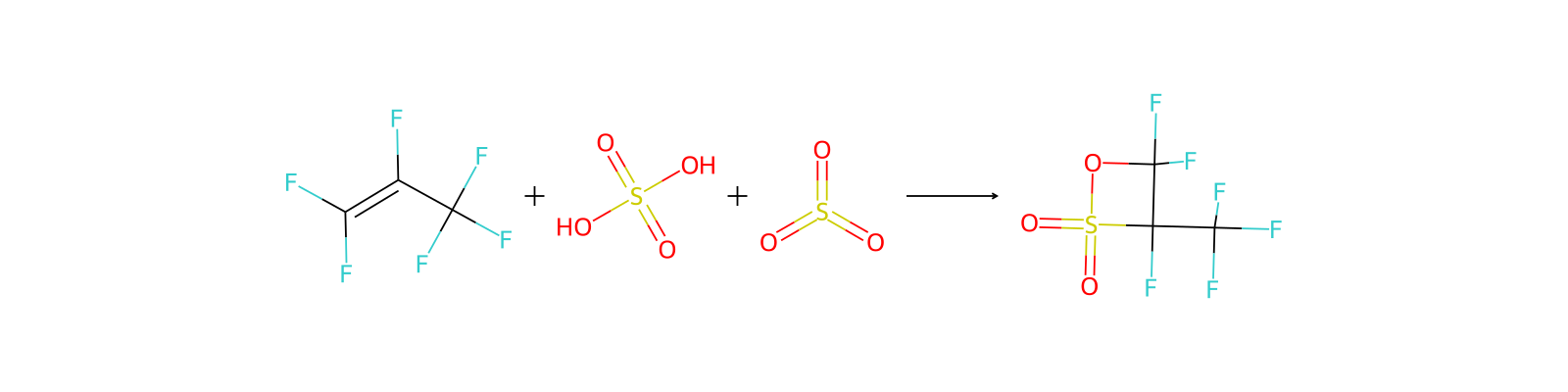
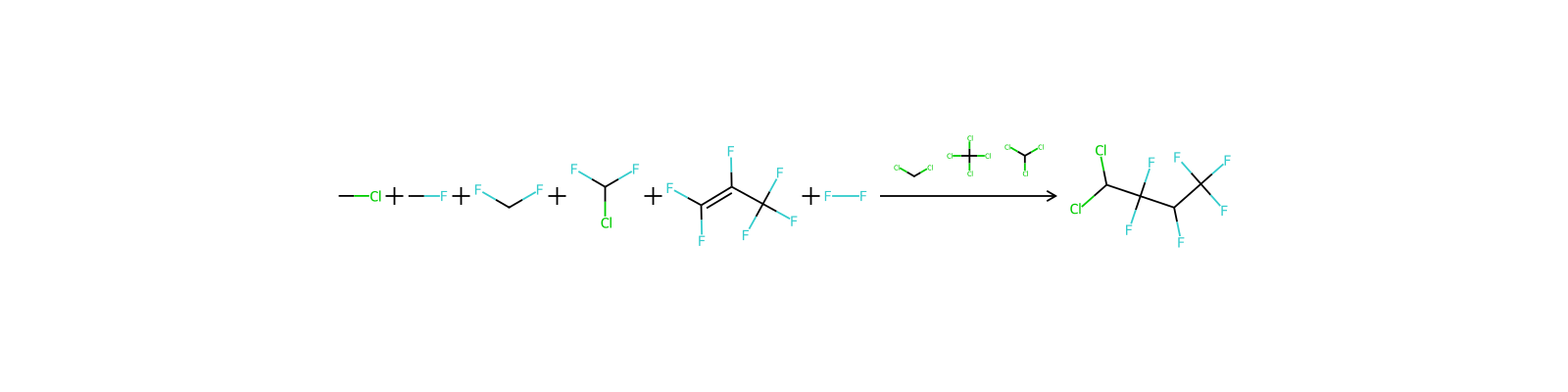
Zugehörige Reaktionen
126



Verknüpfte Notizen
Wird geladen…