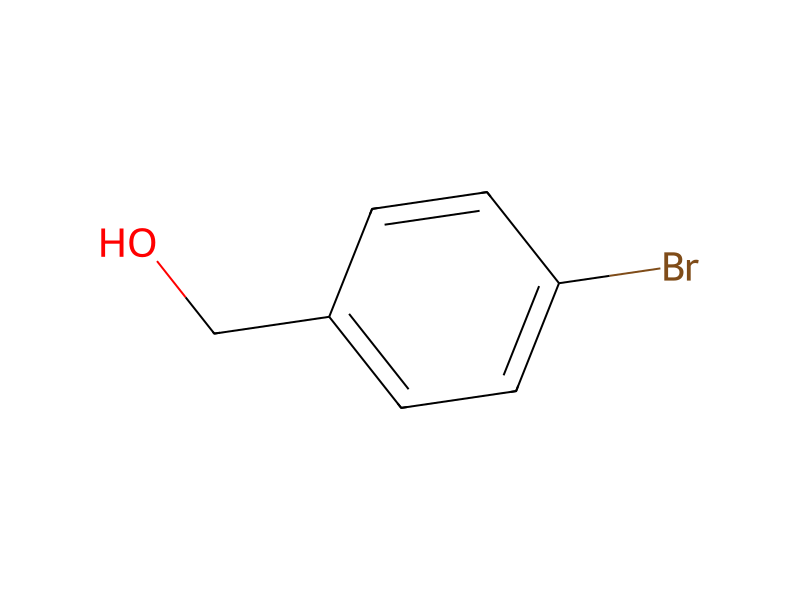
[Cl:1][C:2]1[CH:7]=[C:6]([N+]([O-])=O)[CH:5]=[C:4]([N+:11]([O-:13])=[O:12])[CH:3]=1.[Br:14][C:15]1[CH:22]=[CH:21][C:18]([CH2:19][OH:20])=[CH:17][CH:16]=1.C([O-])([O-])=O.[K+].[K+].Cl>CN(C=O)C.O.CCOC(C)=O.CCCCCC>[Br:14][C:15]1[CH:22]=[CH:21][C:18]([CH2:19][O:20][C:6]2[CH:5]=[C:4]([N+:11]([O-:13])=[O:12])[CH:3]=[C:2]([Cl:1])[CH:7]=2)=[CH:17][CH:16]=1The product from Example 193a (0.75 g, 3.7 mmol), 4-bromobenzyl alcohol (0.77 g, 4.1 mmol) and K2CO3 (0.64 g, 4.6 mmol) in DMF (15 ml) was heated at 110° C. for 23 hours. The reaction mixture was cooled to room temperature, diluted with H2O, acidified to pH 2 with 10% HCl, and then extracted with EtOAc. The extract washed with H2O and brine, dried over MgSO4, filtered and concentrated under vacuum giving the crude title compound. The residue was treated with 50 mL of a mixture of n-hexane and EtOAc (3:1) and silica gel. After being stirred at room temperature for 30 minutes, the mixture was filtered through celite. The filtrate was evaporated and the resulting solid washed with i-Pr2O to give the title compound as a pale yellow crystals (0.70 g).