StartseiteMCPWorkbenchSkills
StartseiteWorkbenchBenachrichtigungenMein Bereich
llms.txt · MCP-AnleitungDatenschutz · Nutzungsbedingungen · Supportv1.8.3
  1. Startseite
  2. /Reaktion

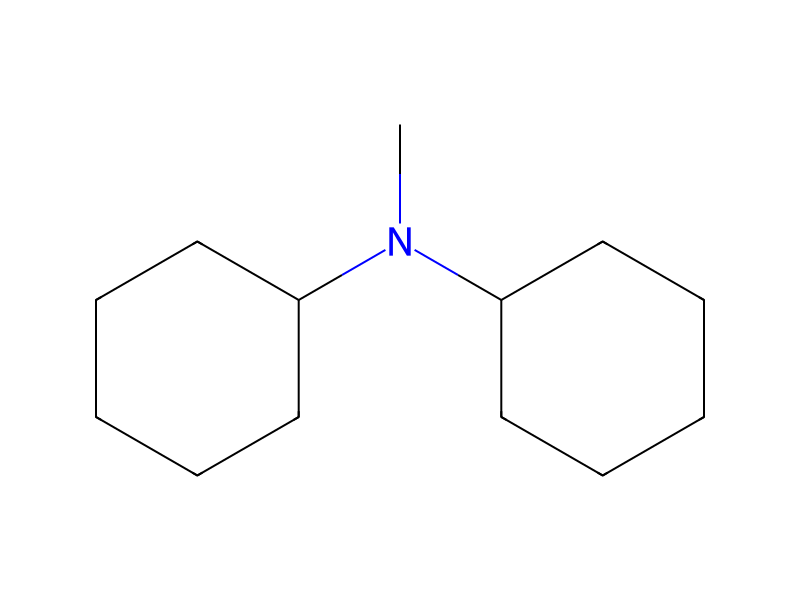
N-Methyl dicyclohexylamine → HCID 86723418, Verbindung

HRID 2201174
Drucken

Reaktionsgleichung

Reaktionsgleichung von HRID 2201174
[CH3:1][N:2]1[C:7]2=[C:8]3[N:13]([C:14]([C:15]4[CH:20]=[CH:19][CH:18]=[CH:17][CH:16]=4)=[C:6]2[C:5](=[O:21])[N:4]([CH3:22])[C:3]1=[O:23])[CH2:12][CH2:11][CH:10]=[CH:9]3.Br[C:25]1[CH:30]=[CH:29][CH:28]=[C:27]([F:31])[C:26]=1[F:32].C1(N(C)C2CCCCC2)CCCCC1>CC(N(C)C)=O.CCOC(C)=O.CC(P(C(C)(C)C)[C]1[CH][CH][CH][CH]1)(C)C.CC(P(C(C)(C)C)[C]1[CH][CH][CH][CH]1)(C)C.Cl[Pd]Cl.[Fe]>[F:31][C:27]1[C:26]([F:32])=[CH:25][CH:30]=[CH:29][C:28]=1[C:9]1[C:8]2[N:13]([C:14]([C:15]3[CH:20]=[CH:19][CH:18]=[CH:17][CH:16]=3)=[C:6]3[C:5](=[O:21])[N:4]([CH3:22])[C:3](=[O:23])[N:2]([CH3:1])[C:7]3=2)[CH2:12][CH2:11][CH:10]=1
KomponentenReaktionsbedingungenVersuchsvorschriftAufarbeitungQuellen und NachweiseNotizen zur Reaktion

Komponenten

7

Edukt 3

HCID 24210N-Methyl dicyclohexylamineHCID 27332601-Bromo-2,3-difluorobenzene3×HCID 867234191,3-Dimethyl-5-phenyl-7,8-dihydropyrimido[4,5-a]indolizine-2,4(1H,3H)-dione2×

Produkt 1

HCID 86723418HCID 86723418, Verbindung

Reagenzien, Katalysatoren, Lösungsmittel 3

HCID 178454869
HCID 178454869, Verbindung
Katalysator
3×
HCID 8857Ethyl AcetateLösungsmittel
HCID 31374DimethylacetamideLösungsmittel

Reaktionsbedingungen

Temperatur
110 °C

Versuchsvorschrift

1,3-Dimethyl-5-phenyl-7,8-dihydropyrimido[4,5-a]indolizine-2,4(1H,3H)-dione (Intermediate I) (180 mg, 0.586 mmol), 1-bromo-2,3-difluorobenzene (commercially available) (0.085 mL, 0.761 mmol) and N-cyclohexyl-N-methylcyclohexanamine (commercially available) (0.251 mL, 1.171 mmol) were combined in DMA (2.5 mL) and the mixture sparged with nitrogen for 30 min. [1,1′-Bis(di-tert-butylphosphino)ferrocene]dichloropalladium(II) (commercially available) (38.2 mg, 0.059 mmol) was then added and the mixture heated at 110° C. for 1 hour under microwave irradiation. After cooling to room temperature, the mixture was heated at 110° C. for a further 6 hours. Further portions of 1-bromo-2,3-difluorobenzene (0.085 mL, 0.761 mmol) and [1,1′-Bis(di-tert-butylphosphino)ferrocene]dichloropalladium(II) (38.2 mg, 0.059 mmol) were added, and the mixture heated at 110° C. for a further 5 h. Further [1,1′-Bis(di-tert-butylphosphino) ferrocene]dichloropalladium(II) (38.2 mg, 0.059 mmol) and 1-bromo-2,3-difluorobenzene (0.085 mL, 0.761 mmol) were added and the mixture heated 110° C. for a further 6 hours. Further [1,1′-Bis(di-tert-butylphosphino)ferrocene]dichloropalladium(II) (38.2 mg, 0.059 mmol) was added and the mixture heated at 110° C. for a further 6 h. The reaction mixture was diluted with EtOAc and washed with water and brine. The organic phase was dried over sodium sulphate and evaporated under reduced pressure. Purification by chromatography on silica, eluting with 15% EtOAc in iso-hexane afforded the title compound, which was used without further purification.

Aufarbeitung

  1. customthe mixture sparged with nitrogen for 30 min. [1,1′-Bis(di-tert-butylphosphino)ferrocene]dichloropalladium(II) (commercially available) (38.2 mg, 0.059 mmol)
  2. additionwas then added
  3. temperatureAfter cooling to room temperature
  4. temperaturethe mixture was heated at 110° C. for a further 6 hours
  5. temperaturethe mixture heated at 110° C. for a further 5 h
  6. temperaturethe mixture heated 110° C. for a further 6 hours
  7. temperaturethe mixture heated at 110° C. for a further 6 h
  8. washwashed with water and brine
  9. dry with materialThe organic phase was dried over sodium sulphate
  10. customevaporated under reduced pressure
  11. customPurification by chromatography on silica
  12. washeluting with 15% EtOAc in iso-hexane

Quellen und Nachweise

ORD-Eintrag
ord-c5c04203eb324fb2b713abb9b549cb5c
Quelldatensatz
uspto-grants-2016_06
DOI
10.6084/m9.figshare.5104873.v1
Patentnummer
US09359381B2

Notizen zur Reaktion

Auf dieser SeiteKomponentenReaktionsbedingungenVersuchsvorschriftAufarbeitungQuellen und NachweiseNotizen zur Reaktion
