StartseiteMCPWorkbenchSkills
StartseiteWorkbenchBenachrichtigungenMein Bereich
llms.txt · MCP-AnleitungDatenschutz · Nutzungsbedingungen · Supportv1.8.3
  1. Startseite
  2. /Reaktion

Triethylamine → 4-Bromo-3,6-dimethyl-pyridine-2-carbonitrile

HRID 2207663
Drucken

Reaktionsgleichung

Reaktionsgleichung von HRID 2207663
[Br:1][C:2]1[C:7]([CH3:8])=[CH:6][N+:5]([O-])=[C:4]([CH3:10])[CH:3]=1.C(OP([C:19]#[N:20])(OCC)=O)C.C(N(CC)CC)C>CC#N>[Br:1][C:2]1[CH:3]=[C:4]([CH3:10])[N:5]=[C:6]([C:19]#[N:20])[C:7]=1[CH3:8]
KomponentenReaktionsbedingungenVersuchsvorschriftAufarbeitungQuellen und NachweiseNotizen zur Reaktion

Komponenten

5

Edukt 3

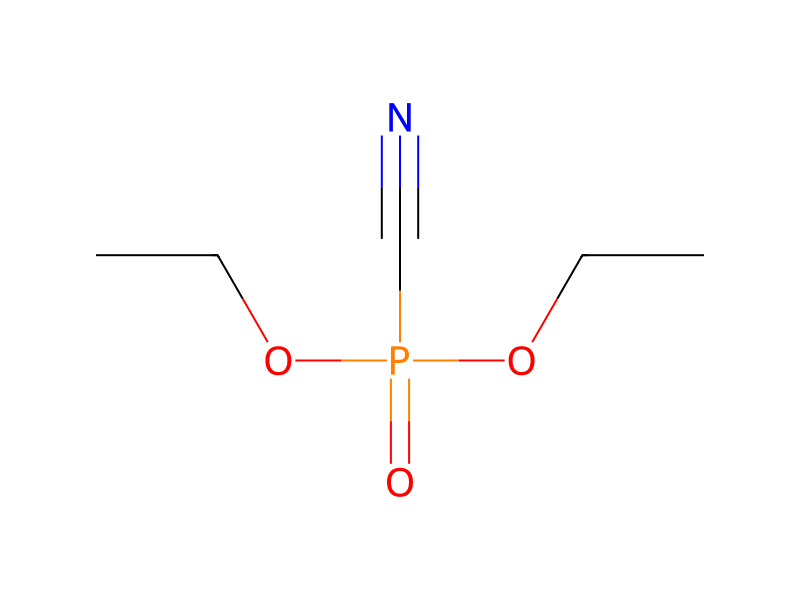
HCID 8471TriethylamineHCID 76257Diethyl cyanophosphonateHCID 544438594-Bromo-2,5-dimethylpyridine 1-oxide

Produkt 1

HCID 896490174-Bromo-3,6-dimethyl-pyridine-2-carbonitrileAusbeute 69,8 %

Reagenzien, Katalysatoren, Lösungsmittel 1

HCID 6342AcetonitrileLösungsmittel

Reaktionsbedingungen

Temperatur
80 °C

Versuchsvorschrift

To a Smith microwave vial was added 4-bromo-2,5-dimethyl-1-oxido-pyridin-1-ium (which may be prepared as described in Description 136), (300 mg, 1.48 mmol), diethoxyphosphorylformonitrile (0.9 mL, 5.94 mmol) and triethylamine (0.41 mL, 2.97 mmol) in anhydrous MeCN (1 mL). The reaction mixture was heated by microwave at 80° C. for 1 h. The reaction mixture was evaporated and the crude dark oil was purified on silica gel chromatography (10 g SiO2) eluting with ethyl acetate in iso-hexane (0-80%). Evaporation of desired fractions gave 4-bromo-3,6-dimethyl-pyridine-2-carbonitrile (D137) (218 mg, 1.0329 mmol, 69.6% yield) as colourless solid;


Aufarbeitung

  1. customThe reaction mixture was evaporated
  2. customthe crude dark oil was purified on silica gel chromatography (10 g SiO2)
  3. washeluting with ethyl acetate in iso-hexane (0-80%)
  4. customEvaporation of desired fractions

Quellen und Nachweise

ORD-Eintrag
ord-3e47e9f5b2bd41e3ba40667aa0bfd57a
Quelldatensatz
uspto-grants-2016_06
DOI
10.6084/m9.figshare.5104873.v1
Patentnummer
US09376436B2

Notizen zur Reaktion

Auf dieser SeiteKomponentenReaktionsbedingungenVersuchsvorschriftAufarbeitungQuellen und NachweiseNotizen zur Reaktion