Reaktionsgleichung

[CH3:1][O:2][P:3]([CH3:7])(=[O:6])[O:4][CH3:5].[Li]CCCC.[C:13]([O:17][C:18]([N:20]1[C@H:24]([C:25]([O-])=[O:26])[CH2:23][O:22][C:21]1([CH3:29])[CH3:28])=[O:19])([CH3:16])([CH3:15])[CH3:14].CCOC(C)=O>C1COCC1.CCO>[C:13]([O:17][C:18]([N:20]1[C@H:24]([C:25](=[O:26])[CH2:7][P:3]([O:4][CH3:5])([O:2][CH3:1])=[O:6])[CH2:23][O:22][C:21]1([CH3:29])[CH3:28])=[O:19])([CH3:16])([CH3:15])[CH3:14]Komponenten
Edukt 4

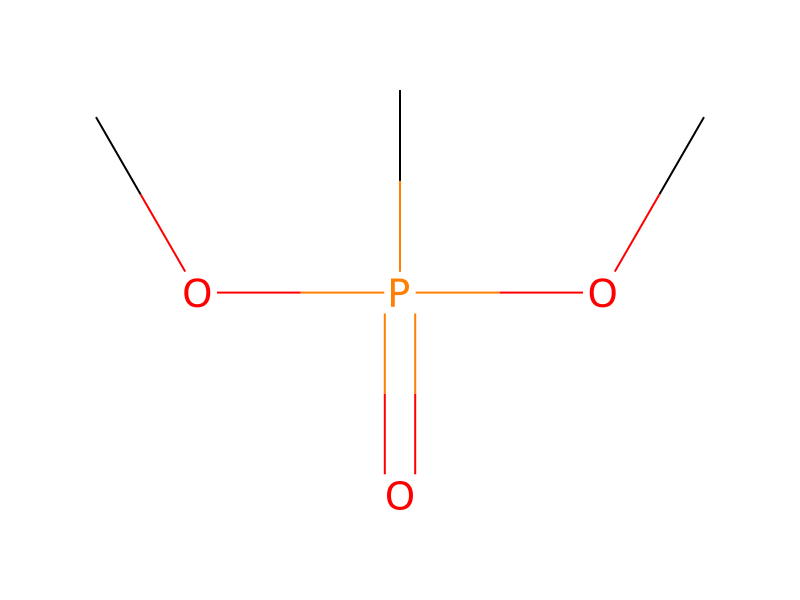


Produkt 1

Reagenzien, Katalysatoren, Lösungsmittel 2


Reaktionsbedingungen
- Temperatur
- -75 °C
Versuchsvorschrift
Dimethylmethylphosphonate (2.3 ml, 21 mmol, 210 mol-%) was dissolved in 10 ml of THF and cooled to -85° C. (internal temp. -75° C.). To this solution was added 14 ml (1.6M, 21 mmol, 210 mol-%) of n-BuLi in hexanes. The reaction mixture was allowed to warm to -25° C. for 1 hour and then cooled back to -85° C. (internal temp. <-75° C.) after which 2.6 g (10 mmol, 100 ml-%) of methyl ((S)-3-(tert-butoxycarbonyl)-2,2-dimethyl-4oxazolidine carboxylate was dissolved in 5 ml of THF and cooled to -85° C. (internal temperature <-75° C.). This solution was cannulated onto the anion at such a speed that the internal temperature stayed <-75° C. at all times. After the addition the reaction mixture was allowed to warm to 0° C. very slowly and then it was quenched with 5 w-% citric acid. The pH was adjusted to 3 with sat. citric acid and the reaction mixture was extracted several times with ethyl acetate (EtOAc). Organic phases were washed with brine, combined, dried over Na2SO4 and the solvents were removed in vacuo. The product can be crystallized if necessary from iso-octane. An analytical sample was purified by flash chromatography using 20% EtOAc in hexanes to remove the traces of starting material and then as a stepgradient with 100% EtOAc to remove the excess of dimethylmethylphosphonate to yield 70% of pure 3. Rf, 100% EtOAc: 0.28. mp. 86°-7° C. 1H NMR (250 MHz, CDCl3) δ:1.30 (s, 3 H, major rotamer) , 1.36 (s, 3 H, minor rotamer) , 1.40 (s, 3 H both rotamers), 1.51 (s, 3 H, major rotamer), 1.55 (s, 3 H minor rotamer), 3.06 (d, 2 H, major rotamer, 2J(HP)=20 Hz), 3.10 (d, H, minor rotamer, 2H(HP)=20 Hz), 3.68 (d, 6 H, 3J(HP)=11,2 Hz), 3.91 (dd, 1 H, minor rotamer, J=3.6 Hz, <0.5 Hz), 3.93 (dd, 1 H, major rotamer, J=3.6 Hz, <0.5 Hz), 4.05 (m, 1 H, both rotamers) , 4.38 (m, 1 H, major rotamer) , 4.48 (m, 1 H, minor rotamer). Rotameric ratio is 2:1 at 20° C. 13C NMR (50 MHz, CDCl3) δ:23.7 (CH3), 25.0 (CH3), 28.0 (CH3), 52.7 (CH3), 65.0 (c), 65.1 (CH2), 89.8 (c), 94.4 (CH2), 95.(C), 150.9 (C=O), 199.0 (C=O) . Anal. Calcd. C 47.86: H 7.46; N 3.99; Found C 48.11; H 7.70; N 4.26. α20 =-40.1(c=14.0, EtOH).
Aufarbeitung
- temperatureto warm to -25° C. for 1 hour
- temperaturecooled to -85° C. (internal temperature <-75° C.)
- customstayed <-75° C. at all times
- additionAfter the addition the reaction mixture
- temperatureto warm to 0° C. very slowly
- customit was quenched with 5 w-% citric acid
- extractionthe reaction mixture was extracted several times with ethyl acetate (EtOAc)
- washOrganic phases were washed with brine
- dry with materialdried over Na2SO4
- customthe solvents were removed in vacuo
- customThe product can be crystallized if necessary from iso-octane
- customAn analytical sample was purified by flash chromatography
- customto remove the traces of starting material
- customas a stepgradient with 100% EtOAc to remove the excess of dimethylmethylphosphonate
- customto yield 70% of pure 3
- customat 20° C
Quellen und Nachweise
- ORD-Eintrag
- ord-44a1fe8b547741f9b4f4aca0d9506505
- Quelldatensatz
- uspto-grants-1995_06
- Patentnummer
- US05426228
Verknüpfte Notizen
Wird geladen…