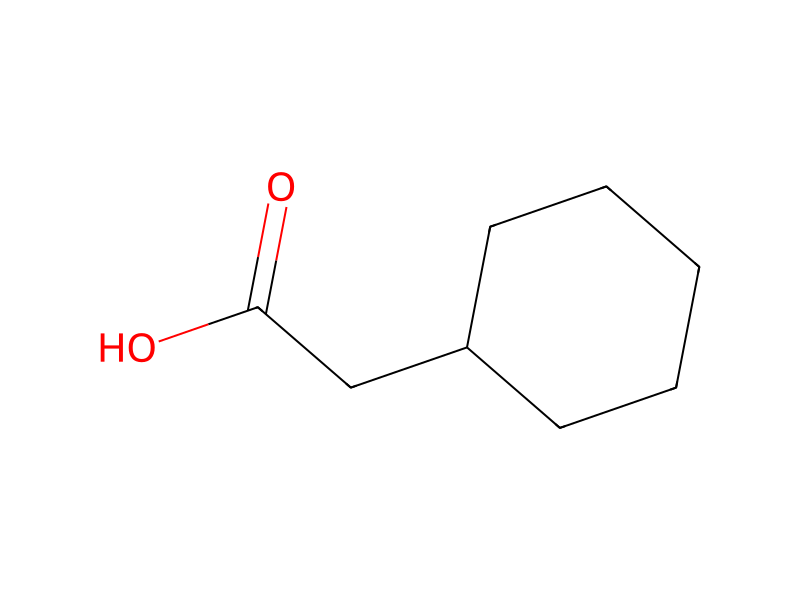
[Cl:1][C:2]1[CH:11]=[CH:10][C:9]2[C:8]([NH2:12])=[C:7]([Cl:13])[CH:6]=[CH:5][C:4]=2[N:3]=1.[CH:14]1([CH2:20][C:21](O)=[O:22])[CH2:19][CH2:18][CH2:17][CH2:16][CH2:15]1.C1CN([P+](Br)(N2CCCC2)N2CCCC2)CC1.F[P-](F)(F)(F)(F)F.Cl>CN1CCCC1=O.O>[Cl:1][C:2]1[CH:11]=[CH:10][C:9]2[C:4](=[CH:5][CH:6]=[C:7]([Cl:13])[C:8]=2[NH:12][C:21](=[O:22])[CH2:20][CH:14]2[CH2:19][CH2:18][CH2:17][CH2:16][CH2:15]2)[N:3]=1To a stirred solution of 2,6-dichloroquinolin-5-amine (prepared as described in (d) below) (1 g) in N-methylpyrrolidinone (12 mL) was added 4-N,N-dimethylaminopyridine (1.2 g), cyclohexaneacetic acid (1 g) and PyBroP (4.4 g). The reaction mixture was heated to 50° C. for 10 hours. The mixture was cooled to room temperature and poured into water (10 mL) which was subsequently acidified to pH1 with aqueous 2M hydrochloric acid. The resulting solution was extracted with dichloromethane (3×20 mL). The combined organic extracts were dried, filtered and partially concentrated to give a white precipitate which was removed by filtration. Purification by chromatography (SiO2, methanol:dichloromethane 1:10 as eluant) gave the sub-title compound (490 mg).