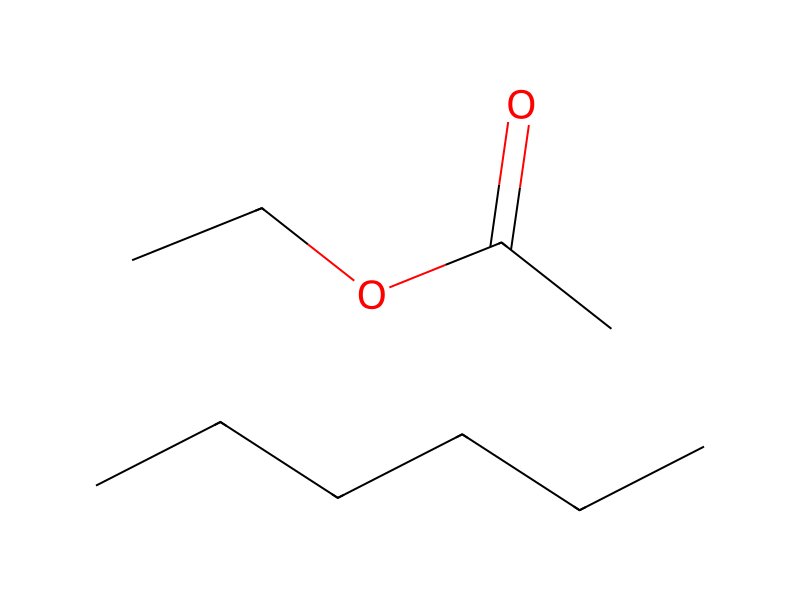
[Br:1][C:2]1[CH:3]=[N:4][C:5]2[C:10]([CH:11]=1)=[CH:9][C:8]([OH:12])=[CH:7][CH:6]=2.C(=O)([O-])[O-].[K+].[K+].Br[CH:20]([CH2:30][CH3:31])[C:21]([NH:23][C:24]([CH3:29])([CH3:28])[C:25]#[C:26][CH3:27])=[O:22].O>CN(C)C=O.CCCCCC.C(OCC)(=O)C>[Br:1][C:2]1[CH:3]=[N:4][C:5]2[C:10]([CH:11]=1)=[CH:9][C:8]([O:12][CH:20]([CH2:30][CH3:31])[C:21]([NH:23][C:24]([CH3:29])([CH3:28])[C:25]#[C:26][CH3:27])=[O:22])=[CH:7][CH:6]=2To a stirred mixture of 3-bromo-6-hydroxyquinoline (0.179 g) and anhydrous potassium carbonate (0.121 g) in dry N,N-dimethylformamide (2 ml) at 80° C. was added 2-bromo-N-(4-methylpent-2-yn-4-yl) butyramide (0.197 g) and the reaction maintained at this temperature for 15 hours. The brown suspension produced was cooled to ambient temperature, poured into water and extracted with diethyl ether. The extract was washed with water, dried over magnesium sulphate then evaporated under reduced pressure to give a brown gum. The gum was fractionated by chromatography (silica; hexane/ethyl acetate) to give 2-(3-bromo-6-quinolinyloxy)-N-(4-methylpent-2-yn-4-yl) butyramide (0.125 g) as a colourless solid, m.p. 109-12° C., 1H NMR (CDCl3) δ: 1.08(3H, t); 1.58 (3H, s); 1.59(3H, s); 1.77(3H, s); 1.99-2.06(2H, m); 4.54(1H, t); 6.37(1H, s); 7.02(1H, m); 7.42(1H, dd); 8.02(1H, d); 8.19(1H, m); 8.78(1H, m).